|
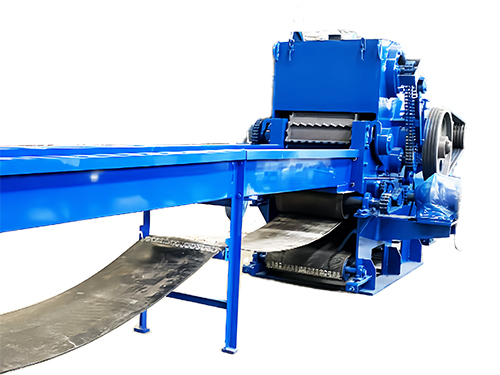
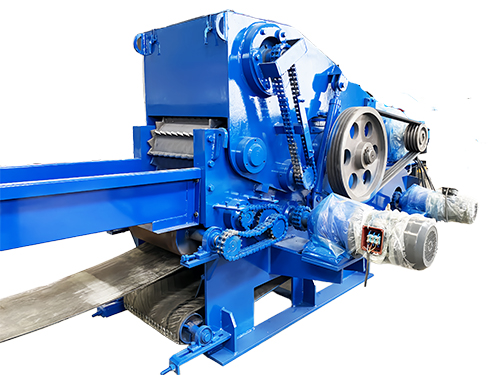
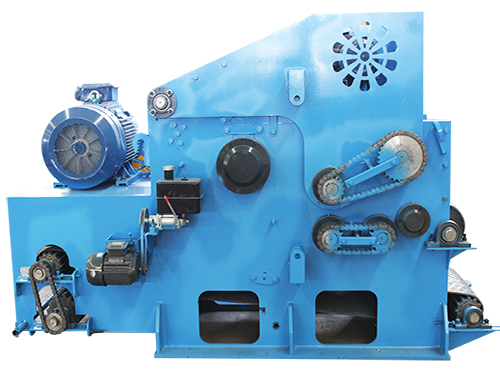
Wood crusher for many years with its superior performance, superior quality, high cost performance and is widely used by domestic and foreign merchants. It is a special equipment for preparing high-quality wood chips, which is suitable for paper mills, particleboard factories, fiberboard factories, wood chip production bases and wood chip export bases. High quality industrial wood chips can be cut into logs, small diameter wood, etc., uniform length, smooth incision, uniform thickness. They can also be used to cut branches, boards, etc.
| Quantity: | |
|---|---|

/ Product display /
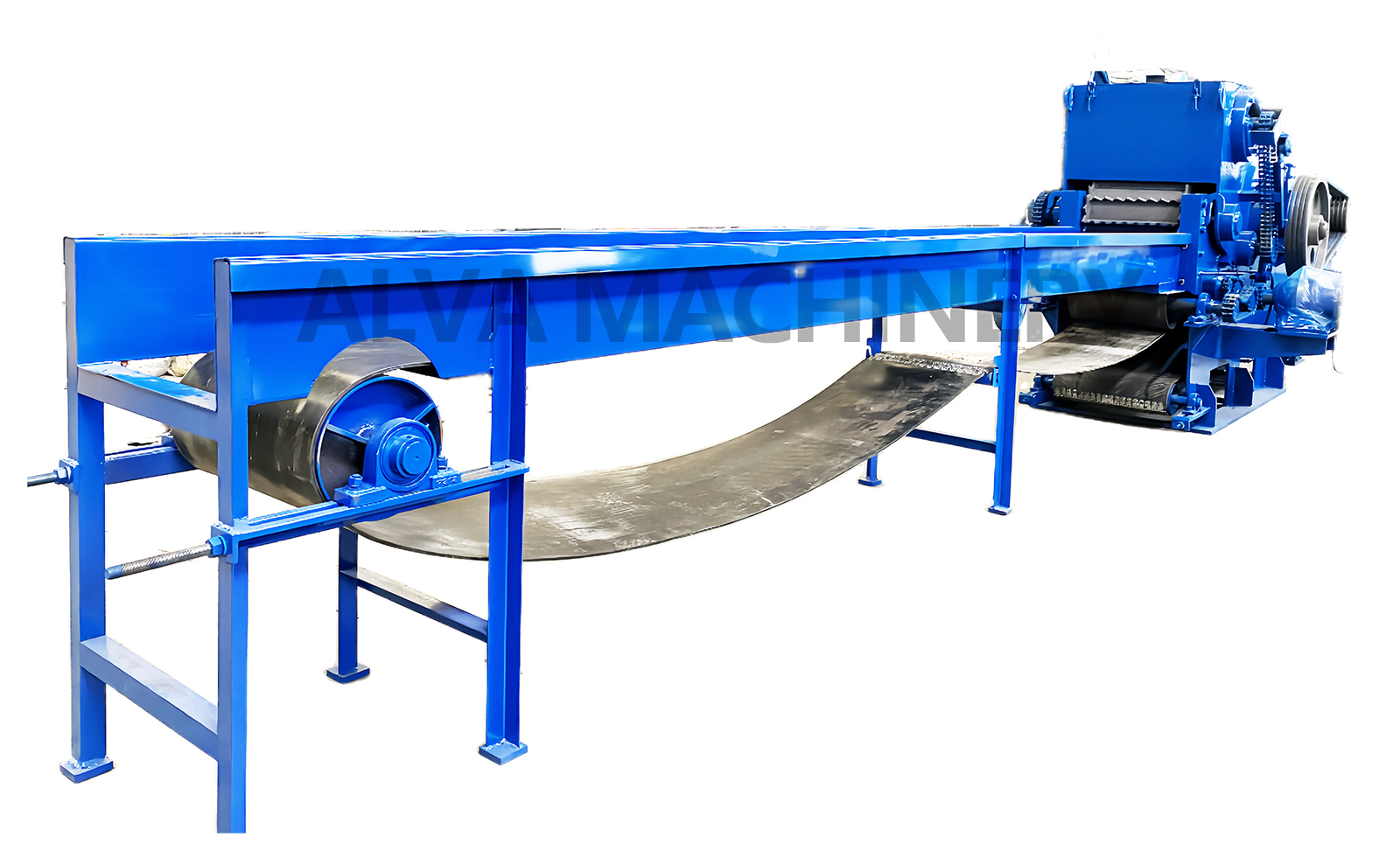
| Main Motor | 45KW-6 |
| Bark Discharge Motor | 5.5KW |
| DischargeChute Motor | 4.0KW |
| Reducer | ZQ650 |
| Stripping Roller Diameter | 820mm |
| Peeling Roller Working Diameter | 980mm |
| Cabinet Plate Thickness | 8+12mm |
| Peeling Roller Thickness | 16mm |
| Tree Bark Belt Width | 1000mm |
| Peeling Tank Working Length | 12m |
| Handling Capacity | 15-20 tons/hour |
| Dimensions | 14000mm*2300mm*2700mm |
| Export Belt Width | 1000mm |
| DischargeChute Length | 6000mm |
The Wood Crusher is a versatile machine designed to transform logs, branches, stumps, and wood waste into uniform wood chips or sawdust. Optimized for biomass energy production, paper mills, and landscaping, this equipment delivers high throughput (400–2,000 kg/h) with minimal energy consumption. Its dual-crushing mechanism (blade cutting and high-speed air impact) ensures efficient processing of diameter 70–250 mm materials, making it ideal for both hardwoods (e.g., oak, maple) and softwoods (e.g., pine, spruce). Certified by EU CE and US EPA, it meets global standards for environmental performance and operational safety.
Processing Capacity: 400–2,000 kg/h (adjustable via feed rate: 400–800 kg/h for mobile models, 1,200–2,000 kg/h for stationary units)
Output Particle Size: 3–5 mm (standard for pelletizing; customizable via screen mesh to 1–10 mm for diverse applications)
Motor Power: 15–55 kW (model-dependent, with 15–30 kW for compact models and 45–55 kW for industrial use)
Blade Rotation Speed: 2,800–3,200 rpm (high-speed rotation ensures efficient material fragmentation)
Noise Level: ≤85 dB (equipped with sound-dampening enclosure and vibration-absorbing pads)
Feed Inlet Size: 300mm × 250mm (accommodates large branches and small logs without pre-cutting)
Blades: High-carbon steel (42CrMo grade) with tungsten carbide coating for long lifespan (up to 8,000 hours of use on softwoods)
Housing: Reinforced steel with abrasion-resistant liners (chromium carbide plates) to minimize wear from hard debris
Screen Mesh: Stainless steel with adjustable apertures (easily interchangeable for quick size changes)
Weight: 320–3,200 kg (model-dependent: 320–800 kg for portable units, 2,000–3,200 kg for stationary installations)
Footprint: 1.3m × 0.6m × 0.8m (compact 500 model; industrial models: 3m × 1.5m × 2m)
Mobility: Track-mounted models feature 150mm wide tracks with 15° climbing capability for rough terrain
The machine combines blade cutting (6 high-speed rotating blades) and high-speed air impact to achieve 95% material reduction in a single pass. The blades—arranged in a spiral pattern—first slice materials into coarse pieces, while the air impact (generated by rotor vanes) further refines particles to uniform sizes. This two-stage process eliminates the need for secondary crushing, reducing energy use by 25% compared to single-stage machines.
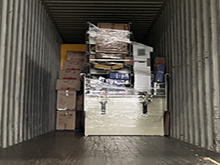
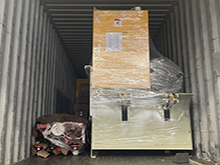
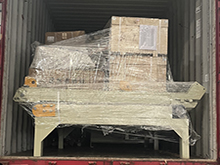
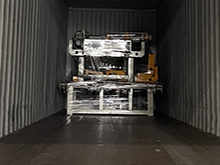
Available in stationary and track-mounted configurations, the Wood Crusher is easy to transport (towable by 3-ton trucks) and deploy in remote locations like forestry sites and construction zones. Track-mounted models feature hydraulic winches for loading heavy logs, while stationary units integrate with conveyor systems for automated feeding. Its modular design allows for quick disassembly, with key components (e.g., blade assembly) removable in under 30 minutes for maintenance.
The self-cleaning blades (equipped with debris scrapers) and accessible housing minimize downtime. Replaceable components, such as wearing plates and bearings, feature standardized sizes for easy sourcing. The machine includes an automatic lubrication system that dispenses grease to critical points every 2 hours, extending component life by 30%. A built-in maintenance reminder alerts operators via the control panel when service is due.
Equipped with dust extraction systems (HEPA filters) and low-emission motors (Tier 4 Final compliant), the Wood Crusher meets EU CE and US EPA standards. Dust emissions are ≤10 mg/m³, protecting worker health and reducing environmental impact. Its energy-efficient design (power factor ≥0.9) reduces carbon footprint by 20% compared to traditional crushers, aligning with corporate sustainability goals.
Pellet Mills: Processes sawdust and wood shavings into premium biomass pellets (moisture content ≤10%), providing a sustainable alternative to fossil fuels with a combustion efficiency of 85%+ in modern boilers.
Biogas Plants: Prepares agricultural residues like corn stover and sorghum stalks for anaerobic digestion, increasing biogas yield by 30% through improved material surface area for microbial activity.
Paper Manufacturing: Converts wood chips into pulp for paper production, supporting circular economy practices by recycling 200+ tons of wood waste daily into high-strength paper (basis weight 60–120 g/m²).
Woodworking: Produces wood flour (30–80 mesh) for particleboard and MDF manufacturing, reducing material waste by incorporating 15–20% recycled wood content into panels without compromising strength.
Waste Management: Handles tree trimmings, stumps, and garden debris, converting them into mulch (5–10 mm particles) that retains soil moisture by 30% and suppresses weed growth in landscaping projects.
Wildfire Prevention: Clears overgrown vegetation in forests, reducing fire risks while generating revenue from biomass sales to energy facilities, creating a win-win for land management and renewable energy.
Waste Recycling: Processes pallets, roofing shingles, and timber scraps into reusable wood chips, minimizing landfill contributions by diverting 1,000+ tons of construction waste annually per machine.
Road Construction: Uses crushed wood as subbase material in low-traffic roads, enhancing soil stabilization and reducing the need for gravel by 20% in rural infrastructure projects.
By combining efficiency, mobility, and environmental sustainability, the Wood Crusher plays a pivotal role in advancing biomass energy and waste reduction initiatives. Its ability to convert wood waste into valuable resources makes it an essential tool for industries aiming to achieve zero-waste goals and carbon neutrality.
 |  |  |  |  |  |
 |  |  |  |  |  |
 |  |  |  |  |  |
 |  |  |  |  |  |
 |  |  |  |  |  |
 |  |  |  |  |  |
 |  |  |  |  |  |
 |  |  |  |  |  |
 |  |  |  |  |  |
 |  |  |  |  |  |
 |  |  |  |  |  |
 |  |  |  |  |  |