Views: 0 Author: Site Editor Publish Time: 2025-08-15 Origin: Site
Against the backdrop of increasing global resource shortages and the advancement of carbon neutrality goals, scrap metal recycling, as a core component of the circular economy, is transcending geographical limitations and demonstrating strong growth potential in the international market. From North America to Europe, from Asia to Africa, the scrap metal recycling industry is experiencing an increasingly pronounced trend toward scale and specialization, with efficient scrap metal processing equipment becoming a key driver of global industry upgrades.
1. Global Scrap Metal Recycling: A Trillion-Dollar Market Driven by Insatiable Resource Demand and Environmental Consensus
From an international resource perspective, steel is a fundamental raw material for the global industrial system, but primary iron ore resources are unevenly distributed and mining costs continue to rise. According to the World Steel Association, global crude steel production will reach 1.87 billion tons in 2024, of which recycled steel will account for over 30%, and this proportion continues to increase annually. Developed countries like Europe and the United States, due to their early industrialization, have vast reserves of scrap metal. For example, the United States generates over 100 million tons of scrap metal annually, with a recycling rate exceeding 75%. Japan, through a refined recycling system, has increased its scrap metal recycling rate from discarded equipment like automobiles and appliances to 90%, setting a global benchmark for scrap metal recycling.
In terms of environmental policy, many countries around the world have incorporated scrap metal recycling into their carbon neutrality strategies. The EU's Circular Economy Action Plan explicitly calls for increasing the steel industry's scrap metal utilization rate to 55% by 2030, while also imposing strict environmental restrictions on primary iron ore mining. The United States passed the Infrastructure Act, providing scrap metal recycling companies with tax credits of up to 20%. Emerging market countries such as India and Brazil have also introduced subsidies to encourage the development of local scrap metal recycling chains and reduce reliance on imported iron ore. The continued release of policy dividends has injected long-term growth momentum into the global scrap metal recycling industry.
From the perspective of international market demand, the recovery of the manufacturing industry is directly driving the consumption of recycled steel. Industries such as automotive, shipbuilding, and engineering machinery are experiencing strong demand for low-cost, low-energy recycled steel. German automakers such as BMW and Volkswagen have increased their use of recycled steel to 40%, reducing production costs while also achieving carbon emission reduction targets. Furthermore, global energy price fluctuations have further highlighted the cost-effectiveness of recycled steel. Compared to virgin steel, every ton of scrap metal used saves 1.6 tons of iron ore, 1.2 tons of standard coal, and reduces carbon dioxide emissions by 2.6 tons. These dual environmental and economic advantages have made recycled steel a popular commodity in the international market.
II. Common Challenges in International Scrap Recycling: Efficient Processing Equipment Holds the Key to Breaking Through
Despite the promising global scrap recycling market, scrap recycling companies in different countries and regions face common challenges: the diverse forms of recycled scrap, ranging from lightweight tinplate cans and used car hulls to heavy industrial steel scrap and rebar. Direct transportation and processing without processing not only increases cross-border and interregional transportation costs (some countries charge by volume), but also reduces subsequent smelting efficiency due to the uneven quality of the material. For example, scrap recycled in Africa often contains impurities such as dirt and plastic, while scrap recycled in Europe is primarily high-quality industrial waste. Traditional processing methods are unable to meet the diverse international demands.
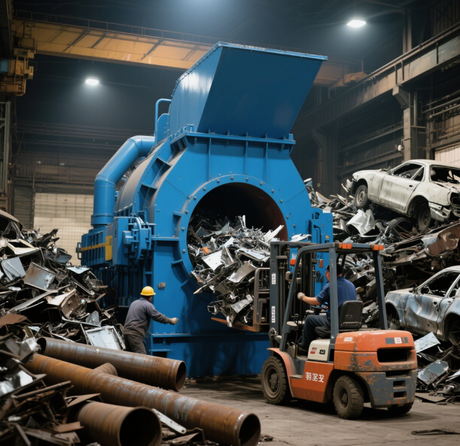
Against this backdrop, efficient and adaptable scrap shredders have become crucial equipment for connecting the international scrap recycling industry chain. With its global design and performance advantages, the Alva scrap shredder has rapidly gained a foothold in the international market, becoming the preferred equipment for recycling companies in many countries.
III. Alva Scrap Shredder: Adapting to Global Demand, Helping International Recyclers Reduce Costs and Increase Efficiency
1. Multi-Scenario Adaptation to Address the Diversity of International Scrap
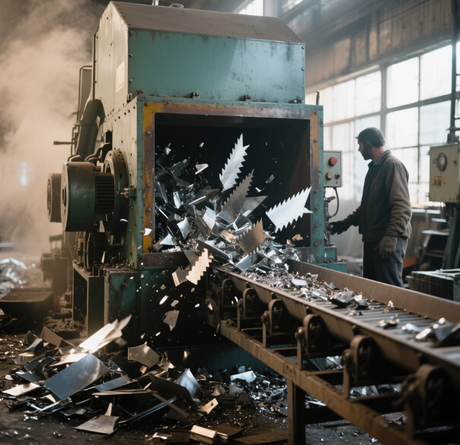
The Alva Scrap Shredder utilizes a modular design to address the specific characteristics of scrap metal in different countries, allowing flexible adjustment of tool configuration and crushing parameters based on material properties. When processing high-quality European industrial scrap, the equipment precisely controls the speed to achieve "low-loss, high-purity" shredding, ensuring that the scrap metal particles meet the raw material standards of high-end manufacturing. For scrap metal in Africa, Southeast Asia, and other regions with mixed impurities, the equipment's pre-treatment screening device simultaneously separates impurities such as dirt and plastic, resulting in a shredded scrap metal purity exceeding 95%, directly meeting the feed requirements of local smelters. Furthermore, the equipment supports a multilingual user interface and remote fault diagnosis, facilitating rapid operational experience for operators in different countries and reducing cross-border operation and maintenance costs.
2. High Efficiency and Energy Saving, Complying with International Environmental Standards
The Alva Scrap Shredder strictly adheres to international standards such as the EU CE certification and the US UL certification, demonstrating outstanding environmental performance. The equipment's efficient dust removal system controls dust emissions during the shredding process to below 10mg/m³, far below the limit set by the EU Industrial Emissions Directive. Its low-noise design keeps the equipment operating at less than 75 decibels, meeting the demands of operations near residential areas. This advantage makes it highly competitive in markets with stringent environmental requirements, such as Europe and the United States. Furthermore, the equipment utilizes an energy-saving motor and intelligent frequency conversion technology, reducing energy consumption by 15% compared to traditional shredders. This aligns with global energy conservation trends and helps international companies control costs amidst high energy prices.
3. Reduce International Logistics Costs and Improve Supply Chain Efficiency
Scrap shredders can reduce the volume of shredded scrap to 1/5-1/8 of its original size, significantly reducing international transportation costs. For example, a recycling company in Southeast Asia has reduced its per-ton transportation costs by 30% by using the Alva shredder to shred scrap for export to China, saving over $2 million in annual logistics expenses. European companies are also using shredded scrap pellets to replace containerized shipping, further improving transportation efficiency. Furthermore, uniform scrap iron particles can shorten smelting times for international smelters. For example, an Indian steel mill using Alva's shredded scrap has reduced its smelting cycle by 20%, significantly increasing its production capacity.
IV. Global Presence: Alva Helps Build an International Scrap Recycling Ecosystem
Currently, Alva scrap shredders have been exported to over 20 countries and regions worldwide. After-sales service centers have been established in Germany, the United States, India, and South Africa, providing on-site support and parts supply within 72 hours, alleviating the worries of international customers. In the future, Alva will continue to focus on international market demand and develop intelligent shredders more suitable for cross-border recycling scenarios (such as models that support IoT remote monitoring and automatic material composition identification). This will help global scrap recyclers break through geographical constraints and achieve efficient resource recycling.
The global scrap recycling industry is experiencing a golden period of development. Driven by technological innovation, Alva scrap shredders will continue to create value for international recyclers, driving the global steel industry towards resource recycling and low-carbon development, and contributing Chinese equipment to achieving global carbon neutrality goals.