Views: 0 Author: Site Editor Publish Time: 2025-08-22 Origin: Site
Among the wide range of modern materials used, polyvinyl chloride (PVC) holds a crucial position in numerous industries, including construction, packaging, electronics, and automotive, thanks to its excellent properties, such as outstanding chemical resistance, electrical insulation, mechanical properties, and relatively low cost. However, as PVC consumption continues to rise, a significant amount of PVC waste is generated, posing a serious challenge to the global environment.
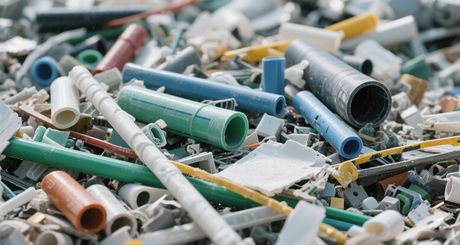
PVC waste primarily originates from production scraps, substandard products, and various post-consumer PVC products, such as discarded PVC pipes, doors and windows, plastic film, and wire and cable sheathing. Due to its relatively stable chemical structure, PVC is difficult to degrade in the natural environment. If this waste is not properly handled, it not only consumes significant land resources but also, under prolonged exposure to sunlight and rain, releases harmful substances, polluting soil, water, and air, threatening ecological balance and human health. Data indicates that the amount of PVC waste generated globally reaches millions of tons annually, and is increasing annually. However, from another perspective, PVC waste is not worthless waste but rather a misplaced "resource." Through effective recycling and shredding, PVC waste can be recycled and transformed into economically valuable recycled materials, contributing to global resource sustainability strategies. Currently, PVC waste recycling and shredding has gradually established itself as a large-scale industry worldwide, with promising market prospects.
From a policy perspective, governments around the world have recognized the severity of the plastic pollution problem and have successively introduced a series of strict environmental regulations and policies to promote the recycling of PVC waste. The European Union has set an ambitious plastic recycling target, requiring a recycling rate of at least 55% for all plastic packaging by 2030, of which PVC waste recycling is a key component. China is also actively promoting plastic pollution control, providing policy support and guidance for the recycling of PVC waste, encouraging companies to increase investment in technological research and development, and improving recycling and processing capabilities. These policies have provided solid policy support for the PVC waste recycling and shredding market, encouraging companies to actively participate in this field and driving the continuous expansion of the market. In terms of market demand, as consumers become increasingly environmentally conscious and favor sustainable products, more and more industries are actively seeking to use recycled materials to reduce their environmental footprint. In the construction industry, recycled PVC can be used to manufacture products such as pipes, window frames, and flooring, meeting building performance requirements while demonstrating corporate social responsibility. The automotive industry is also gradually increasing its use of recycled PVC in the production of components such as automotive interiors and bumpers. This shift in market demand has created a huge market opportunity for the PVC waste recycling and shredding industry. Market research firms predict that the global PVC recycling market is expected to grow from US$400 million in 2022 to US$900 million in 2032, achieving a compound annual growth rate of 10.1%.
Technological innovation is the core driving force behind the development of the PVC waste recycling and shredding industry. In recent years, researchers and companies have continuously increased their R&D investment, developing a series of advanced recycling technologies and equipment. Mechanical recycling is the most common method of PVC waste recycling. Through shredding, cleaning, and granulation, PVC waste is converted into reusable pellets. Currently, new shredding equipment enables more efficient and finer shredding, improving the quality and yield of recycled materials. Chemical recycling technology has also made significant progress. This technology uses chemical reactions to break down PVC waste into monomers or other useful chemical raw materials, achieving a higher level of resource recovery. For example, some companies use thermal depolymerization to convert PVC waste into vinyl chloride monomer, which can be reused in PVC resin production. Furthermore, with the application of emerging technologies such as artificial intelligence and big data in the industrial sector, PVC waste recycling companies can leverage intelligent management systems to optimize recycling processes, improve production efficiency, and reduce operating costs.
From a regional perspective, the Asia-Pacific region, with its large PVC consumer market and vibrant manufacturing industry, is the fastest-growing region in the global PVC waste recycling and shredding market. As the world's largest producer and consumer of PVC, China plays a leading role in PVC waste recycling. Domestic companies are continuously improving recycling technology and equipment, building large-scale recycling and processing bases. Furthermore, a well-developed industrial chain and supporting infrastructure enable recycled PVC materials to quickly enter downstream markets, forming a healthy industrial cycle. Furthermore, countries such as India, Japan, and South Korea are actively promoting the development of the PVC waste recycling industry, which holds enormous market potential. In Europe and the United States, due to strict environmental regulations and high consumer awareness, the PVC waste recycling industry developed early, has mature technology, and has seen relatively stable market development. Companies in these regions focus on brand building and improving product quality, dominating the market for high-end recycled PVC products.
While the PVC waste recycling and shredding market holds great promise, it also faces challenges. PVC waste has a complex composition, with variations in materials and additives from different sources, increasing the difficulty and cost of recycling. Some consumers are skeptical about the performance and quality of recycled PVC products, requiring further market promotion. Recycling companies also need to address issues such as volatile raw material prices and rising energy costs to maintain stable profitability.
Overall, the PVC waste recycling and shredding industry faces both opportunities and challenges within the context of global sustainable development. With policy support, market demand, technological innovation, and regional collaborative development, the industry is expected to achieve further breakthroughs in the future, making significant contributions to addressing global plastic pollution and promoting resource recycling.