Views: 0 Author: Site Editor Publish Time: 2026-03-16 Origin: Site
Metal recycling facilities face a common challenge when managing scrap materials. Loose metal chips, machining turnings, sheet offcuts, and other waste forms occupy large storage areas and complicate transportation. Many companies know they need to compress scrap to improve efficiency, but the key question is whether to use a Metal Briquetting Machine or a metal baler. Both solutions reduce scrap volume, yet they serve different purposes in metal processing and recycling workflows. Understanding the differences between briquetting and baling helps manufacturers and recyclers choose the most suitable solution for their operations, especially when handling metal chips, machining waste, or irregular scrap materials.
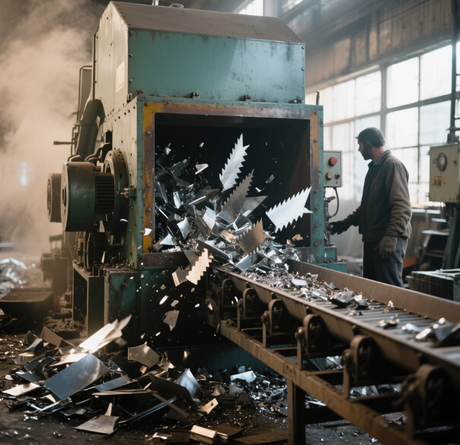
A briquetting machine is specifically designed to compress loose metal chips and small machining waste into dense, compact briquettes. These briquettes are typically cylindrical or block-shaped and have a high density compared to the original loose material.
The primary function of briquetting equipment is to transform fine metal waste such as shavings, turnings, and swarf into solid pieces that can be easily handled and reused. The compression process also squeezes out cutting fluids that remain in the metal chips after machining operations.
Because briquettes are dense and uniform, they perform well in smelting and metal recovery processes. Their compact structure reduces oxidation during melting and improves furnace efficiency.
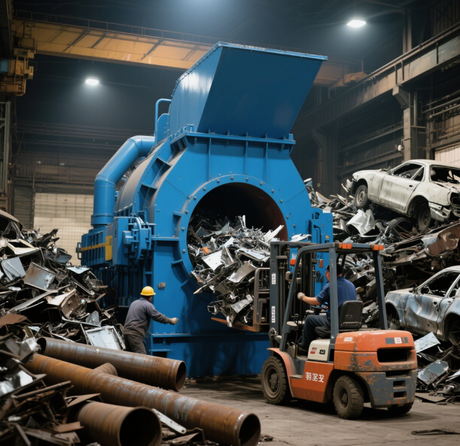
Metal balers serve a different purpose. Instead of processing fine chips, they are designed to compress larger pieces of scrap metal such as sheet offcuts, beverage cans, metal containers, and structural scrap.
Balers compress these materials into large rectangular or cube-shaped bales. The goal is primarily to reduce the volume of bulky scrap so it can be transported more efficiently.
Unlike briquetting machines, balers do not significantly increase the density of fine metal particles. They mainly bundle larger scrap pieces together.
Both machines reduce scrap volume, but the way they achieve this reduction differs significantly. Briquetting focuses on densifying small particles, while baling focuses on bundling larger scrap pieces.
Choosing the correct equipment requires understanding the form of scrap being processed and the downstream recycling goals.
Machining processes generate large quantities of loose chips and turnings. These materials are light, irregular, and difficult to handle.
When these chips are compressed using briquetting equipment, the resulting briquettes become dense and compact. This transformation improves storage efficiency and enhances their value as furnace feedstock.
Loose chips are rarely suitable for baling because they cannot form stable bales without significant compression density.
Large metal pieces such as sheet offcuts, pipes, aluminum cans, and structural scrap are better suited for baling equipment.
Balers can compress bulky scrap into manageable bundles that can be transported and stored efficiently.
For scrap yards handling large volumes of structural metal waste, balers are often the preferred solution.
Machining waste often contains cutting fluids used during manufacturing operations. Briquetting machines can recover these fluids during compression.
When metal chips are compressed into briquettes, excess oil or coolant is squeezed out and collected for reuse. This improves both recycling efficiency and environmental performance.
Balers typically do not provide this fluid recovery capability.
Briquettes have a high density compared to loose metal chips. This density improves their performance in smelting operations.
Dense briquettes reduce air pockets during furnace charging, which helps minimize oxidation and energy loss during melting.
The uniform shape of briquettes also makes them easier to store and transport.
Bales are generally larger and less dense than briquettes. Their main advantage lies in simplifying transportation and handling for bulky scrap materials.
Scrap yards often rely on balers to create compact bundles that can be loaded into trucks or shipping containers.
The shape and density of compressed scrap influence how the material is stored, transported, and sold.
Briquettes typically command higher recycling value when used as furnace feedstock, while bales are commonly traded in scrap markets where volume reduction is the primary objective.
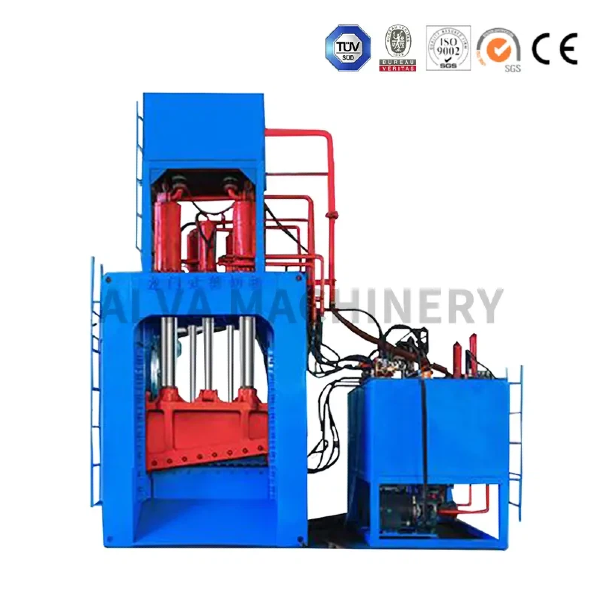
In machining workshops, metal chips often contain cutting oil. Recovering this oil can significantly reduce operating costs.
Briquetting machines extract cutting fluids during compression. The recovered fluids can be filtered and reused in machining processes.
This capability adds economic value beyond simple scrap compression.
For scrap yards focused on collecting and transporting large metal pieces, baling equipment is often more practical.
Balers compress bulky scrap into manageable bundles that can be transported efficiently to recycling facilities or smelting plants.
Some recycling facilities use both briquetting and baling equipment as part of a complete scrap processing line.
For example, machining chips may be briquetted to improve furnace performance, while large scrap pieces are baled for transportation.
Combining both technologies allows facilities to process a wide range of metal waste forms.
Compressed scrap occupies less space than loose materials. Both briquetting and baling reduce storage and transportation costs.
However, briquettes often achieve greater density, which allows more material to be transported in a single shipment.
Briquetting can improve scrap value by producing dense, furnace-ready material. The improved melting efficiency increases the amount of metal recovered during smelting.
This can lead to higher resale value compared to loose metal chips.
Equipment reliability and maintenance requirements also influence operating costs.
Modern briquetting machines are designed with automated control systems that reduce manual handling and improve operational consistency.
Machining facilities generate large volumes of metal chips. Briquetting equipment helps convert these chips into compact briquettes that are easier to store and recycle.
Foundries benefit from briquettes because they provide dense and consistent furnace feedstock.
Using briquettes instead of loose chips improves melting efficiency and reduces metal loss.
Industries producing high volumes of precision components often generate significant amounts of metal swarf. Briquetting equipment allows these materials to be efficiently recycled and reused.
Briquetting equipment can be integrated with conveyors and shredding systems to create efficient recycling lines.
Metal chips collected from machining operations can be automatically transported to briquetting machines for compression.
When scrap is processed efficiently, manufacturers can recycle materials more effectively. Briquetting supports circular manufacturing by transforming waste into reusable resources.
The choice between briquetting and baling should depend on the characteristics of the scrap material and the goals of the recycling process.
Shandong Alva Machinery Co., Ltd. develops equipment solutions designed to support efficient scrap processing across different industrial environments.
Factor | Briquetting | Baling | Better Choice For |
Material Type | Chips, shavings, swarf | Large scrap pieces | Depends on scrap form |
Output Form | Dense briquettes | Large bundles | Briquettes for melting |
Oil Recovery | Possible | Not typical | Briquetting |
Density | High | Moderate | Briquetting |
Transport Efficiency | Very efficient | Efficient | Both depending on material |
Deciding whether briquetting or baling is better depends largely on the type of scrap metal being processed and the goals of the recycling operation. For loose machining chips, turnings, and oil-bearing waste, briquetting often provides greater economic value by producing dense, furnace-ready material while recovering cutting fluids. For bulky scrap pieces such as sheet metal or structural components, baling may provide more practical volume reduction. By understanding the strengths of each technology, recyclers and manufacturers can design more efficient scrap processing systems. Shandong Alva Machinery Co., Ltd. continues to support global industries with advanced equipment solutions that improve recycling efficiency and material recovery through reliable metal scrap briquetting equipment.
For more information about our machinery and recycling solutions, please contact us. Our team is ready to help you explore the most suitable equipment for your scrap processing needs.
Metal briquetting machines are ideal for compressing machining chips, turnings, aluminum shavings, copper scrap, and other fine metal waste generated in manufacturing processes.
Yes. Briquetting increases material density and produces uniform briquettes that melt more efficiently, which can increase the recycling value of metal scrap.
Metal balers are better suited for large scrap items such as sheet metal, pipes, cans, and bulky industrial scrap.
Yes. Some recycling facilities use briquetting machines for fine metal chips while using balers to compress larger scrap pieces, creating a more flexible scrap processing system.