Views: 0 Author: Site Editor Publish Time: 2026-06-27 Origin: Site
Equipment mismatch in industrial size reduction frequently leads to excessive downtime. It accelerates wear-part failure across critical production lines. Bottlenecked throughput then cripples overall operational efficiency and threatens output quotas.
Many facilities blindly default to standard crushing equipment for all their size reduction needs. Yet, processing bulky, unpredictable, or mixed-composition materials requires a highly specific mechanical action. High-speed crushers simply cannot handle these complex, heavy-duty waste streams without suffering catastrophic damage.
This guide establishes clear operational thresholds for heavy-duty shredding machinery. We deeply explore specific material applications, operational limits, and key technical evaluation criteria. You will learn exactly how to successfully deploy the right shredding system in your facility today.
Double shaft shredders utilize low-speed, high-torque shearing to process bulky, high-density materials that would jam or destroy high-speed granulators.
Primary applications include Municipal Solid Waste (MSW), end-of-life tires, e-waste, and light scrap metal where primary volume reduction (not precise final sizing) is the goal.
Facilities requiring strict, uniform particle sizes in a single pass should evaluate single-shaft or quad-shaft alternatives.
Industrial size reduction often relies on high-speed milling machines. These fast-spinning rotors chip away at brittle plastics perfectly. However, they fail catastrophically when they encounter tramp metal. A hidden steel bolt can shatter a rapidly spinning blade instantly. High-speed friction also generates immense heat. This heat creates severe fire risks inside the cutting chamber.
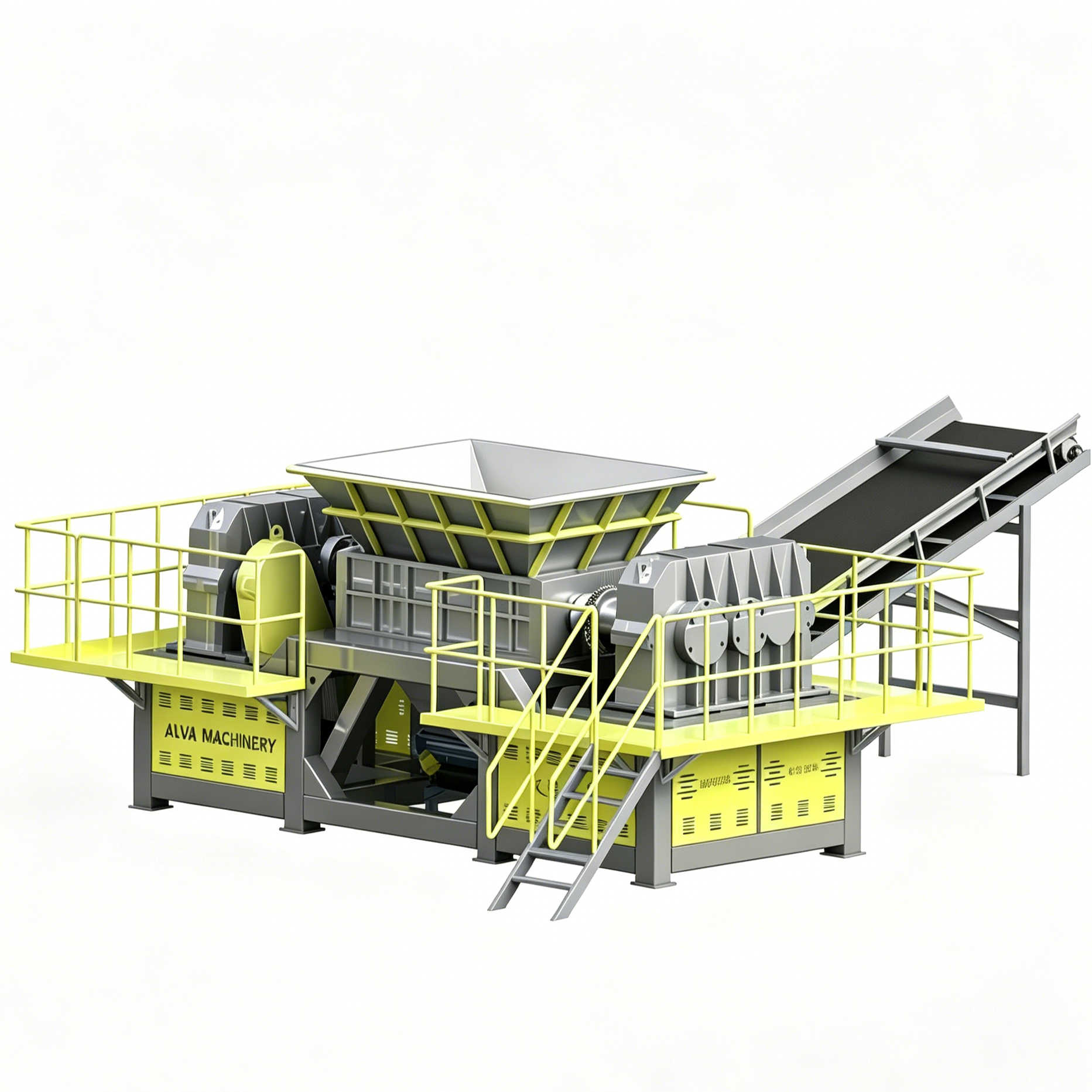
A heavy-duty Recycling Shredder Machine solves these hazards entirely. It operates on a low-speed, high-torque principle. Two counter-rotating shafts pull bulky material inward. The machine focuses purely on shearing and tearing. It does not chip or mill the waste.
If the strong blades grab an uncrushable object, the system reacts immediately. The logic controller senses the sudden overload automatically. The shafts reverse direction instantly to clear the jam. This simple automated action prevents motor burnout. It effectively protects the entire drive train from catastrophic mechanical shock.
You must understand one critical implementation reality. Engineers design these machines strictly for primary size reduction. They provide rough shredding and mass volume reduction. They do not produce fine granulation. The output consists of irregular strips rather than neat, uniform pellets.
Operational Metric | High-Speed Granulator | High-Torque Shredder |
|---|---|---|
Rotor Speed | 300 to 1,000+ RPM | 15 to 40 RPM |
Cutting Mechanism | Chipping and milling | Shearing and tearing |
Jam Tolerance | Very low (causes blade shatter) | Very high (auto-reversing) |
Primary Target | Clean, homogenous plastics | Bulky, mixed, contaminated waste |
Handling unpredictable mixed materials remains a major industrial challenge. Standard garbage bags hide resilient plastics, wet wood, tough textiles, and thick hidden metals. Frequent machine stoppages ruin landfill processing schedules.
A specialized twin-shaft machine handles this massive contamination flawlessly. It rips open tight bags aggressively. It tears through mixed, wet debris effortlessly. The equipment reduces bulk waste volume significantly. This rough shredding prepares the dense waste for downstream magnetic sorting or efficient landfilling.
Common Mistake: Operators often feed MSW too quickly. This creates bridging in the hopper. You should install an automated hydraulic ram. The ram pushes floating waste down into the biting knives constantly.
Electronic waste processing requires highly careful handling. You must liberate precious metals from rigid outer plastic casings. You must accomplish this without generating excessive heat or explosive dust clouds.
A heavy Double Shaft Shredder performs this task perfectly. The low-speed shearing action safely fractures tough printer bodies. It effortlessly breaks open solid hard drives and bulky home appliances. This careful rough shredding pre-conditions the complex material. Downstream magnetic separators and eddy-current machines can then easily recover the valuable inner metals.
Passenger tires and commercial truck tires possess extreme elasticity. They also contain hidden, highly resilient steel wire belts. High-speed crushers bounce off these tires uselessly.
High torque effortlessly shears through this tough rubber armor. Custom blade hooks grab the round tire directly. They pull the thick material straight through the interlocking knives. The machine slices the hidden steel wire cleanly. It creates rough rubber strips highly suitable for secondary crumb rubber processing.
Best Practice: Use specialized wide hooks for passenger tires. The wide hooks prevent the highly elastic rubber from slipping sideways during the initial bite.
Recycling facilities often need to destroy hazardous waste drums permanently. They also process long aluminum profiles and light automotive parts regularly. Volume reduction frees up massive amounts of storage yard space.
Thick, custom-alloy blades bite directly into hollow metal structures. They collapse cylindrical steel objects instantly. Because the massive shafts rotate slowly, dangerous ricochet risks vanish entirely. Operators recover massive amounts of floor space quickly. They successfully prepare the mangled scrap metal for dense baling or direct smelting.
We must avoid "one-size-fits-all" claims in heavy industrial equipment. You need to recognize clear operational mismatches before deploying capital. A twin-shaft machine possesses distinct mechanical boundaries.
Requirement for Uniform Particle Size: Materials can slip through dual blades lengthwise easily. A long, thin plastic strip might emerge entirely intact. If your downstream optical sorter demands a strict two-inch uniform fraction, this machine will fail you. Alternative: You need a single-shaft shredder equipped with a rigid sizing screen.
Need for Fine Granulation: Some production lines aim to create fine powder. Others need uniform tiny flakes from clean plastic scrap. Shearing blades simply cannot produce fine powder. Alternative: Deploy a high-speed granulator for this secondary processing step.
Highly Abrasive Materials: You should never continuously process highly abrasive raw minerals. Pure scrap glass also presents a major mechanical problem. These hard materials act exactly like coarse sandpaper. They cause completely unsustainable wear on the expensive cutting chamber components.
Understanding these hard boundaries prevents disastrous equipment deployments. Always match the mechanical cutting action to your final output requirement.
How do you confidently size the right heavy equipment? You must evaluate your specific operational requirements against exact machine capabilities.
Do not rely solely on basic machine dimensions. You must calculate true capacity accurately. Follow these specific steps to determine your real throughput:
Calculate Material Bulk Density: Weigh one cubic meter of your specific raw waste. Lightweight polyurethane foam requires a massive hopper but yields very low hourly tonnage. Dense metal yields high tonnage quickly.
Determine Bite Frequency: Count the number of cutting hooks on the shafts. More hooks mean more cuts per revolution.
Match Horsepower to Density: Dense, elastic materials demand significantly larger motors. Light, brittle plastics require less torque to fracture.
You must customize the cutting chamber for your target material. Select your blade width carefully. Wide blades produce larger, rougher strips. Narrow blades yield much smaller pieces.
Consider your hook count deeply. Multiple hooks grab bulky, round objects better. Choose robust material alloys for your knives. Standard D2 tool steel works incredibly well for rigid industrial plastics. Custom hardfacing techniques suit abrasive scrap metal much better.
The power delivery method dictates your machine's survival under stress. You must choose between two primary drive systems:
Electric Drives: These offer excellent overall energy efficiency. They utilize planetary gearboxes to multiply torque. They work perfectly for consistent, predictable loads like uniform plastic scrap or standard e-waste.
Hydraulic Drives: These systems deliver superior mechanical shock absorption. They can reverse direction instantly under extreme, unexpected loads. You must choose hydraulics for heavy metal scrap or highly unpredictable municipal waste.
Assess your physical maintenance footprint thoroughly. Review the estimated downtime required to swap dull blade sets completely. Check if the manufacturer uses easily removable split-bearing housings. Verify if they employ custom hex shafts for faster knife sliding. Fast, efficient maintenance design keeps your production line running profitably.
You must prepare your physical facility meticulously for this massive industrial equipment. Ignoring basic operational requirements leads directly to catastrophic operational failures.
Industrial knives remain highly consumable items. They will inevitably wear down over time due to constant friction. You must plan a strict, proactive maintenance schedule for knife sharpening. Base this replacement schedule strictly on your specific material's abrasiveness. Processing dirty agricultural film wears blades much faster than processing clean office paper. Establish a routine inspection cycle to monitor blade edge degradation.
These are incredibly heavy, violently vibrating systems. They require deep, reinforced concrete foundations. Standard warehouse floors will crack under the intense dynamic load.
You must verify adequate overhead clearance immediately. Maintenance teams need ample vertical room to operate heavy bridge cranes safely. Cranes must lift entire shaft assemblies during routine knife replacements. You also need specialized, heavy-duty electrical drops to handle massive motor startup currents safely.
Your heavy equipment installation must meet strict industrial safety codes continuously. Implement robust, active dust suppression systems around the discharge conveyor.
Integrate automated fire suppression nozzles directly into the primary infeed hopper. This step proves absolutely critical for e-waste or municipal solid waste streams containing hidden lithium batteries. Finally, install comprehensive noise mitigation enclosures to protect your facility workers from permanent hearing damage.
A twin-shaft shearing machine forms the absolute optimal baseline investment for heavy industrial recycling. It processes bulky, mixed, or highly resilient waste perfectly. It serves as your most reliable primary volume reduction workhorse. By relying on immense torque rather than fragile speed, it survives the harshest waste environments.
Your next step requires physical validation. Arrange a comprehensive material test run before you finalize any procurement. Send actual, contaminated material samples directly to the equipment manufacturer. Validate their specific capacity claims using your exact daily waste stream. Observing this trial ensures your specific material reacts exactly as expected under the knives.
Focus your initial evaluation on material bulk density, required chamber configurations, and dedicated maintenance access. Proper sizing guarantees maximum uptime and steady production throughput.
A: A twin-shaft machine utilizes two low-speed, counter-rotating shafts. It relies on screenless shearing to tear bulky materials apart. A single-shaft machine utilizes one high-speed rotor spinning against a stationary knife. It pushes material through a sizing screen to guarantee a uniform final particle size.
A: It handles light to medium scrap metal easily. Aluminum profiles, car doors, and steel drums pose no problem. However, heavy plate steel, solid engine blocks, or thick metal ingots require dedicated industrial metal shears or massive hammer mills.
A: Blade lifespan depends entirely on your specific material's abrasiveness and your daily operating hours. Processing clean plastic allows blades to last for years. Processing dirty, sand-covered agricultural film or scrap metal may require blade re-sharpening every few months.
A: Standard twin-shaft models do not use screens. They rely on the width of the blades to determine the rough output size. Because they lack a restrictive screen, they cannot guarantee a precise, uniform final particle size in a single pass.