Views: 0 Author: Site Editor Publish Time: 2026-03-18 Origin: Site
Recycling operations and waste processing facilities handle materials that vary widely in size, strength, and composition. Large plastic drums, discarded tires, wooden pallets, electronic waste, and industrial scrap all require different processing approaches before they can be reused or recycled. A Double Shaft Shredder is one of the most widely used machines for handling such materials because it can tear apart bulky waste with powerful torque and controlled speed. However, many buyers assume that all double shaft shredders perform the same function. In reality, several different types exist, each designed for specific materials, blade configurations, power systems, and installation requirements. Understanding these variations helps recycling operators choose equipment that matches their processing needs and improves the overall efficiency of their recycling line.
The defining characteristic of a double shaft shredder is its pair of intermeshing rotating shafts. Each shaft is equipped with cutting blades arranged in alternating positions. As the shafts rotate toward each other, the blades grab, tear, and shear materials placed inside the shredding chamber.
Unlike high-speed shredders that rely on rapid cutting, double shaft shredders operate at relatively low rotational speeds but generate extremely high torque. This design allows the machine to process thick, bulky, or irregular materials without excessive vibration or mechanical stress.
Low-speed operation also helps reduce dust generation and noise, which is beneficial in industrial recycling environments.
Many recycling facilities encounter materials that cannot be easily processed using standard cutting equipment. Large plastic containers, rubber tires, industrial packaging materials, and mixed municipal waste often have irregular shapes and high strength.
A double shaft shredder can handle these materials effectively because the interlocking blades apply continuous pulling and tearing forces. Instead of simply cutting material into smaller pieces, the machine gradually breaks it down through repeated shearing actions.
This capability makes it particularly suitable for pre-processing bulky waste before further recycling steps.
Double shaft shredders are commonly used as the first stage of a recycling process. They reduce large waste materials into smaller pieces that can be more easily handled by downstream equipment.
After shredding, materials may pass through additional machines such as:
Magnetic separators
Eddy current separators
Granulators
Sorting systems
This initial size reduction improves the efficiency of the entire recycling workflow.
One of the most common applications for double shaft shredders is plastic waste processing. Plastic drums, containers, pipes, and packaging materials are often bulky and difficult to break apart manually.
Shredders designed for plastics typically use blade configurations optimized for cutting flexible yet durable materials. These machines can process items such as:
Plastic barrels
Packaging containers
Plastic pallets
Industrial plastic scrap
By reducing these materials into smaller fragments, recycling facilities can prepare them for washing, separation, and pelletizing processes.
Certain shredders are specifically designed to process tougher waste streams such as rubber tires, wooden pallets, and municipal solid waste.
These materials require stronger blade structures and higher torque levels because they are often dense, irregular, and resistant to cutting.
In municipal waste treatment facilities, double shaft shredders are commonly used to reduce the size of mixed waste streams before further sorting or energy recovery processes.
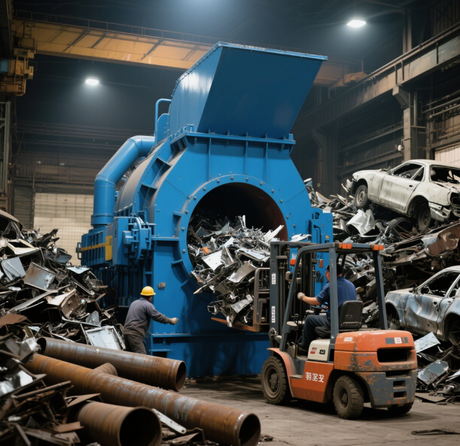
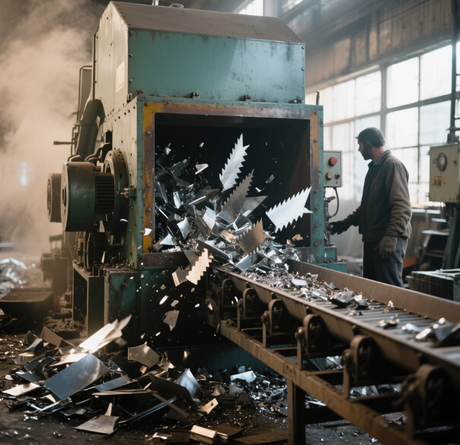
Some double shaft shredders are built with reinforced frames and wear-resistant blades to handle metal-containing waste.
These machines are used in applications such as:
Electronic waste recycling
Scrap metal preprocessing
Appliance recycling
Heavy-duty shredders are designed to withstand high impact loads and abrasive materials while maintaining stable operation.
The design of the shredding blades plays a crucial role in determining how the machine processes materials.
Blade thickness influences cutting strength and durability. Thicker blades are better suited for hard materials such as metal scrap or rubber tires, while thinner blades may be used for lighter materials like plastic packaging.
The tooth profile of each blade also affects the shredding process. Aggressive tooth shapes provide stronger gripping action, allowing the machine to pull materials into the cutting zone more effectively.
Blade spacing determines the size of the shredded output. Narrow spacing produces smaller fragments, while wider spacing results in larger pieces.
Choosing the correct blade spacing depends on the requirements of downstream processing equipment. For example, materials destined for granulators may require smaller particle sizes than those intended for preliminary sorting.
Blade configuration influences not only the size of shredded material but also the machine’s throughput capacity.
Well-designed blade arrangements allow materials to move smoothly through the cutting chamber without jamming. This ensures consistent production rates and reduces downtime caused by blockages.
Most double shaft shredders use electric motors to drive the shafts through gearboxes. Electric motor systems offer stable operation, efficient energy usage, and reliable control.
Motor-driven shredders are commonly used in recycling facilities where consistent throughput and long operating hours are required.
Electric drives also allow precise control of shaft rotation speed, which improves shredding performance for different materials.
Certain heavy-duty shredders use hydraulic drive systems instead of conventional electric motors. Hydraulic drives provide extremely high torque and allow the machine to handle exceptionally tough materials.
These systems are often used in applications involving thick metal components or extremely dense waste streams.
Hydraulic drive shredders also offer adjustable torque control, allowing operators to adapt the machine to different materials.
Shredders processing unpredictable waste streams must include protection systems to prevent mechanical damage.
Modern machines incorporate gearbox protection features and automatic reverse systems. When the machine encounters excessive resistance, the shafts automatically reverse direction to release the obstruction.
This function helps prevent blade damage and maintains stable machine operation.
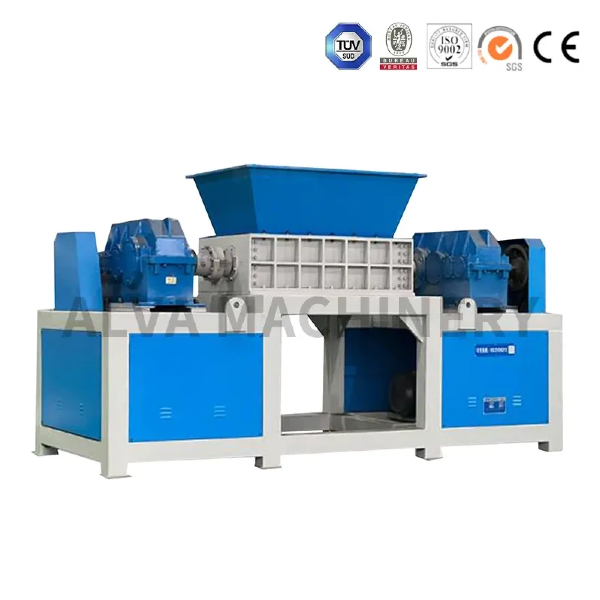
Stationary double shaft shredders are commonly installed in fixed recycling plants. These machines are integrated into processing lines and operate continuously for extended periods.
Stationary installations typically include feeding conveyors, sorting systems, and downstream processing equipment.
This configuration allows facilities to handle large volumes of waste efficiently.
Some facilities require flexible equipment that can be relocated or integrated into different processing lines.
Mobile shredders or modular shredding units allow operators to adapt equipment placement according to changing operational needs.
Such flexibility is useful in construction waste recycling or temporary processing sites.
Industrial facilities often face space limitations. Compact shredder designs help maximize productivity within confined areas.
These machines maintain high shredding capacity while occupying minimal floor space.
Compact installations are particularly useful for urban recycling centers or smaller industrial facilities.
Waste streams containing mixed materials can be challenging to process. Double shaft shredders excel in these environments because their powerful tearing action allows them to process mixed waste without extensive pre-sorting.
This capability improves operational efficiency and reduces labor requirements.
Industrial waste often includes large objects such as containers, pipes, and packaging materials. The strong pulling force generated by dual shafts allows the machine to grip and tear these items effectively.
Refuse-derived fuel production requires waste materials to be shredded before they can be processed into fuel pellets or energy products.
Double shaft shredders provide the necessary size reduction stage before further processing.
Choosing a shredder designed for the specific material being processed ensures smoother operation. Correct blade configuration and drive systems reduce the likelihood of material jams.
Uniform shredded output helps downstream equipment operate more efficiently. When materials enter sorting or separation systems in consistent sizes, overall processing efficiency improves.
Proper machine selection reduces excessive stress on blades and mechanical components. This leads to longer service life and more predictable maintenance schedules.
Shandong Alva Machinery Co., Ltd. develops shredding equipment designed to handle diverse waste streams while maintaining stable and reliable operation in demanding industrial environments.
Type | Typical Materials | Key Design Feature | Best Application |
Plastic Waste Shredder | Containers, pipes, plastic pallets | Moderate blade thickness | Plastic recycling plants |
Tire and Rubber Shredder | Tires, rubber waste | Reinforced blades | Tire recycling facilities |
Municipal Waste Shredder | Mixed household waste | High torque design | Waste treatment plants |
Metal Preprocessing Shredder | E-waste, appliance scrap | Heavy-duty construction | Metal recycling operations |
Industrial Waste Shredder | Packaging, pallets, mixed scrap | Balanced blade spacing | Industrial waste management |
Understanding the different types of shredding equipment helps recycling operators select machinery that matches their waste streams and processing goals. A double shaft shredder is not a single universal machine but a versatile category of equipment designed for different materials, blade configurations, power systems, and installation environments. Selecting the right shredder type improves operational efficiency, reduces downtime, and enhances the performance of the entire recycling line. Shandong Alva Machinery Co., Ltd. continues to develop advanced equipment solutions to support global recycling industries with reliable twin shaft shredding machines that handle complex waste streams and improve material recovery efficiency.
For more information about our shredding equipment and recycling solutions, please contact us. Our team will be happy to help you explore the most suitable machinery for your waste processing requirements.
A double shaft shredder can process a wide variety of materials including plastics, rubber tires, wood, electronic waste, packaging materials, and certain types of metal scrap.
Their low-speed high-torque design allows the machine to tear apart large and irregular materials that cannot be easily processed by standard cutting equipment.
Blade thickness, tooth shape, and spacing determine the size of shredded materials and influence the machine’s throughput and efficiency.
They are widely used in recycling centers, waste treatment plants, electronic recycling facilities, and industrial waste processing operations.