Views: 0 Author: Site Editor Publish Time: 2026-09-25 Origin: Site
Industrial material recovery and volume reduction demand uncompromising mechanical force. Procuring the wrong equipment creates severe operational bottlenecks, excessive maintenance demands, and catastrophic downtime. Facility managers and procurement engineers navigate a saturated market of industrial equipment. Selecting the right machine requires translating complex technical specifications—like torque ratios, blade metallurgy, drive configurations, and feeding mechanisms—into predictable operational outcomes for specific waste streams. This guide breaks down the engineering features and operational safeguards you must evaluate before finalizing your purchase. We focus on matching machine capabilities directly to your material stream to ensure maximum throughput and reliability.
Material-to-Machine Matching: The viability of a shredder hinges on aligning blade geometry and metallurgy with the specific density, size, and shear strength of the target material.
Powertrain and Overload Protection: High-torque, low-speed drive systems paired with automated PLC-controlled reversing mechanisms are non-negotiable for preventing motor burnout during material jams.
Maintenance Accessibility Defines ROI: Equipment designed with modular shafts and accessible cutting chambers drastically reduces the labor hours and downtime required for routine blade replacements.
Configuration Context: A double shaft shredder excels at primary, coarse size reduction. Understanding its energy and maintenance advantages over four-shaft models is critical for establishing realistic throughput expectations and controlling OpEx.
Establishing baseline requirements for primary size reduction dictates your entire equipment selection process. Define success by required throughput in tons per hour, target output size, and the physical characteristics of the infeed material. Without these hard metrics, selecting a machine relies on guesswork, which inevitably leads to underperformance or mechanical failure on the facility floor.
Different shredder configurations serve entirely different operational purposes. A single-shaft shredder operates at high speeds, utilizing a hydraulic pusher ram to force material against a spinning rotor fitted with cutting blocks. This design produces a highly uniform output size because the material must pass through a sizing screen before exiting the cutting chamber. However, single-shaft machines struggle heavily with bulky, hollow, or highly dense materials that require massive initial shear force to break down.
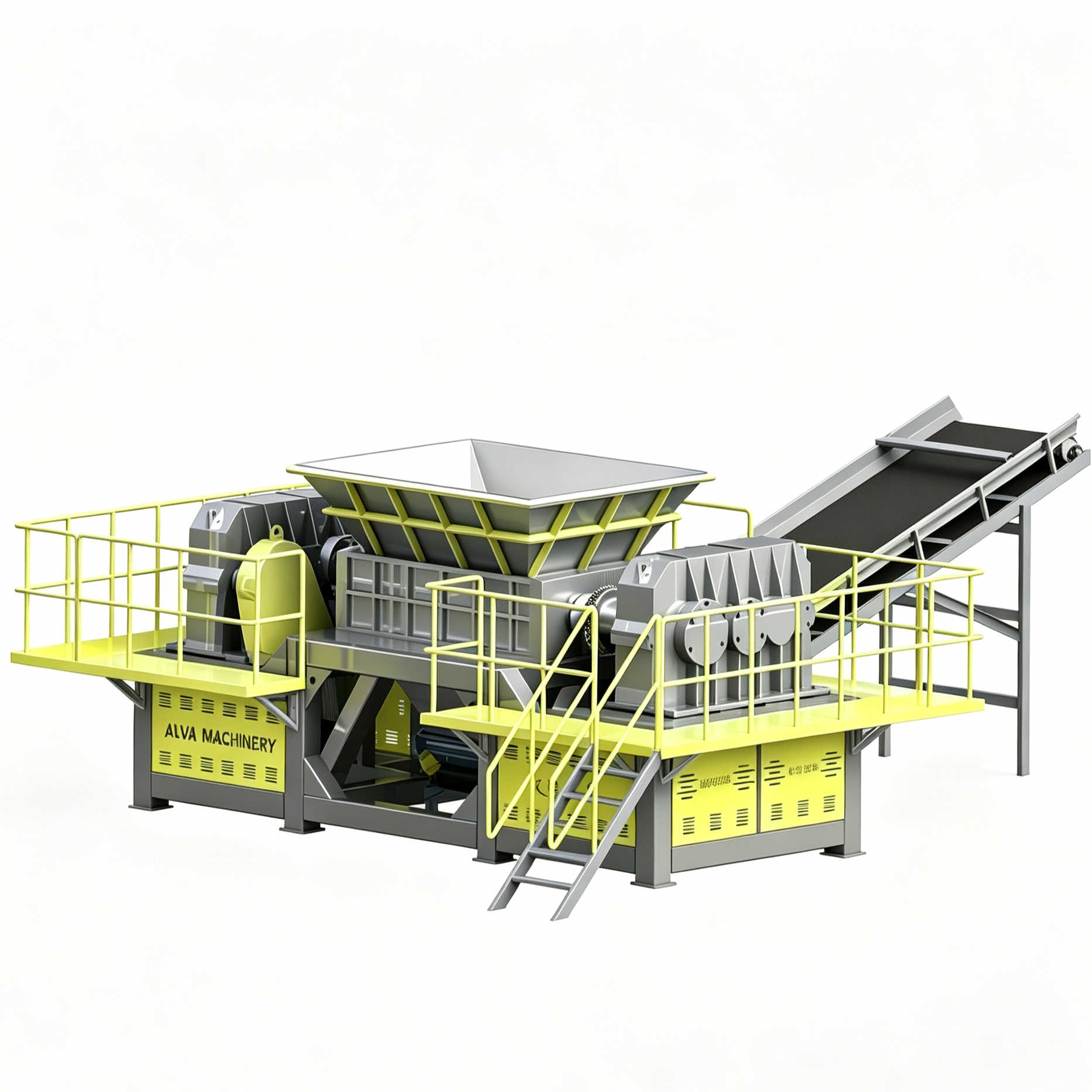
A Double Shaft Shredder operates on a completely different mechanical principle. It utilizes low-speed, high-torque counter-rotating shafts fitted with interlocking cutting discs that grab and pull material downward. This configuration excels at coarse size reduction. It does not use a sizing screen, meaning the output size is determined solely by the width of the cutting blades and the geometry of the hooks. This design provides massive shearing force without generating excessive heat, which is vital when processing temperature-sensitive materials like plastics or rubber.
Stepping up to a four-shaft system makes sense only when you need both high torque and uniform, screened sizing in a single pass. Four-shaft machines use two primary cutting shafts and two secondary sizing shafts positioned above a screen. While effective for specific applications like e-waste destruction, they carry significant drawbacks. Double-shaft shredders hold distinct advantages over four-shaft models. They consume significantly less energy and require much less maintenance because there are fewer moving parts, fewer bearings to grease, and no screens to clear or replace. When coarse reduction is sufficient for your downstream process, a two-shaft system remains the optimal choice.
These machines handle specific primary applications exceptionally well. Ideal use cases include Municipal Solid Waste (MSW), bulky plastics, passenger and commercial tires, e-waste, and light scrap metal. For plastic recycling, these machines easily break down large purgings, IBC totes, and thick-walled HDPE pipes. You must recognize material limitations. Heavy solid steel blocks, engine blocks, and highly abrasive aggregates pose severe risks. Processing these materials causes rapid blade degradation, shaft deflection, or catastrophic gearbox failure.
Industrial Shredder Configuration Comparison | |||
Operational Feature | Single-Shaft System | Double-Shaft System | Four-Shaft System |
|---|---|---|---|
Rotational Speed & Torque | High Speed / Low Torque | Low Speed / High Torque | Low Speed / High Torque |
Primary Feeding Mechanism | Hydraulic Pusher Ram | Self-Feeding (Gravity & Rotors) | Self-Feeding (Gravity & Rotors) |
Output Particle Uniformity | High (Screened Output) | Coarse (Unscreened Output) | High (Screened Output) |
Relative Energy Consumption | Moderate | Low to Moderate | High |
Maintenance Complexity | Moderate | Low | High |
Ideal Material Types | Wood, Uniform Plastics, Paper | Tires, MSW, Bulky Plastics, E-Waste | E-Waste, Medical Waste, Hard Drives |
The powertrain dictates the sheer mechanical force your machine applies to resistant materials. Evaluate motor capacity and torque-to-speed ratios carefully. Low-speed, high-torque processing provides a massive mechanical advantage, allowing the machine to shear dense materials without generating excessive friction. Heat generation is detrimental when processing plastics or rubber, as it causes melting, material wrapping around the shafts, and eventual bearing seal failure.
Evaluate kilowatt (kW) or horsepower (HP) ratings against the expected bulk density of your material stream. A higher horsepower rating does not automatically equal better performance if the gear reduction ratio is incorrect. The gearbox converts motor speed into rotational torque. Dense materials require aggressive gear reduction to maximize torque at the cutting shafts. Look for heavy-duty planetary or helical gearboxes designed specifically for shock-load applications.
Choosing between hydraulic and electric drive systems fundamentally changes operational parameters and facility infrastructure requirements. Electric drives offer distinct advantages for many stationary facilities. They provide higher energy efficiency during continuous operation and require lower initial capital expenditure. Electric drives suit consistent, predictable material streams where shock loads are minimal. Modern electric systems often utilize Variable Frequency Drives (VFDs) to provide better speed control and reduce inrush current during startup.
Hydraulic drives operate differently, utilizing a standalone hydraulic power unit (HPU) to drive hydraulic motors mounted directly on the cutting shafts. This setup provides immense benefits for highly variable or shock-prone materials. Hydraulic systems offer instantaneous reversing capabilities without stressing electrical contactors. They provide superior shock load absorption, protecting the mechanical components from sudden jams. They also deliver maximum peak torque at zero RPM, allowing the machine to chew through tough materials from a dead stop. Balance these advantages against higher operational expenses and increased maintenance complexity. Hydraulic fluid requires regular monitoring, filtration, and active temperature management via oil coolers.
Calculate the total required throughput in tons per hour to establish baseline horsepower requirements.
Analyze the material stream for potential shock loads (e.g., hidden metal in MSW) to determine if a hydraulic drive is necessary.
Verify the facility's electrical infrastructure can handle the startup amperage draw of large electric motors.
Evaluate the physical space available for standalone hydraulic power units and cooling systems if selecting a hydraulic drive.
The cutting chamber represents the heart of any Commercial Shredder Machine. Blade geometry and hook configurations dictate how effectively the machine processes your specific waste stream. Evaluate the number of hooks, the hook shape, and the overall blade thickness. The inward counter-rotation of parallel shafts fitted with interlocking, hook-shaped cutting discs dictates the aggressiveness of the material grab and determines the final shredded particle size.
Fewer hooks on a blade result in a more aggressive bite. A single or double-hook design works well for bulky, hollow items like 55-gallon drums that resist feeding. More hooks per blade create smaller, more frequent bites, which suits dense, solid materials like thick plastic purgings or rubber blocks. Blade thickness directly correlates to the width of the shredded output strips. Thinner blades produce smaller particles but are more susceptible to lateral deflection and breakage under heavy loads.
Material hardness and heat treatment standards are critical evaluation points. Demand high-strength, heat-treated alloy steels for the cutting discs. Common industrial standards include D2 tool steel, H13 tool steel, or specialized proprietary alloys. D2 steel offers exceptional wear resistance due to its high carbon and chromium content, making it suitable for abrasive materials like tires containing dirt and steel belts. H13 steel provides superior toughness and shock resistance, preventing blade shattering when encountering unexpected metal inclusions.
Operators face a constant trade-off between blade hardness and toughness. Harder blades (e.g., 58-60 HRC) resist wear but become brittle. Tougher blades (e.g., 50-54 HRC) absorb impacts but lose their edge faster. Match the metallurgy to your primary material stream. If your material contains frequent, unpredictable metal contaminants, prioritize toughness over absolute hardness to prevent catastrophic blade failure.
Shaft interlocking mechanics and precision machining separate premium machines from inferior models. Tight tolerances between the counter-rotating cutting discs are mandatory. Precision spacing ensures clean shearing action. If the gap between blades is too wide, the machine will tear or fold the material rather than cutting it. This tearing action degrades throughput, increases energy consumption, and causes material to wrap around the shafts, requiring manual intervention to clear.
Common Shredder Blade Metallurgy Comparison | |||
Steel Alloy Type | Primary Characteristic | Ideal Application | Vulnerability |
|---|---|---|---|
D2 Tool Steel | High Wear Resistance | Clean Plastics, Tires, Paper | Brittle under heavy shock loads |
H13 Tool Steel | High Shock Resistance | Mixed MSW, Light Scrap Metal | Faster edge wear on abrasive materials |
Hardox 500/600 | Excellent Toughness | Bulky Construction Waste | Lower edge retention than tool steels |
Custom Case-Hardened | Hard Exterior, Tough Core | Highly Variable Waste Streams | Higher replacement cost |
Material introduction dictates overall throughput efficiency. Self-feeding mechanics rely on the geometry of the cutting chamber and the inward rotation of the shafts. As the shafts turn toward each other, the hooks naturally grab and pull materials downward. For many dense or heavy materials, gravity and rotor action provide sufficient feeding force without external assistance. The angle of the hopper walls also plays a role; steep walls prevent material bridging and ensure a continuous flow into the cutting zone.
Certain waste streams resist this natural feeding process. Understand when to specify an optional hydraulic ram or press assist. Bulky, hollow, or low-density materials often bridge across the hopper. Items like IBC totes, large plastic barrels, or loose municipal solid waste bounce on top of the rotors, resisting the initial bite of the hooks.
A hydraulic press assist mounts above or adjacent to the cutting chamber. It physically forces stubborn materials down into the cutting shafts. This continuous pressure ensures the blades can grab the material, maintaining consistent throughput. Without a press assist, processing hollow items results in extended idle times and severely reduced operational efficiency. Evaluate your material's bulk density to determine if this optional mechanism is necessary. If your material weighs less than 10 pounds per cubic foot, a ram assist is almost always required.
Industrial shredding environments are unpredictable. Un-shreddable items will inevitably enter the cutting chamber. Auto-reversing mechanisms and jam prevention systems protect your investment from catastrophic mechanical failure. Understand the mechanics of overload detection to ensure the machine can protect itself during unmanned operation.
When torque limits are exceeded during a material jam, the system must react instantly. The control system detects a spike in motor amperage (in electric drives) or hydraulic pressure (in hydraulic drives). The system automatically pauses shaft rotation, reverses the shafts to clear the jam, reorients the material, and resumes forward operation. This entire sequence occurs automatically without operator intervention. If the machine jams repeatedly on the same object—typically three times in succession—it shuts down and triggers a visual or audible alarm.
Programmable Logic Controllers (PLCs) and sensor integration form the brain of these safeguards. Evaluate the sophistication of the PLC control system. The PLC monitors critical parameters continuously, tracking motor amperage, hydraulic fluid pressure, and main bearing temperatures. If bearing temperatures exceed safe operational limits, the PLC pauses the machine to prevent seal degradation and bearing failure.
Data logging capabilities within the PLC aid in predictive maintenance. By tracking historical amperage spikes and operational hours, maintenance teams predict when blades require sharpening or replacement. This precision control improves operator accountability and ensures the machine operates strictly within its designed mechanical limits.
Blades, spacers, and cleaning fingers are wear parts. They degrade over time and require replacement. Evaluate machines based on how easily technicians access the cutting chamber. Complex, enclosed designs turn routine maintenance into multi-day operational shutdowns, severely impacting facility output.
Modular design for blade and shaft replacement heavily influences lifecycle expenses. Look for split-bearing housings. A split housing allows technicians to unbolt the top half of the bearing assembly and lift the entire rotor straight up and out of the machine using an overhead crane. Without split housings, technicians must pull the shafts horizontally out the side of the machine, requiring massive floor space and specialized extraction tooling.
Evaluate modular blade designs carefully. Individual bolt-on blades allow you to replace only the damaged sections of the rotor. Solid stacked rotors require you to remove the entire shaft, press off the undamaged blades, replace the broken disc, and reassemble the entire stack. Modular designs drastically reduce maintenance downtime and lower replacement part costs.
Energy consumption directly impacts your operating expenses. Factor in the energy draw per ton of processed material. Track lubrication requirements for gearboxes and bearings. Calculate the annualized cost of replacement knives based on your material's abrasiveness. A machine with a lower initial purchase price often incurs significantly higher operating expenses if it requires frequent blade replacements, consumes excessive electricity, or demands excessive labor hours for routine servicing.
Daily: Inspect the cutting chamber for un-shreddable debris and verify auto-lube system levels.
Weekly: Grease all main bearings, check gearbox oil levels, and inspect cleaning fingers for excessive wear.
Monthly: Torque check all mounting bolts, inspect hydraulic hoses for abrasions, and review PLC fault logs.
Quarterly: Measure blade gap tolerances and schedule rotor removal for blade sharpening if throughput drops.
Installing heavy industrial equipment requires rigorous facility planning. Address the physical realities of installation early in the procurement process. Evaluate the static and dynamic load requirements for your concrete foundations. High-torque machines generate significant vibration and torsional stress. The foundation must absorb these dynamic loads to prevent structural fatigue. Often, facilities require isolated concrete pads poured specifically for the shredder, utilizing 4000 PSI concrete reinforced with heavy rebar mats.
Vertical clearance for hoppers dictates how you load the machine. Ensure your facility has adequate ceiling height for feed conveyors, grapple excavators, or forklift tipping bins. Integration with infeed and outfeed conveyor systems must be seamless. The outfeed conveyor must have sufficient width and speed to evacuate shredded material quickly. If material backs up under the cutting chamber, it causes severe rotor wear, secondary shredding, and potential jamming.
Emission control, dust, and noise mitigation require careful evaluation to maintain regulatory compliance and ensure workplace safety. Processing friable materials generates significant airborne particulate matter. Evaluate the need for integrated dust suppression systems. Misting systems suppress dust at the hopper opening using high-pressure water nozzles. Extraction hoods pull airborne particulates into external baghouse filtration units.
Acoustic enclosures become necessary when operating in urban industrial zones or enclosed facilities. Shredding metal or dense plastics generates high decibel levels, often exceeding 90 dB(A). Acoustic paneling around the hopper and cutting chamber protects workers from hearing damage and keeps your facility compliant with local occupational noise ordinances.
Take these actionable next steps before finalizing your procurement decision:
Request documented material testing from the manufacturer using a representative sample of your specific waste stream.
Demand a pilot trial to verify throughput claims, output sizing, and the effectiveness of the feeding mechanism.
Review the detailed maintenance manual to confirm the exact labor hours and tooling required for a full blade change.
Verify the physical dimensions of the equipment against your facility layout, ensuring adequate clearance for outfeed conveyors and overhead cranes.
Confirm the availability and lead times for critical wear parts like blades, spacers, and bearings from the manufacturer's local inventory.
A: Blade lifespan depends entirely on material abrasiveness, operating hours, and the specific steel alloy used. Processing clean plastics with D2 steel blades yields thousands of hours of operation. Shredding tires with steel belts or materials containing abrasive dirt reduces blade life significantly, requiring sharpening or replacement every few months.
A: A double shaft machine uses low speed and high torque with inward counter-rotating shafts to self-feed and shear material, producing a coarse output. A single shaft machine uses high speed, lower torque, a hydraulic pusher ram, and a sizing screen to produce a highly uniform, smaller output particle.
A: Standard models cannot process heavy solid metals like engine blocks, thick steel plates, or solid steel shafts. They are also unsuitable for highly explosive materials or extremely abrasive aggregates like rocks and concrete, which cause catastrophic blade failure and shaft distortion.
A: A hydraulic press is needed when processing bulky, low-density, or hollow items like plastic barrels, IBC totes, or loose municipal waste. These items tend to bounce on top of the rotating shafts. The press forces them down into the cutting hooks to ensure continuous feeding.
A: When a tough object jams the rotors, the PLC detects a sudden spike in motor amperage or hydraulic pressure. The system automatically stops the shafts, reverses their rotation to clear the obstruction, and then resumes forward rotation. This prevents motor burnout and mechanical damage.
A: Maintenance includes daily visual inspections of the cutting chamber and hopper. Weekly tasks involve lubricating bearings and checking gearbox oil levels. Quarterly or annual maintenance requires inspecting blade wear, adjusting cutting clearances, and replacing worn knives, spacers, or cleaning fingers based on operational hours.
A: Calculate throughput by combining your peak volume requirements and the material's bulk density over your planned operational hours. Always factor in a 20% buffer for surge loads and unexpected downtime to ensure the machine handles peak facility demands without becoming a bottleneck.

 English