Views: 0 Author: Site Editor Publish Time: 2026-03-25 Origin: Site
Recycling facilities often rely on magnetic separation to recover valuable metals from waste streams. Standard magnetic systems work well for iron and steel, but many valuable metals such as aluminum and copper remain mixed with plastics, glass, rubber, and other non-metallic materials. This is where an Eddy Current Separator becomes essential. The machine is specifically designed to identify and eject non-ferrous metals from mixed waste streams using electromagnetic forces rather than simple magnetism. Understanding how this technology works helps recycling operators improve material recovery, increase the value of processed waste, and build more efficient resource recovery systems.
In recycling operations, metals are typically divided into two categories: ferrous and non-ferrous. Ferrous metals such as iron and steel are easily separated using magnetic equipment. Non-ferrous metals, however, require a different approach.
An eddy current separator is designed to isolate metals such as aluminum, copper, and zinc from mixed waste streams. These materials are commonly found in electronic scrap, beverage containers, automotive components, and construction debris.
By separating these metals from other materials, recycling facilities can significantly increase the value of recovered materials.
Non-ferrous metals are often more valuable than ferrous metals because they are widely used in manufacturing and retain their properties after recycling.
For example:
Aluminum can be repeatedly recycled without losing strength.
Copper is essential in electrical systems and electronics.
Zinc alloys are commonly used in automotive and industrial components.
Recovering these metals efficiently improves the economic performance of recycling plants.
Eddy current separators are widely used in modern material recovery facilities. They are commonly installed in recycling lines handling:
Electronic waste
Municipal solid waste
Automotive shredder residue
Construction and demolition waste
The machine typically operates after primary size reduction equipment such as shredders or crushers.
The working principle of an eddy current separator is based on electromagnetic induction. When conductive metals move through a rapidly changing magnetic field, electrical currents are generated inside the metal.
These circulating electrical currents are called eddy currents.
The currents create their own magnetic field, which interacts with the magnetic field generated by the machine.
Only conductive materials can generate eddy currents when exposed to a changing magnetic field. Metals such as aluminum and copper respond strongly to this effect.
Non-metallic materials such as plastic, rubber, glass, and wood do not conduct electricity, so they do not generate eddy currents.
Because of this difference, the machine can separate conductive metals from other materials.
When eddy currents form inside a conductive metal object, they produce a magnetic field that opposes the original magnetic field created by the separator.
This interaction produces a repelling force that pushes the metal object away from the magnetic rotor.
The result is that non-ferrous metal pieces are thrown forward while non-metal materials follow a different trajectory.
In a typical recycling line, mixed waste materials are fed onto a conveyor belt. The conveyor carries the material toward the separation zone of the eddy current separator.
For effective separation, materials should be spread evenly across the belt. Thin layers allow the magnetic system to interact with each piece of material individually.
Proper feeding improves both recovery rate and separation accuracy.
The core component of the separator is a magnetic rotor located inside a non-magnetic drum. This rotor spins at extremely high speeds, creating a rapidly alternating magnetic field above the conveyor belt.
As materials pass over the rotor, conductive metals experience the electromagnetic effect described earlier.
Once the magnetic field induces eddy currents in metal particles, the repelling force propels them away from the belt.
Non-metallic materials continue to move along the natural trajectory of the conveyor.
A splitter plate placed at the discharge point separates the two streams, allowing metals and non-metals to be collected separately.
The magnetic rotor is the most important component of the separator. Modern machines use high-strength neodymium magnets to generate powerful magnetic fields.
A high-speed rotor combined with strong magnets improves the intensity of the eddy current effect, which enhances metal ejection performance.
Several operational parameters influence separation efficiency.
The conveyor belt speed determines how long materials remain within the magnetic field. Rotor speed influences the strength of the magnetic field fluctuations.
The splitter position determines how accurately the machine separates metal from non-metal materials.
Operators adjust these parameters to match different material streams.
Industrial recycling equipment must operate continuously under demanding conditions. The structural frame of the separator must be strong enough to maintain precise alignment of mechanical components.
Wear-resistant materials help extend the lifespan of the machine when processing abrasive waste streams.
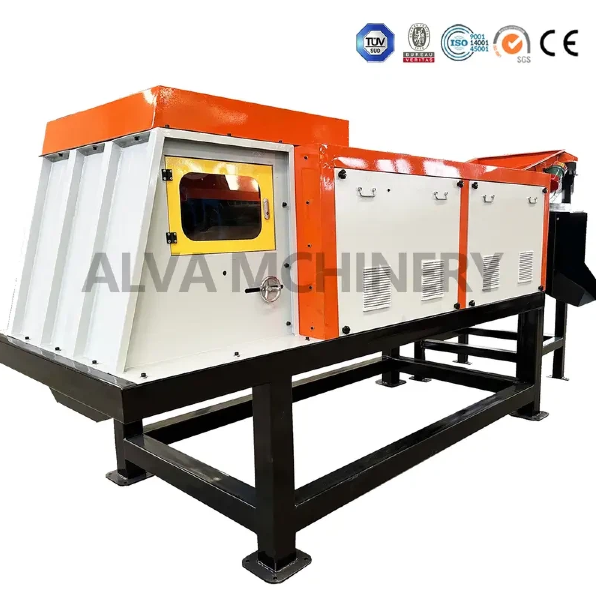
One of the most common applications for eddy current separators is aluminum recovery from beverage can recycling.
The machine efficiently ejects aluminum cans from mixed waste streams, allowing recycling facilities to recover large volumes of valuable metal.
Eddy current separators also recover copper wires, zinc components, and die-cast metal fragments from electronic scrap and industrial waste.
These metals are highly valuable and widely used in manufacturing industries.
Although the technology is highly effective, it does have limitations.
Very small particles may not generate sufficient eddy currents to produce a strong repelling force. Similarly, composite materials containing both metal and plastic may behave unpredictably.
Proper preprocessing helps improve separation efficiency.
In most recycling systems, ferrous metals are removed using magnetic separators before materials reach the eddy current separator.
This step prevents ferrous metals from interfering with the separation of non-ferrous materials.
Shredding equipment reduces the size of waste materials before separation. Screening systems may also be used to create consistent particle sizes.
After these preprocessing stages, materials move to the eddy current separator for non-ferrous metal recovery.
This technology is widely used across many recycling sectors, including:
Electronic waste recycling
Automotive shredder residue processing
Municipal solid waste recovery
Construction and demolition waste recycling
These applications benefit from efficient recovery of valuable non-ferrous metals.
Maintaining a consistent material layer on the conveyor belt improves separation performance.
When materials are evenly distributed, the magnetic rotor can interact with each particle effectively.
Different materials require different machine settings. Adjusting rotor speed, belt speed, and splitter position helps optimize separation for specific waste streams.
Routine maintenance ensures that the magnetic rotor, conveyor system, and mechanical components remain in good working condition.
Regular inspection prevents performance degradation and extends equipment lifespan.
Shandong Alva Machinery Co., Ltd. designs advanced separation equipment that supports reliable metal recovery in demanding industrial recycling environments.
Machine Part | Function | Effect on Separation | Adjustment Point |
Conveyor Belt | Transports material | Controls feed rate | Belt speed |
Magnetic Rotor | Generates magnetic field | Creates eddy current effect | Rotor speed |
Splitter Plate | Divides output streams | Improves separation accuracy | Position adjustment |
Machine Frame | Supports mechanical stability | Maintains alignment | Structural integrity |
Control System | Manages machine operation | Optimizes separation efficiency | Parameter control |
Understanding how separation technology works helps recycling operators improve the efficiency of their material recovery processes. Rather than functioning as a mysterious device, an eddy current separator uses electromagnetic principles to identify and eject conductive metals from mixed waste streams. When properly integrated into a recycling line, this technology transforms complex waste into valuable recovered materials while reducing landfill waste and improving economic returns. Shandong Alva Machinery Co., Ltd. continues to develop advanced equipment designed to support modern recycling systems through reliable non-ferrous metal separation equipment.
For more information about our recycling equipment and sorting technologies, please contact us. Our team will gladly assist you in building efficient material recovery solutions for your facility.
An eddy current separator can recover non-ferrous metals such as aluminum, copper, zinc, and certain die-cast alloys from mixed waste streams.
Magnets only attract ferrous metals such as iron and steel. Aluminum and copper are non-ferrous, so they require electromagnetic separation technology.
The machine is commonly used in electronic waste recycling, municipal solid waste processing, automotive shredder residue recovery, and construction waste recycling lines.
Efficiency can be improved by maintaining even material feeding, adjusting belt and rotor speeds correctly, and performing regular maintenance on the equipment.