Views: 0 Author: Site Editor Publish Time: 2026-03-11 Origin: Site
Industrial recycling equipment often looks similar from the outside, yet the reliability of a Metal Briquetting Machine depends heavily on how it is designed and manufactured. Two machines may appear identical in pictures, but differences in engineering, structural fabrication, hydraulic assembly, and quality control determine whether the equipment will operate smoothly for years or experience frequent downtime. The production of a briquetting machine involves far more than simply assembling parts together. Every stage, from design to final testing, must be carefully controlled to ensure the machine can handle high pressure, continuous operation, and demanding industrial environments. Understanding how a metal briquetting machine is manufactured helps buyers appreciate the engineering behind the equipment and the factors that influence its durability and performance.
A metal briquetting machine operates under extremely high pressure when compressing metal chips and shavings. Each compression cycle applies strong forces to the machine frame, chamber walls, and hydraulic system. If structural components are poorly fabricated or misaligned, the machine may experience premature wear, vibration, or hydraulic leakage.
High-quality manufacturing ensures that the frame structure remains stable under repeated loads. When welding, machining, and assembly are performed with precision, the machine can withstand years of operation without deformation or structural damage.
Long machine lifespan is especially important in metal recycling operations where equipment often runs continuously. A well-manufactured briquetting machine reduces maintenance costs and improves operational stability.
Briquetting machines rely on precise alignment between the hydraulic cylinder, compression chamber, and pressing mold. Even small dimensional inaccuracies can affect the compression process.
When structural alignment is maintained, the pressing force is evenly distributed across the metal chips. This results in briquettes with consistent density and shape. Accurate construction also reduces friction between components, which helps extend the service life of wear parts.
Many buyers compare equipment mainly by pressing force or motor power. However, these parameters alone do not guarantee reliable performance.
Important manufacturing factors include:
Structural welding quality
Precision machining of key components
Reliability of hydraulic components
Integration of automation systems
Machines produced with strong manufacturing standards tend to deliver more consistent results in long-term industrial use.
The manufacturing process begins with engineering design. Engineers must determine how the machine will perform under different operating conditions and what types of metal chips it will process.
Different metals behave differently during compression. Aluminum chips compress easily and require moderate pressure, while steel or cast iron may require stronger pressing force.
Designing the machine based on specific materials ensures optimal compression efficiency and prevents unnecessary stress on the system.
Engineers must carefully design the structural frame to support the hydraulic forces generated during compression. The frame must resist deformation while maintaining alignment between the pressing cylinder and compression chamber.
The chamber layout determines how chips flow and compress during each cycle. Proper design allows the material to distribute evenly before compression begins.
Hydraulic system design is also integrated at this stage to ensure the pump capacity, cylinder size, and pressure range are properly matched.
Modern industrial equipment increasingly requires automation for efficiency and safety. Engineers incorporate PLC control systems, sensors, and safety interlocks during the design stage.
Automation allows operators to control the entire briquetting cycle with minimal manual intervention. It also improves consistency in production and helps detect abnormal conditions early.
The structural frame of a briquetting machine must withstand repeated high-pressure cycles. For this reason, manufacturers use heavy-duty steel plates and reinforced structural materials to construct the main frame.
The thickness and strength of the steel influence the machine’s rigidity. A strong frame prevents deformation during long-term operation and maintains precise alignment between mechanical components.
Hydraulic systems are essential to the compression process. High-quality pumps, cylinders, valves, and seals ensure stable pressure delivery throughout the machine’s operating cycle.
Reliable sealing materials prevent hydraulic oil leakage, which is important for maintaining system efficiency and preventing contamination.
Hydraulic component quality directly affects machine stability and operating costs.
Electrical systems are responsible for monitoring and controlling the entire machine operation. High-quality sensors detect system pressure, cylinder position, and operational status.
Control hardware such as PLC units, wiring systems, and control panels must be durable and reliable in industrial environments.
Proper electrical component selection ensures smooth automation and stable machine control.
Once the design is finalized and materials are prepared, the fabrication stage begins. Structural steel components are cut, machined, and welded to create the machine frame and chamber housing.
Precision cutting equipment ensures accurate dimensions for each component. Welding procedures must be carefully controlled to maintain structural strength.
After welding, critical surfaces may undergo machining to ensure precise alignment for mounting hydraulic cylinders and compression chambers.
The pressing chamber and cylinder mounting points must be manufactured with high accuracy. Misalignment between these components can cause uneven pressure distribution during operation.
Precision machining ensures that the hydraulic cylinder moves smoothly along its axis while delivering uniform compression force.
During operation, the machine frame and chamber must handle strong mechanical forces. Accurate dimensions ensure that pressure is evenly distributed across structural components.
Proper alignment also reduces mechanical stress on bearings, seals, and wear parts, improving machine longevity.
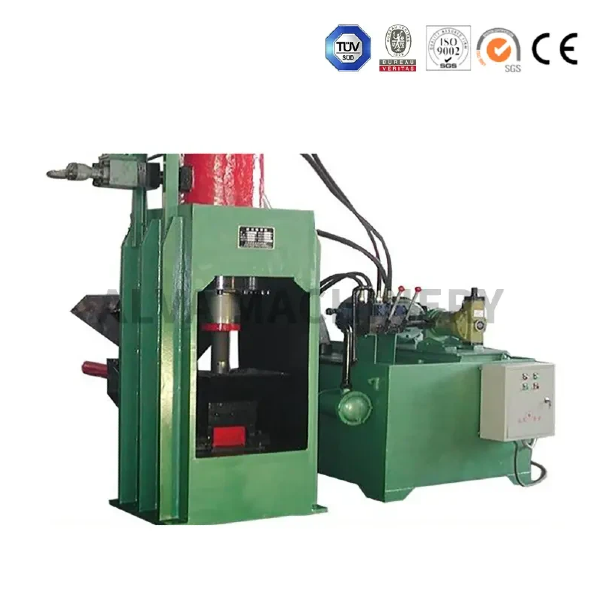
After the structural body is completed, the hydraulic system is installed. This includes hydraulic pumps, control valves, oil reservoirs, pipelines, and cylinders.
Each component must be properly connected to ensure stable pressure transmission. Hydraulic pipelines must be installed carefully to prevent leakage and ensure smooth oil flow.
The electrical assembly stage includes installation of the PLC control cabinet, sensors, and wiring systems.
Control logic programming allows operators to define the compression cycle, pressure levels, and machine timing. Automation improves consistency while reducing manual intervention.
Safety systems are integrated into the electrical control architecture. These systems protect operators and equipment during operation.
Common safety mechanisms include emergency stop switches, overload protection, and door interlock systems. These features help ensure safe operation in industrial environments.
Before final assembly is completed, the machine frame undergoes surface treatment. Cleaning removes welding residue and contaminants from structural components.
Protective paint coatings help prevent corrosion and improve the durability of the equipment when used in demanding industrial environments.
External protective guards and access panels are installed to protect moving components and provide easy maintenance access.
The discharge system is also mounted during this stage to allow finished briquettes to exit the compression chamber smoothly.
The final assembly stage includes precise alignment of mechanical and hydraulic components. Engineers ensure that all moving parts operate smoothly and that the compression cycle functions correctly.
Proper alignment ensures that the machine operates efficiently and produces consistent briquette output.
Before processing real material, the machine undergoes dry-run testing. During this stage, engineers verify that hydraulic cylinders, feeding systems, and control sequences operate correctly.
Dry-run testing helps identify any mechanical or control issues before the machine is put into full operation.
Hydraulic systems must be tested under operating pressure to ensure stability and reliability. Engineers check all pipelines and seals to confirm that no leaks occur during operation.
Pressure testing also verifies that the system can maintain stable compression force during the briquetting cycle.
The final step in the manufacturing process involves trial briquetting using real metal chips or turnings.
This stage confirms that the machine can produce briquettes with the expected density and shape. Engineers adjust parameters if necessary to optimize performance before shipment.
Machines manufactured with precise engineering and accurate fabrication produce briquettes with consistent density and shape. Uniform briquettes improve melting efficiency in furnaces and increase recycling value.
High-quality manufacturing reduces mechanical stress and component wear. This results in fewer breakdowns and lower maintenance requirements.
Industrial facilities benefit from improved operational reliability and reduced production interruptions.
Manufacturing precision ensures that the machine can handle continuous operation under demanding conditions. Well-designed briquetting equipment can process large volumes of metal chips efficiently without sacrificing reliability.
Shandong Alva Machinery Co., Ltd. applies strict manufacturing standards and engineering expertise to produce machines capable of supporting long-term industrial recycling operations.
Stage | Key Work | Quality Focus | Buyer Benefit |
Engineering Design | Structural layout and system planning | Proper load distribution | Reliable machine performance |
Material Selection | Steel, hydraulic components, electrical parts | Durability and strength | Longer service life |
Fabrication | Cutting, welding, machining | Structural accuracy | Stable machine operation |
Hydraulic Assembly | Pumps, cylinders, valves installation | Pressure stability | Consistent briquette density |
Electrical Integration | PLC programming and wiring | Automation reliability | Efficient machine control |
Testing | Dry-run and material testing | Performance verification | Confidence in equipment quality |
Manufacturing a briquetting machine requires far more than assembling mechanical parts. It is a carefully coordinated process that combines engineering design, material selection, structural fabrication, hydraulic integration, electrical automation, and rigorous testing. Each stage contributes to the machine’s ability to operate reliably under demanding industrial conditions. By focusing on manufacturing precision and system integration, Shandong Alva Machinery Co., Ltd. produces equipment capable of supporting efficient metal recycling operations worldwide. A well-designed metal chip briquetting machine transforms loose machining waste into valuable recycled material while improving productivity and resource efficiency.
If you would like to learn more about our equipment or explore solutions for your recycling needs, please contact us. Our team will gladly provide detailed information and support for your project.
A metal briquetting machine can compress aluminum chips, copper shavings, steel turnings, cast iron scrap, and other machining waste generated in industrial production.
The manufacturing time depends on machine size and customization requirements, but it typically includes several stages such as design, fabrication, assembly, and testing before delivery.
The hydraulic system provides the pressing force needed to compress metal chips. Stable hydraulic pressure ensures consistent briquette density and reliable machine operation.
Manufacturers conduct dry-run tests, hydraulic pressure checks, and trial briquetting with actual metal chips to confirm that the machine operates correctly and produces high-quality briquettes.