Views: 0 Author: Site Editor Publish Time: 2026-03-23 Origin: Site
Planning a recycling or waste reduction system often leads to one common comparison: whether to use a single shaft shredder or a Double Shaft Shredder. Both machines are widely used in recycling operations, but they are designed with very different structural principles and operating goals. Some facilities require precise particle size control, while others focus on breaking down large and difficult materials as quickly as possible. Understanding the practical differences between these two shredding technologies helps waste processors and recycling operators choose the equipment that delivers the strongest performance for their specific materials and production goals.
The most fundamental difference between the two machines lies in their internal structure. A single shaft shredder uses one rotating shaft equipped with cutting blades. Material is pushed against the rotating shaft by a hydraulic pusher and gradually cut against stationary knives.
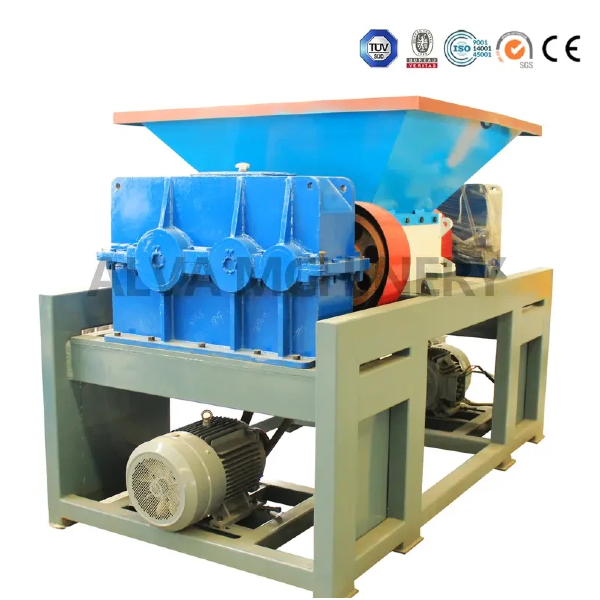
A double shaft shredder uses two shafts that rotate toward each other. Each shaft carries multiple cutting discs arranged in alternating positions. As the shafts rotate, the blades interlock and shear materials by pulling them into the shredding chamber.
This dual-shaft structure allows the machine to apply powerful tearing forces rather than relying solely on cutting pressure.
Single shaft shredders usually include a screen beneath the rotor. The shredded material must pass through this screen before leaving the chamber. The screen controls the final particle size but also restricts the speed at which materials can exit the machine.
Double shaft shredders typically operate without a screening system. Instead of producing uniform small particles immediately, they focus on tearing large materials into manageable pieces.
This difference significantly affects how each machine handles bulky waste.
Large or irregular materials can be difficult to feed into a single shaft shredder because the hydraulic pusher must push them against the rotor.
A double shaft shredder, by contrast, pulls materials inward automatically as the rotating shafts grip and tear the waste. This design allows it to process oversized items more efficiently.
Many industrial recycling facilities deal with waste streams that contain diverse materials. Rubber tires, plastic drums, wooden pallets, discarded appliances, and electronic waste often arrive in irregular shapes and sizes.
A double shaft shredder is particularly effective in these situations because the dual shafts can grip and tear materials from multiple directions.
This makes it suitable for applications such as:
Tire recycling
Plastic container shredding
Industrial waste reduction
Appliance and e-waste preprocessing
Mixed waste often includes contaminants such as dirt, metal fragments, or rigid components. These elements can cause blockages or excessive wear in some shredding systems.
The strong pulling action of twin shafts allows the machine to break apart mixed waste without requiring precise feeding or extensive pre-sorting.
Each shaft in a double shaft shredder rotates toward the other, creating a continuous pulling force. The cutting discs interlock and grip materials, drawing them deeper into the chamber.
This mechanism allows the shredder to tear through bulky objects that might otherwise resist cutting.
In many recycling systems, the first processing stage only needs to reduce material size so it can be handled by downstream equipment.
A double shaft shredder excels at this primary reduction stage. It breaks down large waste items into smaller fragments that can be further processed later.
Some recycling processes require materials to reach a precise particle size. In these cases, a single shaft shredder or granulator may be used after the initial shredding stage.
This combination allows facilities to achieve both efficient size reduction and precise particle control.
Many modern recycling plants use a two-stage shredding system. A double shaft shredder performs the first stage by breaking down bulky materials, while additional machines refine the material size.
This approach improves efficiency because the first machine focuses on power and durability while the second machine handles precision sizing.
Double shaft shredders typically operate at lower rotational speeds than single shaft machines. However, they produce extremely high torque.
This high torque allows the machine to process tough materials such as rubber tires, thick plastics, and industrial scrap.
Low-speed operation also reduces wear on mechanical components and lowers energy consumption.
Industrial waste streams can contain unpredictable materials. When excessive resistance occurs, modern shredders include automatic reverse systems that temporarily reverse shaft rotation.
This mechanism helps release trapped materials and prevent damage to blades or gearboxes.
Recycling facilities often run shredding equipment for long periods each day. Double shaft shredders are designed for such heavy-duty operation.
Their simple mechanical structure and robust cutting discs allow them to maintain consistent performance under demanding conditions.
Blade wear occurs in all shredding equipment. In a double shaft shredder, cutting discs can often be individually replaced or repositioned.
This modular design helps extend blade life and reduces maintenance costs.
Single shaft shredders rely heavily on screens to control output size. Over time, these screens may wear out or become clogged.
Maintaining the screen system adds an additional maintenance task that does not exist in most dual-shaft machines.
Facilities processing mixed or contaminated waste often prefer double shaft shredders because their simpler structure reduces the risk of screen blockage.
Lower downtime translates into higher productivity and lower operational costs.
Recycling centers often receive mixed waste materials that vary widely in shape and size. A double shaft shredder can process these materials effectively without extensive sorting.
Waste treatment plants commonly handle municipal solid waste and industrial waste streams. These materials often contain large objects that require strong tearing forces for size reduction.
Electronic waste and refuse-derived fuel production require initial shredding to break down appliances, packaging materials, and other bulky items.
Double shaft shredders perform this initial stage efficiently before additional processing steps.
Breaking down large materials quickly is essential in recycling lines. Double shaft shredders provide the power needed for aggressive size reduction.
This allows downstream machines to process materials more efficiently.
Uniformly shredded materials feed more smoothly into sorting and separation systems such as magnetic separators or eddy current separators.
Consistent feeding improves the performance of the entire recycling process.
Waste streams change over time as industries evolve. Double shaft shredders provide the flexibility needed to process various materials without major adjustments.
Shandong Alva Machinery Co., Ltd. develops shredding equipment that supports diverse recycling applications while maintaining stable operation and efficient material processing.
Factor | Double Shaft Shredder | Single Shaft Shredder | Best Fit Scenario |
Structure | Two counter-rotating shafts | One rotor with pusher | Depends on material type |
Processing Method | Tearing and shearing | Cutting against screen | Different shredding stages |
Material Type | Bulky and mixed waste | More uniform materials | Recycling lines |
Output Size Control | Rough reduction | Controlled by screen | Precision applications |
Jam Resistance | High due to reverse system | Moderate | Tough waste streams |
Comparing shredding technologies shows that both machine types serve important roles in recycling systems, but their strengths differ significantly. When the goal is aggressive first-stage reduction of bulky materials such as tires, drums, electronic waste, or mixed industrial scrap, a dual-shaft machine often delivers stronger performance and higher reliability. Its powerful tearing action, high torque, and ability to handle irregular waste streams make it ideal for demanding recycling environments. Shandong Alva Machinery Co., Ltd. continues to develop robust equipment designed to support industrial waste processing and material recovery through reliable twin shaft shredding equipment.
For more information about our shredding solutions and recycling machinery, please contact us. Our team will gladly provide professional guidance and technical support to help you improve waste processing efficiency.
A single shaft shredder uses one rotor and a screen to control particle size, while a double shaft shredder uses two counter-rotating shafts to tear materials apart.
Their dual-shaft structure provides strong pulling and tearing forces, allowing them to process large or irregular materials more effectively.
Yes. Double shaft shredders are commonly used for mixed waste streams including plastics, wood, tires, and electronic waste.
Single shaft shredders are often used when precise particle size control is required after the initial shredding stage.