Views: 0 Author: Site Editor Publish Time: 2026-06-29 Origin: Site
Choosing the wrong industrial shredder leads to chronic jamming. It causes excessive blade wear and creates critical operational bottlenecks. Facility managers and procurement engineers face this high-stakes decision daily. Both machines effectively reduce material size. However, their mechanical approaches serve entirely different stages of the waste management lifecycle. One relies on precise cutting. The other uses aggressive shearing. Understanding this fundamental distinction prevents costly downtime. This guide breaks down the mechanical realities and material suitability of these machines. We explore how they handle diverse waste streams under industrial conditions. You will learn exactly how to align your specific material needs with the right equipment. This practical knowledge helps buyers make a confident, risk-free CapEx decision. Proper alignment between machinery and waste material guarantees long-term operational success.
Single Shaft Shredders utilize a high-speed rotor, a hydraulic pusher, and a sizing screen to produce a uniform, predictable output size.
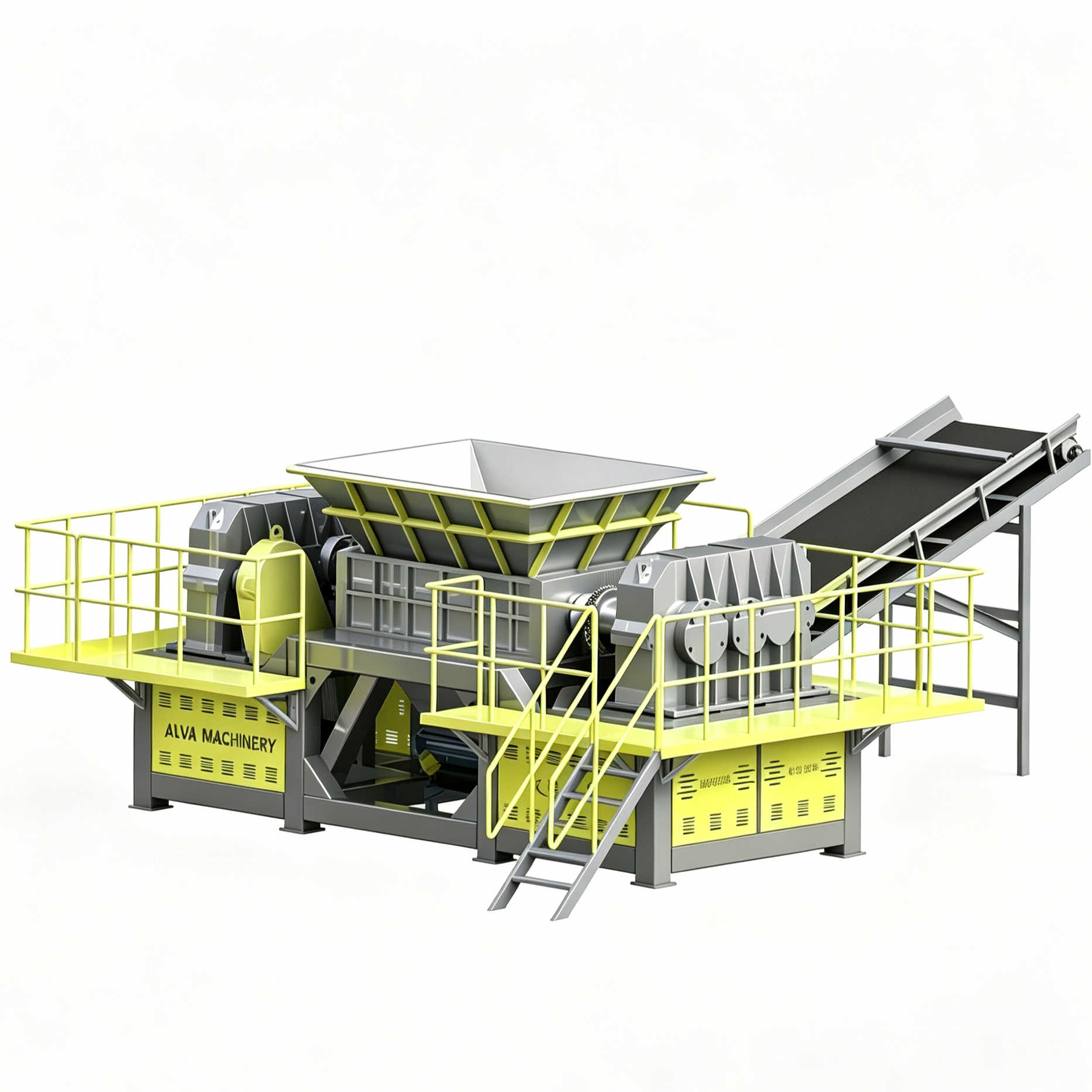
A Double Shaft Shredder relies on low-speed, high-torque counter-rotating blades to rip and shear bulky, highly resistant materials for primary volume reduction.
Material dictates the machine: Single shafts are ideal for rigid plastics, wood, and paper; double shafts dominate in municipal solid waste (MSW), tires, e-waste, and metal drums.
Output vs. Volume: If downstream processing requires an exact particle size, a single shaft is mandatory. If maximum throughput and raw volume reduction are the goals, a double shaft is required.
Engineering limits dictate machine performance. You must understand the internal architecture of these machines. It reveals distinct operational boundaries. Facility managers often confuse the basic cutting mechanics. This section demystifies the internal engineering designs.
A Single Shaft Shredder operates at relatively high rotational speeds. The internal cutting chamber features a solitary, robust rotor. This rotor holds multiple square or round cutting inserts. A hydraulic ram acts as an automated pusher mechanism. It forces incoming bulk material against the spinning rotor. This action aggressively shears the material against stationary bed knives mounted on the chamber floor.
The system relies heavily on a specialized sizing screen. This screen sits directly underneath the cutting zone. Material cannot exit the chamber freely. It stays trapped inside the cutting area. It continuously bounces between the rotor and stationary knives. The material eventually becomes small enough to fit through the screen holes. Once reduced, particles drop through the screen. This mechanical barrier guarantees a highly uniform final product. However, it requires continuous energy to maintain rotor speed.
A Double Shaft Shredder operates under an entirely different mechanical philosophy. It runs at much lower speeds but generates massive mechanical torque. The cutting chamber contains two parallel, counter-rotating hexagonal shafts. These thick shafts feature interlocking hook blades. As the shafts rotate inward, they actively grab the incoming feed material. They pull the items deep into the cutting zone.
These interlocking blades rip, tear, and shear the items apart. You will notice the complete absence of a sizing screen here. Material passes through the cutting chamber only once. It drops out the bottom immediately after passing the blades. This single-pass implementation reality creates irregular outputs. You often receive long strips or random, jagged chunks. The machine prioritizes pure destructive power and raw throughput over exact precision.
Matching waste streams to the proper equipment prevents catastrophic operational failures. Industrial realities show distinct material preferences for each machine type. You cannot force a machine to process incompatible materials safely.
Specific waste streams require precise cutting. Optimal materials for this machine include:
Heavy purge blocks from injection molding.
Thick plastic lumps and extruded pipes.
Solid wood pallets and lumber offcuts.
Dense paper rolls and cardboard bales.
Industrial textiles and woven fabrics.
Why do these materials belong here? Secondary processing demands strict uniformity. Extrusion and granulation equipment cannot accept random, oversized chunks. A uniform input prevents damaging jams in downstream conveying systems. Precision cutting guarantees dimensionally compliant particles. Rigid plastics break down cleanly into manageable flakes. Wood pallets splinter into consistent, burnable chips. The machine serves perfectly as a preparation step for sensitive recycling lines.
Chaotic waste streams demand aggressive tearing. Optimal materials for this robust machine include:
Municipal Solid Waste (MSW) and household refuse.
Passenger vehicle and heavy truck tires.
WEEE (e-waste) and household appliances.
Steel metal drums and IBC tanks.
Bulky industrial debris and demolition waste.
Why deploy this specific machine? These complex waste streams contain highly unpredictable densities. Operators frequently encounter hidden "uncrushables" mixed inside MSW loads. Massive torque easily handles these dangerous surprises. The machine destroys rigid metal drums without risking catastrophic motor failure. It effortlessly rips through thick, steel-belted rubber tires. Unpredictable waste demands aggressive shearing action rather than delicate precision.
You always face an engineering trade-off in industrial shredding. You must choose between the strict precision of the final product and the total volume processed per hour. It remains impossible to maximize both metrics simultaneously in a single pass.
Performance Metric | Single Shaft Machinery | Double Shaft Machinery |
|---|---|---|
Output Size | Highly uniform (determined by screen) | Irregular strips and random chunks |
Particle Predictability | Excellent | Poor |
Volume Throughput | Moderate (limited by screen capacity) | Very High (free-flowing exit) |
Primary Application | Secondary recycling preparation | Primary bulk volume reduction |
Screen sizes dictate absolute dimensional compliance. Manufacturers typically offer screens ranging from 20mm to 100mm. They guarantee exactly what leaves the cutting chamber. Downstream equipment relies heavily on this strict predictability. Sensitive extruders require consistent feeding to maintain pressure.
However, this tight precision comes at a noticeable performance cost. Overall throughput speed drops significantly. Material must bounce around the enclosed chamber repeatedly. It takes considerable time to reach the required target size. This constant friction generates severe heat. It slows down the entire volume reduction process. You trade raw speed for a perfectly uniform end product.
Throughput capacity remains significantly higher here. The machine moves massive volumes of material quickly. The final output size roughly matches the specific width of the cutting blades. You generally receive long strips or wide, unrefined chunks.
This irregular sizing serves specific industrial purposes perfectly. It works exceptionally well for landfill volume reduction. It prepares bulky material adequately for mass incineration. It also enables efficient primary sorting on automated conveyor belts. If your facility needs maximum volume reduction immediately, this tearing method wins. It clears massive waste stockpiles faster than any screen-based alternative.
We must openly discuss the unglamorous realities of daily machine maintenance. Vulnerable failure points exist in every mechanical system. Preparing for these realities builds operational resilience.
Operators frequently encounter a frustrating condition called "screen blinding." Intense friction heat builds up rapidly during the cutting process. Thermoplastics often soften and melt inside the closed chamber. The melted material quickly clogs the sizing screen holes. This blinding physically blocks material from exiting the machine.
Operators must power down the machine completely. They must manually scrape and clean the blocked holes. This causes unplanned operational downtime. Maintenance routines also require constant attention to the blades. Technicians must rotate or replace the square cutting inserts regularly. Dull inserts severely reduce throughput. They also drastically increase the electrical energy draw. Regular insert rotation remains a non-negotiable maintenance task.
Abrasive materials cause severe and rapid blade wear. Glass shards and metal fragments hidden in MSW grind down the hardened cutting edges. Operators cannot easily swap small inserts here. They must maintain the massive blade profiles.
High-quality systems include an intelligent auto-reverse function. A PLC senses an un-shreddable object jamming the hooks. It instantly reverses the shafts to clear the jam automatically. This vital function prevents catastrophic shaft snapping. Maintenance presents a distinct challenge. Rebuilding or hard-facing these massive blades requires intense manual labor. Welders must carefully build up worn edges using specialized hard-facing alloys. This specific process takes far more labor effort than simply swapping small single-shaft inserts.
Buyers need a practical shortlisting matrix to avoid expensive mistakes. Follow this structured approach to select your ideal equipment.
You must determine your primary objective clearly. Do you need primary volume reduction for efficient transport and landfilling? Or do you require secondary material recovery for recycling and pelletizing? Your end goal immediately narrows the available options. Primary volume reduction demands aggressive tearing. Secondary material recovery strictly demands precise, uniform cutting.
You must identify the percentage of hidden contamination in your typical load. Look closely for rigid "uncrushables" buried inside the waste. High unpredictability leans heavily toward the dual-shaft design. Clean, predictable streams allow for single-shaft precision. Ask your floor operators about the strange items they frequently find in the waste stream. Their daily experience reveals the true nature of your material.
Consider your overall facility layout carefully. Complex operations often require a dedicated two-stage system. They use a primary machine for the initial bulk breakdown. This primary unit feeds material directly into a secondary machine for final, precise sizing. You must evaluate available floor space. You must also plan for intermediate conveyor integration.
Decision Criteria | Choose Single Shaft If: | Choose Double Shaft If: |
|---|---|---|
Waste Condition | Clean, sorted, predictable | Mixed, highly contaminated |
Output Requirement | Exact size needed (e.g., 50mm) | Rough volume reduction acceptable |
Contamination Risk | Very low risk of solid metals | High risk of hidden metals/rocks |
Neither machine is objectively better across the board. Their inherent value depends entirely on your specific waste stream. Output granularity requirements ultimately drive the final procurement decision. If you need precise flakes, choose one path. If you need raw destruction, choose the other.
We strongly advise buyers not to rely solely on manufacturer spec sheets. Paper specifications rarely capture the messy, unpredictable realities of industrial waste processing. We encourage facility managers to request a live material test. Demand a tangible proof of concept from the manufacturer. They should run your exact waste stream through their demonstration equipment. Observing this live test finalized your procurement confidently and eliminates expensive guesswork.
A: Generally, no. Because they lack a sizing screen, the output consists of irregular strips or chunks determined by the blade width. If strict uniformity is needed, secondary processing is required.
A: Single shaft shredders are the industry standard for rigid plastics because they output uniform pieces ready for granulators and extruders. Double shafts are only used in plastics for primary destruction of massive, bulky items (like IBC tanks) before secondary shredding.
A: A quality double shaft shredder uses PLC controls to sense torque overload, automatically reversing the shafts to clear the jam. Single shafts may stall or damage the hydraulic pusher, requiring manual clearing.
A: Quad-shaft shredders combine the high torque of a double shaft with the sizing screens of a single shaft. They are ideal for complex applications requiring both extreme power and strict output sizing in a single pass (e.g., medical waste or secure document destruction).