Views: 0 Author: Site Editor Publish Time: 2025-12-25 Origin: Site
When it comes to processing metal waste, one of the most commonly used types of machinery is the impact type metal crusher. Whether you are in the recycling industry, demolition work, or metal processing, understanding how an impact type metal crusher works and what makes it effective is crucial for optimizing your operations. In this article, we will delve into the key aspects that contribute to the effectiveness of an impact type metal crusher, while also comparing it to other crusher types like jaw crushers and hammer crushers.
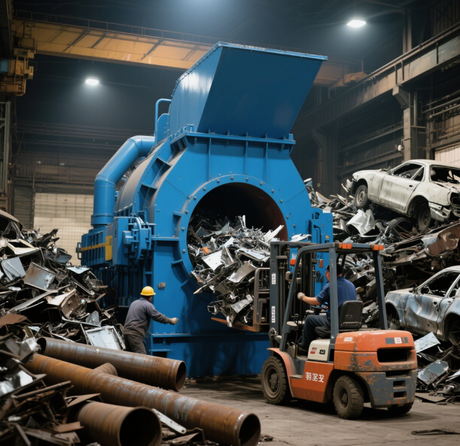
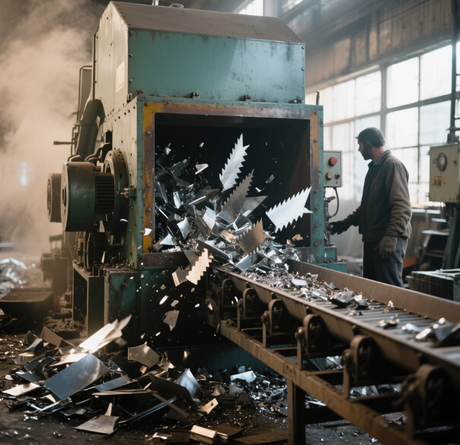
An impact type metal crusher is a machine that uses impact force to break down materials. These crushers are designed for crushing metal scrap, including steel, aluminum, and other metals. The process involves high-speed rotation of a rotor inside the machine, which forces the material against a surface to break it into smaller pieces. The impact force causes the material to fragment and break down into manageable pieces, which are then collected for further processing or recycling.
Impact crushers are widely used in industries such as mining, metallurgy, and waste recycling because of their ability to handle a variety of materials and their efficient crushing performance. One of the main advantages of impact crushers is that they offer high productivity, especially when compared to other types of crushers.
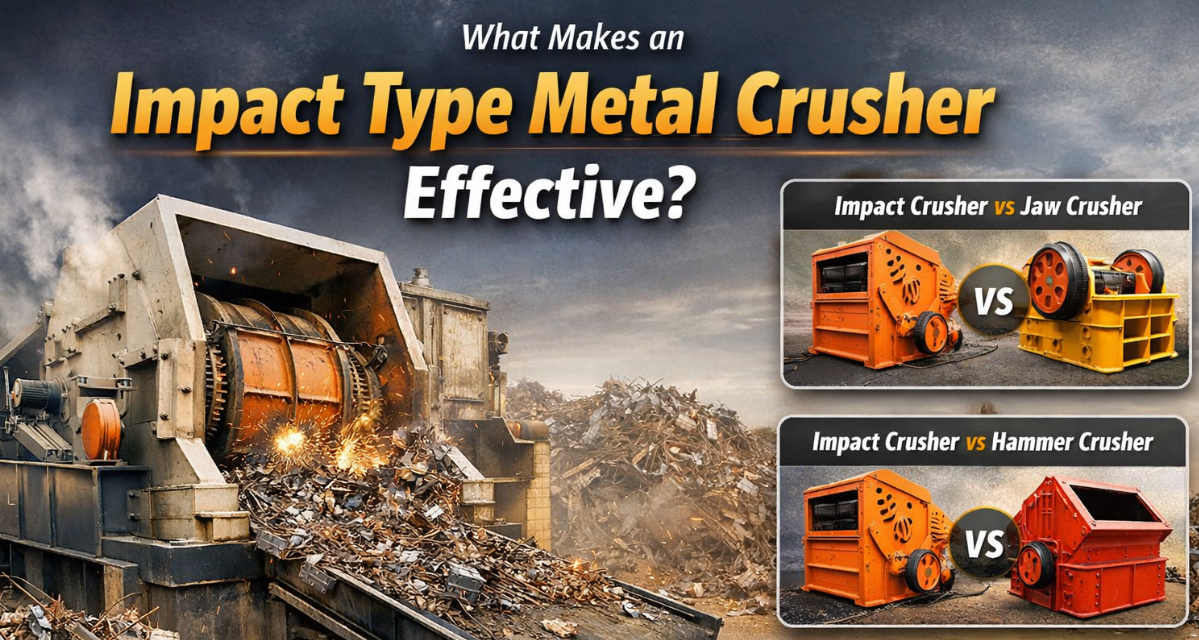
The working principle of an impact crusher is relatively simple. It operates based on the principle of impact force. The crusher consists of a rotor that spins at high speeds. As the material enters the machine, it is fed into a chamber where it is struck by the rotating rotor. The material is then thrown against the walls of the crushing chamber or other materials, which further break the material down into smaller pieces.
The rotor’s speed, along with the sharpness of the impact plates, determines how effectively the material will be crushed. This makes impact type crushers more efficient at breaking down hard and brittle materials such as metal scrap, concrete, and asphalt.
High Crushing Efficiency
One of the standout features of the impact type crusher is its high crushing efficiency. The high-speed rotor combined with the impact force allows the crusher to break down materials quickly and efficiently, reducing processing time and increasing output.
Versatility
Impact crushers are highly versatile and can handle a wide range of materials, from hard metals to softer materials. This makes them ideal for industries that require flexibility in their crushing processes, such as recycling, mining, and construction.
Low Wear and Tear
Another key advantage of the impact crusher is that it generally experiences less wear and tear compared to other crushers, such as jaw crushers or hammer crushers. The materials are crushed by impact rather than compression, which minimizes the wear on the internal components of the machine.
Energy Efficiency
Impact type crushers are designed to be energy efficient, which helps reduce operational costs. They require less power to operate compared to other types of crushers, which can lead to significant savings in energy costs over time.
Improved Material Size Control
The impact type crusher provides a high degree of control over the size and quality of the output material. By adjusting the rotor speed and the gap between the impact plates, operators can fine-tune the size of the crushed material, making it more suitable for specific applications.
When comparing impact crushers vs jaw crushers, there are several key differences that impact the effectiveness of the crusher in specific applications. Jaw crushers are typically used for primary crushing, where the material is large and requires significant compression to break it down. They use two heavy jaws that move back and forth to crush the material.
In contrast, impact crushers are more commonly used for secondary or tertiary crushing. They are better suited for breaking down smaller, already fragmented material. Jaw crushers typically handle harder and more abrasive materials, whereas impact crushers are more effective for materials that need to be fragmented by impact force.
While jaw crushers offer better efficiency for primary crushing, impact crushers tend to provide better results when it comes to processing softer, less abrasive materials and when fine material size control is required.
When comparing impact crusher vs hammer crusher, the main difference lies in the type of force used to crush the material. Both crushers use impact force to break down materials, but there are some notable differences:
Crushing Mechanism:
Impact crushers use high-speed rotors with sharp impact plates to crush materials by throwing them against a surface.
Hammer crushers utilize a series of hammers that swing to strike the material.
Efficiency:
Impact crushers tend to be more efficient than hammer crushers when it comes to breaking down hard, brittle materials like metal scrap.
Hammer crushers can handle both soft and hard materials but may not offer the same level of control over the size of the output material.
Applications:
Impact crushers are often used in recycling, road construction, and for processing non-metallic materials.
Hammer crushers are typically employed in cement production, mining, and industries that need to crush softer materials like coal, limestone, or gypsum.
Maintenance:
Impact crushers tend to require less maintenance compared to hammer crushers because of fewer moving parts and less wear on the internal components.
Hammer crushers require more frequent maintenance due to the continuous wear on the hammer heads.
In terms of effectiveness, impact crushers are more efficient at handling a wider range of materials, and their ability to finely control the size of the crushed material makes them ideal for many applications in recycling and metal processing industries.
Several factors contribute to the overall effectiveness of an impact type metal crusher. These factors include:
Rotor Speed: The speed at which the rotor spins directly impacts the crushing efficiency. Higher rotor speeds can increase the fragmentation of materials but may also result in higher wear and tear. It’s important to balance speed with material characteristics to achieve optimal performance.
Impact Plate Design: The design of the impact plates or anvils is crucial to the effectiveness of the crusher. Sharp, well-designed impact plates can improve the fragmentation process and reduce the amount of time required to break down materials.
Material Characteristics: The type and size of the material being processed will also affect the efficiency of the impact crusher. Harder materials may require more powerful machines, while softer materials may require less force for effective crushing.
Crusher Size: The size of the impact crusher plays a significant role in its effectiveness. Larger crushers with more robust rotors can handle larger amounts of material, making them more suitable for high-volume operations.
Wear and Tear: Regular maintenance and the use of durable materials for key components (such as the rotor and impact plates) help reduce wear and tear, ensuring the long-term effectiveness of the crusher.
The price of an impact crusher can vary significantly based on factors such as its size, capacity, and the materials it is designed to handle. Generally, impact crusher price tends to be higher than jaw crushers due to the more complex design and the need for higher-quality components.
However, the efficiency and long-term savings offered by impact crushers often justify the initial investment. When considering purchasing an impact crusher, it is important to weigh the upfront cost against the potential operational savings that result from improved efficiency, lower energy consumption, and reduced maintenance needs.
Q1: What are the main differences between an impact type metal crusher and a jaw crusher?
A1: Jaw crushers are better suited for primary crushing of hard, large materials, while impact type crushers are ideal for secondary or tertiary crushing and are particularly effective at breaking down brittle and softer materials.
Q2: How does an impact crusher compare to a hammer crusher?
A2: While both crushers use impact force, impact crushers tend to offer better material control and higher efficiency for hard, brittle materials. Hammer crushers are typically used for softer materials and are less efficient in certain applications.
Q3: What materials can be processed by an impact type metal crusher?
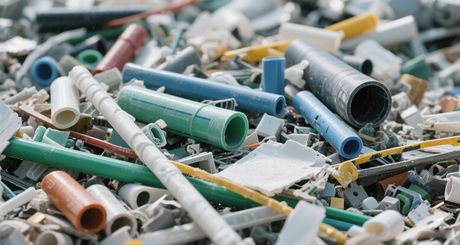
A3: Impact crushers are designed to process a wide range of materials, including metal scrap, concrete, asphalt, and other materials that can be broken down by impact force.
Q4: How do I choose between an impact crusher and a hammer crusher for my needs?
A4: If you need to break down hard, brittle materials with control over the output size, an impact crusher is the better option. For softer materials or when a more cost-effective solution is needed, a hammer crusher might be the better choice.
Q5: What factors should I consider when purchasing an impact crusher?
A5: Consider the size, capacity, material type, rotor speed, and wear resistance of the crusher when making a purchasing decision. Also, evaluate the operational costs and maintenance requirements to determine the long-term value.