Views: 0 Author: Site Editor Publish Time: 2025-10-07 Origin: Site
You will notice a clear difference between a chipper and a shredder: chippers break down large branches and wood, while shredders handle softer yard waste like leaves and small twigs. Chippers work best for turning tree limbs into wood chips, but shredders excel at reducing garden debris into mulch. Selecting the right machine helps you manage waste more efficiently. In industrial settings, you often find high-capacity machines like the Double Shaft Shredder, which can process large volumes and tough materials.
Setting | User Type | Machine Type | Key Features |
|---|---|---|---|
Residential | Homeowners, gardeners | Smaller, portable | User-friendly, affordable |
Industrial | Commercial sectors | High-capacity, heavy-duty | Efficient wood waste management, large volume handling |
Chippers are designed for large branches and wood, turning them into chips, while shredders handle softer materials like leaves and small twigs.
Choosing the right machine depends on the type of waste you manage; chippers excel with woody debris, and shredders are best for garden waste.
Dual-shaft shredders are powerful machines that can process tough and bulky materials, making them ideal for industrial applications.
Understanding the size and volume of materials helps you select the right equipment, ensuring efficient operation and preventing jams.
Always match your machine to your specific needs for optimal performance and easier maintenance.
A chipper is a machine that helps you manage wood waste by turning large pieces of wood into smaller chips. You will find that the main components of a chipper include a hopper, a chipping mechanism, and often a collection bin. The chipping mechanism uses sharp blades mounted on a flywheel, which spins quickly when powered by an electric motor or a gas engine. These key components work together to break down wood into chips that are usually about 1 to 2 inches in size.
Tip: Always feed branches into the hopper slowly to avoid jams and ensure safe operation.
You can use a chipper to process a wide range of materials. The main components are designed to handle tough items like logs, branches, and stumps. Chippers also work well with yard waste such as leaves, small branches, and twigs. Some models can even process brush, palm fronds, and bamboo. If you work in agriculture, you might use a chipper for sugarcane bagasse, wheat straw, or corn stalks. Many industrial chippers can handle wooden pallets, crates, and composite wood materials like particleboard or MDF. The key components must be strong and sharp to handle these different materials.
Typical materials for chippers:
Logs and branches
Yard waste (leaves, twigs)
Brush and underbrush
Palm fronds and bamboo
Agricultural residues
Wooden pallets and crates
Composite wood materials
Tree bark
You will find chippers useful in many situations. Homeowners use them to turn branches, leaves, and yard waste into small wood chips, making disposal easier. Landscapers rely on chippers to create mulch for gardens, which helps soil retain moisture and improves its quality. After storms or seasonal trimming, you can use a chipper to clean up your yard quickly. In forestry, chippers help process large amounts of wood waste, making land clearing and tree service operations more efficient.
Note: The global market for chippers shows steady growth, which means more people in forestry, farming, and landscaping depend on these machines every year.
The main components and key components of a chipper make it a valuable tool for anyone who needs to manage wood and yard waste efficiently.
You will find that a shredder is a machine used for shredding materials. It reduces the size of various items for recycling and waste management. You can use a shredder in many recycling applications, such as plastic, scrap metal, e-waste, wood, and tire recycling. The shredding process creates raw materials for manufacturing and finished products like landscape mulch.
A shredder helps you manage waste by breaking down large or bulky items.
You can use shredders to recycle plastics, metals, wood, tires, and even electronic waste.
The shredding process makes it easier to transport and reuse materials.
Industrial shredders come in several types. Shear shredders use counter-rotating shafts to cut materials. Rotary cutters have a rotating shaft with multiple blades. Grinders and chippers are also used for specific materials. You will see that shredders can be single-shafted, dual-shafted, or quad-shafted, depending on the number of shafts and blades.
Type of Shredder | Description |
|---|---|
Plastic Shredders | Used for reducing materials like plastic, rubber, and wood, classified into grinders, chippers, etc. |
Tire Shredders | Designed for processing old tires into usable products, categorized into shear, specialty, grinders, etc. |
Paper Shredders | For safe shredding of paper waste, including strip-cut, cross-cut, and industrial paper shredders. |
Single-Shafted Shredders: Feature a single shaft with rotary blades.
Dual-Shafted Shredders: Use two counter-rotating shafts for shredding.
Quad-Shafted Shredders: Have four intermeshing shafts for consistent shredding.
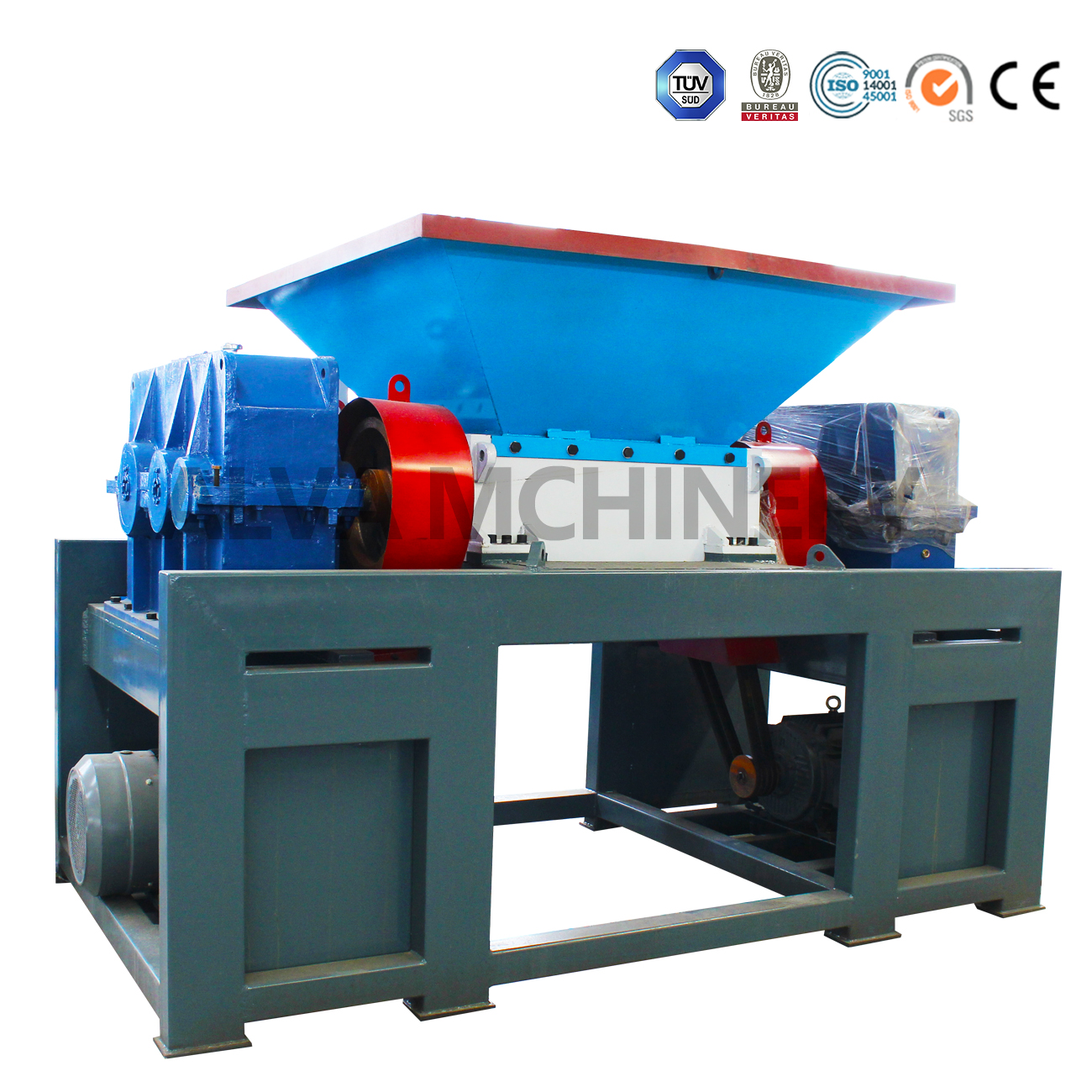
You will often see the double shaft shredder in industrial settings. This machine uses two parallel main shafts with staggered blades. The blades form a "gear bite" shape, which helps grab and tear materials. The double shaft shredder stands out because it can handle tough, bulky, or hard-to-shred items.
Feature | Double Shaft Shredder | Single Shaft Shredder |
|---|---|---|
Structural Features | Two parallel main shafts with staggered blades forming a 'gear bite' shape. | One rotating main shaft with multiple blades and a fixed knife seat. |
Working Principle | Shafts rotate in opposite directions, shearing and tearing materials against each other. | Moving knife rotates to create shear force with the fixed knife. |
Power Characteristics | Greater torque and stronger ability to grab and crush materials. | Power depends on the torque and speed of a single main shaft. |
You will notice that the double shaft shredder uses two motors, which gives it high torque and strong crushing power. This design allows you to shred large, hard, or bulky materials that other shredders cannot handle. The double shaft shredder is popular in recycling plants, waste management centers, and manufacturing facilities.
Model | Blade Specification | Power | Blades Quantity | Dimension (MM) |
|---|---|---|---|---|
#600 | Φ250*20 | 15KW*2 | 30 | 280014001900 |
#600 | Φ300*30 | 22KW*2 | 20 | 280014001900 |
#800 | Φ350*25 | 22KW*2 | 32 | 370015402200 |
#800 | Φ400*40 | 30KW*2 | 20 | 370015402200 |
#1000 | Φ400*30 | 30KW*2 | 33 | 386015502350 |
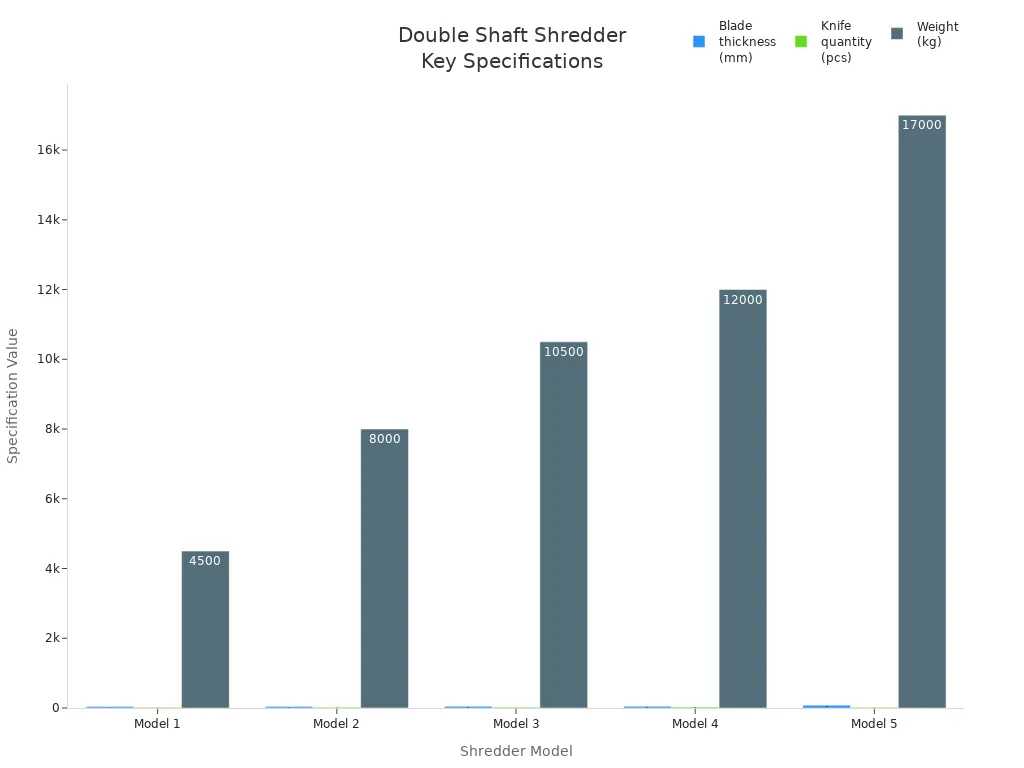
You can see that double shaft shredders come in different sizes and power levels. Some models have blade thicknesses up to 80 mm and can weigh up to 17,000 kg. The shredding capacity ranges from 500 kg/h to 5000 kg/h. These machines use robust steel cutters and advanced control systems for safety and efficiency.
You will find the double-shaft shredder easy to operate, but it uses advanced engineering. The shredding process involves several steps:
You feed the material into the shredder using a hopper. You can do this manually or with a conveyor belt.
The two shafts rotate slowly but with great power. They grab the material as it enters the chamber.
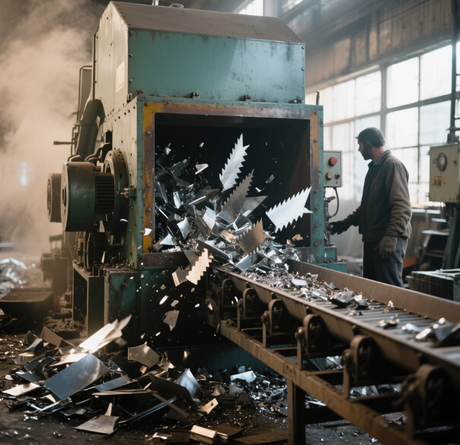
Interlocking cutters slice and tear the material into smaller pieces. The staggered blades create a strong shearing force.
The shredded material exits through a screen. You can adjust the output size by changing the screen.
The double-shaft shredder uses two motors and staggered blades to create high torque. This design makes the shredding process efficient and reliable. You can shred large, hard, or bulky items without frequent jams or breakdowns.
Tip: The double-shaft shredder operates with minimal noise and vibration, making it suitable for continuous industrial use.
You can use a dual-shaft shredder to process a wide variety of materials. This flexibility makes it a top choice for many industries.
Plastics (rigid and soft)
Wood (pallets, branches, MDF)
Metals (aluminum, copper, thin steel)
E-waste (circuit boards, old appliances)
Paper and cardboard (office paper, newspapers)
Textiles (clothing, industrial fabrics)
Medical waste (syringes, pharmaceutical packaging)
Application Type | Materials Processed |
|---|---|
General Shredding | Tires, Plastic bottles, Cardboard, Furniture |
Bulky Waste Reduction | Electronic scrap, Metals, White goods |
Product Destruction | Appliances, Computers |
Typical Applications include: Tires, Wire and cable shredding, Bale breaking, Product destruction (white goods – ie. computers, appliances), Plastics, Metals, Electronic scrap, Bulky waste.
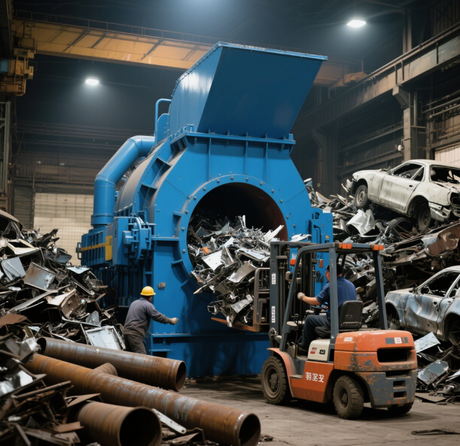
You will see the double-shaft shredder in action at recycling centers, factories, and waste management plants. It can efficiently shred a variety of materials, reduce large items into small pieces, and handle bulky or hard-to-handle materials. The double-shaft shredder is especially useful for primary shredding, where you need to break down items before further processing.
You will notice clear design differences between a chipper and a shredder. Chippers use sharp blades mounted on a flywheel to cut large branches and wood into chips. Shredders use blunt edges or interlocking cutters to pull apart softer materials like leaves and garden debris. Dual-shaft shredders stand out because they use two parallel shafts with staggered blades. This design allows you to process tough, bulky materials efficiently.
Feature | Wood Chipper | Wood Shredder |
|---|---|---|
Material Input | Larger branches or complete pieces of wood | Smaller materials like leaves and debris |
Mechanism | Breaks down into chips using sharp blades | Pulls apart using blunt edges, often for compost |
Purpose | Primarily for chipping wood | Primarily for shredding organic waste |
Dual-shaft shredders use two motors and staggered blades. The working process involves both shafts rotating in opposite directions, grabbing and tearing materials apart. You can adjust blade spacing and rotation speed to match the material type. This flexibility makes dual-shaft shredders ideal for industrial applications.
Tip: Dual-shaft shredders offer a high degree of automation and reliability, which reduces manual labor and increases safety.
You will see a big difference in the output material from chippers and shredders. Chippers produce larger, coarse wood chips that vary in size. Shredders create finer, more consistent mulch, similar to sawdust. Dual-shaft shredders generate coarser output, but you can adjust the working process to achieve different sizes.
Chippers produce irregular, chunky wood chips.
Shredders make fine, uniform mulch.
Dual-shaft shredders can create both coarse and fine shredded material, depending on the blade setup and working process.
Feature | Double Shaft Shredder | Wood Chipper |
|---|---|---|
Output Size | Coarser output | Fine and uniform wood chips |
Suitable Materials | Large branches, stumps, and tough wood | Smaller branches, leaves, garden waste |
Production Capacity | High throughput, several tons per hour | Lower throughput, suitable for smaller operations |
You can use dual-shaft shredders to process large volumes of waste quickly. The working process ensures consistent output, which helps with recycling and further processing.
You will find chippers and shredders in many landscaping and waste management tasks. Chippers work best for processing woody debris, regular brush trimming, and tree pruning. You can use them to chip branches up to 23cm in diameter. Shredders excel at producing mulch and compost from leaves, small branches, and garden waste. Dual-shaft shredders handle bulky waste, electronic scrap, and tough wood in industrial settings.
Processing woody debris
Maintaining landscapes
Producing mulch and compost
Tree pruning and forest cleanup
Mobile usage with trailers
Industrial waste reduction
Dual-shaft shredders are popular in recycling centers and manufacturing plants. You can use them for product destruction, bale breaking, and shredding metals, plastics, and e-waste. The working process allows you to handle a wide range of materials, including textiles and medical waste.
Note: Dual-shaft shredders provide high throughput and versatility, making them suitable for large-scale operations.
You will see important differences when you compare dual-shaft shredders and chippers. Dual-shaft shredders use two parallel shafts with multiple blades. This design lets you process various shapes and sizes of waste wood, including large pieces. Chippers focus on branches and leaves, using sharp blades for cutting.
Aspect | Dual-Shaft Shredder | Wood Chipper |
|---|---|---|
Handling Capability | Can process various shapes and sizes of waste wood, including large pieces. | Typically designed for branches and leaves. |
Shredding Efficiency | Provides uniform size of shredded materials, facilitating further processing. | May produce inconsistent sizes. |
Automation and Operation | High degree of automation, simple and reliable operation. | Often requires more manual input. |
Cost | Higher initial investment and maintenance costs. | Generally lower cost. |
Maintenance | Requires regular cleaning to prevent entanglement of slender waste wood. | Easier maintenance for typical yard waste. |
Dual-shaft shredders offer several advantages. You can handle a variety of waste wood shapes and sizes. The working process produces uniform shredded material, which helps with recycling. You benefit from high automation and reliability. However, dual-shaft shredders cost more and require regular cleaning, especially when processing slender materials.
Advantages of dual-shaft shredders:
Handles many types of waste wood
Produces uniform shredded material
High automation and reliability
Disadvantages of dual-shaft shredders:
Higher equipment and maintenance costs
Needs regular cleaning for slender materials
You should choose a dual-shaft shredder if you need to process large volumes of tough materials. The working process is efficient and flexible. Chippers are better for smaller jobs and typical yard waste.
Tip: Dual-shaft shredders are the best choice for industrial facilities that need high throughput and versatile waste processing.
You need to consider your specific requirements before selecting a chipper or a shredder. The type of yard waste you handle plays a major role in your decision. Chippers work best for large branches and limbs. Shredders excel at processing leaves, grass clippings, and small twigs. If you often deal with mixed debris, you may benefit from a machine that combines both functions.
Understanding the size and volume of material helps you choose the right equipment. Chippers can process larger diameters, while shredders handle smaller debris. Engine power also matters. Higher horsepower machines suit bigger jobs and tougher materials. You should think about how often you plan to use the machine. Occasional cleanup requires less power than regular, heavy-duty tasks.
Tip: Always match the machine’s capacity to the largest branches or debris you expect to process. This prevents jams and ensures efficient operation.
You should also consider weight and mobility. If you need to move the machine around your property, choose a model that is easy to maneuver. For small yards, a lightweight chipper or shredder works well. Larger properties may require a heavier, more powerful unit.
Functionality: Chippers process large branches; shredders handle leaves and small debris.
Capacity: Chippers accept bigger wood diameters than shredders.
Engine Power: Select engine size based on your workload.
Weight and Mobility: Pick a machine that fits your terrain and storage space.
If you work in the waste recycling industry, your needs may differ. Industrial users often require machines with higher throughput and automation. Double Shaft Shredder models offer strong performance for processing tough materials in large volumes. These machines suit recycling centers and manufacturing plants where efficiency and reliability matter most.
You now know the main differences between chippers and shredders. Chippers work best for large branches and woody material, while shredders handle green waste and mixed debris efficiently. For heavy-duty jobs, a Double Shaft Shredder processes tough materials and mixed waste with high capacity. Before you choose, think about the type and size of material you need to process, your end goals, and how often you will use the machine.
Tip: Always match your machine to your yard or industrial needs for the best results and easier maintenance.
Task | Wood Chipper | Wood Shredder |
|---|---|---|
Best For | Large branches, limbs | Leaves, small debris |
Efficiency | Woody material | Green waste |
A Double Shaft Shredder uses two parallel shafts with blades to tear and shear tough materials. You can use it for industrial waste, bulky items, and recycling tasks. This machine handles materials that single-shaft shredders or chippers cannot process.
Yes, you can use a Double Shaft Shredder for both wood and plastic. It shreds pallets, branches, plastic bottles, and containers. You get reliable performance for mixed material loads.
A Double Shaft Shredder tears and crushes materials using two shafts. A wood chipper cuts branches into chips with sharp blades. You should use a shredder for tough, bulky waste and a chipper for clean wood debris.
Always wear safety gear. Keep hands and loose clothing away from the hopper. You should check the machine for jams before starting. Never overload the shredder. Follow the manufacturer’s instructions for safe operation.
You should clean the blades after each use. Check for wear or damage regularly. Lubricate moving parts as recommended. Replace worn blades to keep the Double Shaft Shredder working efficiently.