Views: 0 Author: Site Editor Publish Time: 2026-06-03 Origin: Site
Processing industrial scrap, metal-bearing ores, or foundry slag demands immense mechanical force. You simply cannot treat heavy machinery like a generic sledgehammer. Choosing the wrong size reduction equipment consistently leads to catastrophic tool wear. It also triggers severe material choking and ruins your production metrics. Many operators face massive downtime because they misapply crushing forces to the wrong materials.
We need to transition from viewing these machines as isolated smashers. Instead, you must treat them as specialized components within a highly integrated comminution and recycling circuit. Every machine plays a distinct role in preparing material for the smelter or landfill. This article delivers an objective breakdown of different machine types. You will learn exactly how physical principles govern material breakdown. We will also explore stage-by-stage applications so you can justify your capital expenditure confidently.
Physics dictates selection: Ductile scrap metals require shear and high-speed impact (shredders/hammer mills), whereas brittle metal slag and ores respond best to compression (jaw/cone crushers).
Crushing is a multi-stage system: Single-pass processing is rarely viable. Efficient setups divide the work into Primary (volume reduction) and Secondary/Tertiary (liberation and densification) stages.
Predictive maintenance is mandatory: The true cost of a metal crusher is not CapEx, but the replacement frequency of wear parts (hammers, liners, rotors) and unplanned downtime.
Material behavior under stress forms the absolute baseline for equipment evaluation. You cannot evaluate a machine without understanding how it applies physical force to a specific alloy. Different metals react wildly differently to mechanical stress. Operators experience severe equipment failure when they ignore these core physics.
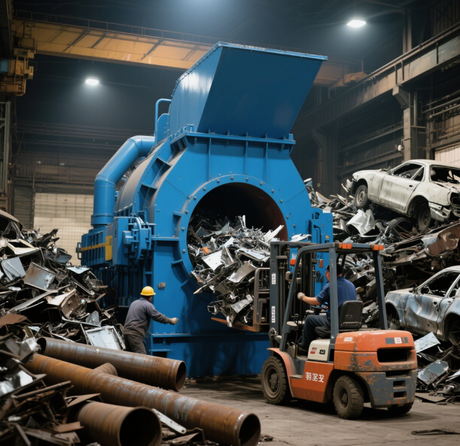
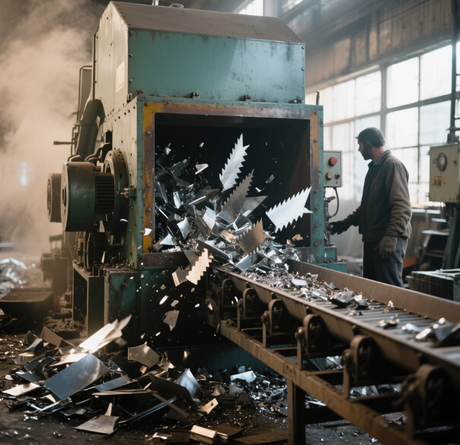
Shear force is ideal for ductile materials. Think of aluminum siding, thin sheet metal, and flexible copper wire. These materials stretch and bend before they break. Low-speed, high-torque operations heavily rely on this tearing mechanism. A robust Metal Shredder uses opposing, counter-rotating blades to trap and tear these flexible metals apart. The sheer torque rips the metal rather than trying to shatter it.
Impact force relies entirely on kinetic speed rather than sustained surface pressure. It forces materials to break abruptly along their natural fault lines. This approach works exceptionally well for dense auto-scrap or electronic waste (WEEE). Fast-moving rotors strike the material in mid-air. The sudden shockwave shatters the brittle housings while knocking ductile metals loose. This dynamic action creates clean, fist-sized nuggets ready for magnetic sorting.
Compression proves highly effective for extremely brittle materials. Foundry slag, cast iron blocks, and mined metal ores shatter predictably when squeezed between two hard surfaces. However, you face a massive implementation risk here. Applying compression equipment to ductile scrap metal causes a phenomenon known as "pancaking." The machine merely flattens the flexible metal instead of breaking it. This flattening leads to severe mechanical blockages. It eventually causes total eccentric shaft failure.
Plant engineers understand reducing metal size happens sequentially. Relying on one magic bullet machine remains an operational myth. High-volume circuits strictly divide the labor into specific stages. This multi-stage approach ensures maximum efficiency and protects downstream equipment from oversize material damage.
| Processing Stage | Primary Goal | Typical Equipment |
|---|---|---|
| Primary Processing | Accept bulky, varied-sized feed and reduce it to a uniform flow. | Heavy-duty shear shredders, Jaw crushers |
| Secondary Processing | Separate distinct materials (liberation) and achieve target output size. | Hammer mills, Horizontal Shaft Impactors (HSI) |
| Tertiary Processing | Produce highly consistent, dense granules for final smelting. | Vertical Shaft Impactors (VSI), Fine granulators |
The main goal here involves accepting bulky, chaotic, and varied-sized feed. Industry professionals call this the "all-in feed." The equipment must reduce this unpredictable flow into a manageable stream. Heavy-duty shear shredders handle the scrap recycling side. Meanwhile, heavy-duty jaw crushers tackle the brittle ore and slag processing side. These machines act as the gatekeepers for your entire production line.
During the secondary stage, the focus shifts to liberation and sizing. You must separate distinct, entwined materials. A perfect example is detaching steel components from rubber and plastic in auto shredding residue. Hammer mills and horizontal shaft impactors dominate this middle stage. They often operate in a closed-loop system using vibratory screens. Any oversized material simply cycles back into the chamber until it passes through the screen.
The final goal involves extreme refinement and granulation. Smelters require highly consistent, dense granules to operate efficiently. Oddly shaped or overly large flakes melt unevenly. Vertical shaft impactors and fine granulators deliver a precise, cubic particle shape. This stage maximizes the bulk density of your final product, significantly increasing its market value.
Let us explore a structured, unbiased capability matrix. This direct comparison helps plant engineers and procurement managers shortlist the right equipment for their specific site demands.
These machines utilize counter-rotating shafts equipped with hooked blades. They rip material apart using extreme shear force at low rotational speeds.
Pros: They handle bulky, mixed scrap exceptionally well. They boast a high tolerance for "unshreddable" tramp metals. Modern units feature auto-reverse mechanisms to protect the shafts from stalling. They also generate remarkably low dust and noise.
Cons: They do not produce highly dense, clean nuggets. They remain strictly a first-stage machine meant for rough volume reduction.
A high-velocity rotor equipped with swinging hammers strikes the incoming material. The force drives the fragmented pieces through a specific sizing screen at the bottom.
Pros: They are excellent for liberating mixed metals. Processing electric motors and auto scrap yields highly profitable results here. A properly configured Metal Crusher of this type produces dense, saleable scrap nuggets.
Cons: Operational costs run very high due to rapid hammer and grate wear. They are also highly vulnerable to catastrophic damage if solid steel billets enter the chamber.
These machines apply pure compression. A moving toggle plate squeezes the feed material against a fixed stationary plate.
Pros: They offer massive throughput capacities. Large mining setups push up to 1600 tons per hour. They are incredibly robust for primary stage hard-rock and heavy slag crushing.
Cons: They are an extremely poor choice for ductile, bendable scrap. Their overall reduction ratio typically sits around 3:1 to 5:1. This metric is significantly lower than impact-style machines.
VSIs use intense centrifugal force to throw material against a specialized anvil ring. Some configurations throw the material against itself, creating autogenous crushing.
Pros: They remain unmatched for generating precise, cubic particle shapes. Operators heavily utilize them in fine metal slag recovery and tertiary ore processing.
Cons: They are highly sensitive to feed size variations. You must strictly manage the infeed volume and size to prevent stalling or internal damage.
Procurement managers must follow strict decision criteria before signing off on a purchase order. Use this evaluation framework to navigate the selection process intelligently.
Analyze Material Input Characteristics: Are you processing malleable scrap like cars and wire, or friable rock and slag? This single question eliminates either compression or shear machines immediately. Ductility demands shear. Brittleness demands compression.
Define the Target Output (Liberation Requirements): Do you just need basic volume reduction to lower transport and landfill costs? Or do you need fully liberated copper granules ready for a direct smelter feed? Your final purity goals dictate how many processing stages you need.
Assess Throughput Capacity vs. Choke Feeding: Can the machine handle "choke feeding"? Certain compression units running ore perform best when the chamber stays completely full. This maximizes efficiency and improves particle shape. Other machines require strictly metered, gradual feeding to prevent sudden jamming.
Determine Mobility Requirements: You must decide between a fixed plant installation and mobile tracked crushers. Tracked crushers radically reduce haulage costs and carbon emissions. They prove exceptionally useful for contractors processing slag or construction scrap directly on-site.
Establishing operational authority requires addressing what happens after the machine powers on. Equipment fails rapidly when operators ignore mechanical limits. Understanding these hidden risks protects your initial capital investment.
Choking occurs when input volume dramatically exceeds discharge capacity. Jams also happen when a solid, unyielding block of high-tensile steel enters a high-speed impactor. A hidden forklift tine inside a crushed car is a common culprit. You can mitigate this severe risk by installing robust overload protection systems. Auto-reversing hydraulic drives sense resistance and reverse the blades automatically before damage occurs.
Catastrophic component wear is entirely inevitable when processing highly abrasive materials. Slag and ore cause rapid degradation of internal chamber liners, hammer heads, and cutting teeth. You must factor in the cost-per-ton for wear parts replacements during your initial procurement phase. Looking only at the upfront machine cost creates a dangerous financial blind spot.
Eccentric shaft stress remains highly common in compression units. This specific mechanical failure triggers when operators feed materials exceeding the rated compressive strength. It also happens when operators ignore ductility limits. You must avoid pancaking ductile metals at all costs. The stress transfers directly to the main shaft, causing micro-fractures and eventual snapping.
A strict predictive maintenance mandate protects your production schedule. Modern recycling operations must leverage vibration and temperature sensors. These tools provide real-time online condition monitoring. Identifying abnormal baseline vibrations early prevents catastrophic, unplanned shutdowns. Replacing a worn bearing during scheduled downtime costs far less than replacing a shattered rotor mid-shift.
Selecting the ideal industrial machine is ultimately an exercise in matching mechanical forces directly to the metallurgical properties of your feed material. You must align shear, high-speed impact, or compression actions with the specific ductility or brittleness of your scrap. Ignoring these physical realities leads to jammed chambers, broken shafts, and ruined profit margins.
We strongly recommend running a pilot material test with an equipment manufacturer. Taking the time to perform physical material sampling accurately maps your expected reduction ratios. It also reveals realistic throughput rates and uncovers hidden wear costs. Always conduct this real-world test before finalizing any heavy capital purchase.
A: Crushers generally rely on compression or high-speed impact forces. They excel at processing brittle materials like metal-bearing ores, cast iron, and foundry slag. In contrast, shredders use slow-speed, high-torque shear forces. Their counter-rotating blades efficiently hook and tear apart ductile, flexible scrap metal, such as scrapped cars, aluminum sheets, and copper wire.
A: No, you generally should avoid this. Feeding ductile scrap metal into a jaw or cone crusher causes "pancaking." The machine merely flattens the flexible metal instead of shattering it. This creates severe blockages inside the crushing chamber and places extremely dangerous stress on the eccentric shaft.
A: Liberation is the specific process of physically separating different entwined materials. A common example is detaching valuable copper winding from a steel motor housing. High-speed impact forces shatter the outer housing, freeing the internal components. Achieving high liberation allows plants to sort materials cleanly and sell them at premium market rates.