Views: 0 Author: Site Editor Publish Time: 2026-07-29 Origin: Site
Furnace efficiency, melt yield, and the mechanical properties of cast steel depend directly on the physical characteristics of the charge material. Particle size distribution and bulk density are the primary drivers of melting performance. Feeding irregular, oversized, or poorly sorted scrap into electric arc furnaces or induction furnaces causes erratic thermal conductivity. You end up with prolonged tap-to-tap times, high energy consumption, accelerated refractory wear, and severe alloy segregation. Mechanical size reduction serves as the critical pre-melt intervention. Deploying a specialized scrap steel crusher standardizes particle size, optimizes energy absorption, and stabilizes the remelting process. It secures a consistent, high-volume supply of optimal charge material to keep foundry operations running without interruption.
Optimal Size Dictates Efficiency: Consistent particle size distribution (typically targeting uniform, fist-sized nuggets depending on furnace type) maximizes the contact area between the charge and molten steel, accelerating melting behavior.
The Multi-Modal Packing Advantage: Blending complementary particle sizes (coarse, medium, and controlled fines) optimizes bulk density by filling interstitial voids, preventing the bridging or structural sintering failures common with uniform, single-size feeds.
Density vs. Oxidation Trade-off: While smaller particles increase thermal conductivity, excessive fines lead to high oxidation losses, slag inclusion risks, and lower metallic yield; precision crushing equipment is required to minimize fines.
Equipment Selection is Application-Specific: Choosing between a standard metal crusher, a vertical metal crusher, or specialized shredders depends on the input material (e.g., heavy melt vs. light gauge) and the target output dimensions.
Verification Through Sieve Analysis: Regular quality control via industrial sieve analysis is essential to maintain PSD standards and prevent sampling bias during metallurgical chemistry audits.
The surface area of scrap particles heavily influences heat transfer rates during the initial melting phase. Larger surface areas absorb heat faster, accelerating the transition from solid to liquid metal. Proper particle size distribution eliminates cold spots within the furnace charge. Uniform heating prevents localized freezing of the melt pool. Consistent thermal conductivity ensures predictable tap-to-tap times, allowing operators to maintain stable temperature gradients across the entire furnace hearth. When you drop a charge into the furnace, the thermal shock must be distributed evenly. Irregular chunks create thermal shadows where heat fails to penetrate, leaving solid masses that delay the entire heat.
Heat transfer in a furnace relies on the exposed surface area of the scrap. A dense block of steel takes significantly longer to melt than the equivalent weight of shredded nuggets. The nuggets provide thousands of square inches of additional surface area for the arc or induction field to act upon. This rapid energy transfer reduces the time the furnace roof remains open, limiting heat loss to the surrounding environment. Operators rely on this predictable melting behavior to time their alloy additions and slag conditioning accurately.
Uniform particle sizes prevent bridging and scaffolding in the furnace. Bridging occurs when large scrap pieces interlock above the melt pool, blocking heat transfer and delaying the melting process. Consistent sizing ensures continuous and predictable energy absorption. A stable charge profile maintains steady slag door operation and reduces electrical fluctuations in electric arc furnaces. Smooth energy transfer protects electrodes from sudden mechanical shocks caused by shifting scrap.
Scaffolding forces operators to physically intervene, often requiring them to break the jam with heavy equipment or manipulate the electrodes. This introduces safety risks and halts production. A well-prepared charge flows naturally into the melt pool as the lower layers liquefy. The continuous feed of material into the liquid bath maintains a steady temperature drop, preventing the superheating of the liquid while the upper layers remain solid. This balance is only achievable with a tightly controlled particle size distribution.
Oversized scrap presents severe mechanical risks to furnace infrastructure. Large pieces can collapse and cause electrode breakage. Heavy impacts damage refractory linings and prolong overall melting times. Conversely, undersized particles introduce distinct metallurgical risks. High surface oxidation occurs rapidly on excessive fines, increasing slag volume and reducing overall metallic yield. Excessive oxidation leads to compromised surface quality in finished steel parts. Slag inclusions and porosity deplete the mechanical properties of the final casting.
When heavy, oversized scrap shifts during the melt, the physical force can snap graphite electrodes instantly. Replacing an electrode stops production and adds massive operational delays. On the other end of the spectrum, charging dust and ultra-fine shavings results in a violent reaction with the furnace atmosphere. The high surface area of fines allows them to oxidize before they even reach the liquid bath. This creates a thick, unmanageable slag layer that traps valuable alloys and requires extensive chemical conditioning to neutralize.
Electric arc furnaces and induction furnaces require different optimal charge dimensions. Induction furnaces generally need smaller, highly uniform pieces to prevent bridging and ensure rapid magnetic coupling. Electric arc furnaces handle slightly larger, denser scrap bundles. Metallurgical additives and ferroalloys follow similar dissolution kinetics rules. The standard commercial size range for ferrosilicon is 10 to 50 millimeters. Particle size determines the contact area and the rate of alloying. Maintaining a stable supply of customized particles meets daily furnace throughput demands.
Induction melting relies on the magnetic field penetrating the scrap. If the pieces are too large, the field cannot couple effectively, leading to slow heating and excessive power draw. If the pieces are too small, they can sinter together, forming a solid ring that blocks the flow of liquid metal. Electric arc furnaces use the scrap itself to conduct the arc. Dense, medium-sized nuggets provide the ideal conductive path while protecting the sidewalls from arc flare. Matching the scrap size to the specific furnace technology is a non-negotiable operational standard.
A controlled, multi-modal particle size distribution improves packing density. Incorporating complementary coarse and medium sizes fills interstitial voids effectively. This mirrors powder metallurgy and clay sintering packing principles on a macro scale. Filling voids increases bulk density without causing structural bridging. It avoids the sintering failures associated with exclusively ultra-fine charging. Higher bulk density offers significant operational benefits on the floor. It requires fewer basket charges per heat, reducing heat loss from open furnace roofs and speeding up cycle times.
When you load a scrap basket, empty space is wasted capacity. A single-size feed leaves massive gaps between the pieces. By blending 80mm nuggets with 30mm fragments, the smaller pieces fall into the gaps left by the larger ones. This multi-modal approach maximizes the weight of steel in every cubic meter of the basket. Fewer basket drops mean less time with the furnace roof swung open. Every minute the roof is open, the furnace loses thermal energy that must be replaced, extending the heat time and drawing more power.
Industrial sieve analysis is the most reliable method for determining particle size distribution. Scrapyards use it to verify the consistency of processed materials. Variance in particle size causes lighter particles to settle unevenly. This segregation creates chemical sampling bias during quality checks. Inaccurate melt chemistry predictions lead to off-spec steel heats. Establishing strict protocols for obtaining representative samples is necessary. Sampling from crushed scrap piles ensures consistent metallurgical output.
Extract a minimum 500-kilogram sample from multiple points in the processed scrap pile to ensure representation.
Pass the material through a heavy-duty industrial screening deck equipped with graduated mesh sizes.
Weigh the retained material on each deck to calculate the exact percentage of coarse, medium, and fine particles.
Compare the resulting distribution curve against the specific charging requirements of the destination furnace.
Adjust the crusher grate settings immediately if the fines exceed the allowable metallurgical threshold.
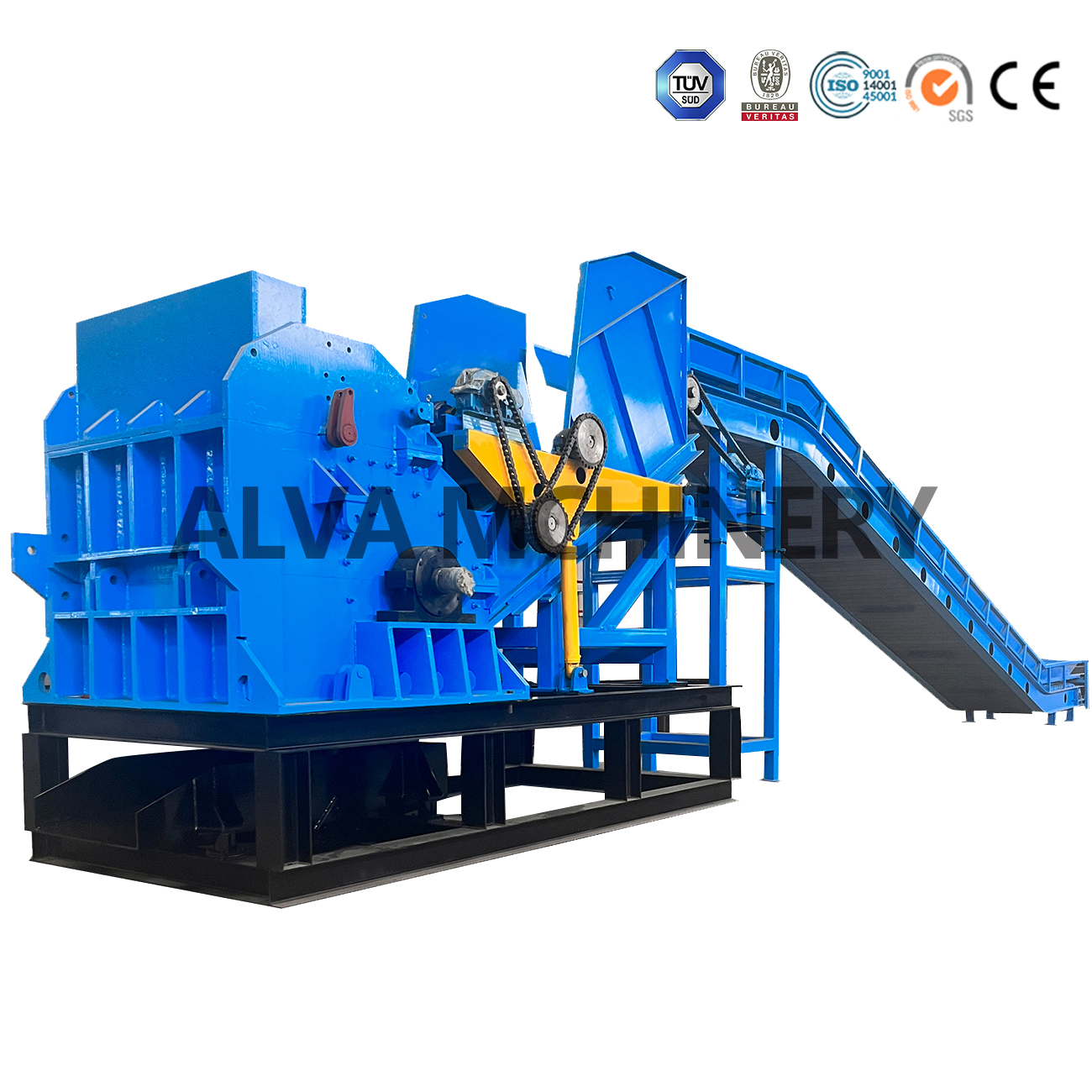
A scrap steel crusher utilizes impact, shear, and compression forces. These mechanical principles transform loose, irregular scrap into dense nuggets. Bottom grates and hammer configurations control the maximum output particle size. Screen adjustments dictate the final dimensions of the processed material. Proper calibration minimizes the production of unusable fines. This ensures the output meets strict furnace charging specifications.
The rotor spins at high velocity, driving heavy manganese hammers into the incoming scrap. The initial impact shatters brittle materials and folds ductile steel. As the material is dragged across the anvil and bottom grates, shear forces rip the metal apart. The scrap remains in the crushing chamber until it is small enough to pass through the grate openings. This continuous attrition densifies the metal, balling it up into tight, heavy nuggets that sink rapidly into a melt pool.
Different scrap streams require specific crusher configurations for optimal processing. A vertical metal crusher uses vertical shaft impactors for continuous grinding. This produces high-density nuggets and provides superior paint removal. The autogenous particle-on-particle attrition cleans the scrap thoroughly. Alternatively, a standard metal crusher utilizes horizontal hammermills. Horizontal rotors handle high-throughput processing of end-of-life vehicles. They easily manage mixed light scrap and industrial off-cuts.
Crusher Type | Primary Mechanism | Ideal Feed Material | Output Characteristics |
|---|---|---|---|
Horizontal Hammermill | Impact and Shear | End-of-life vehicles, white goods | High volume, medium density, shredded strips |
Vertical Shaft Impactor | Autogenous Attrition | Pre-shredded scrap, heavy clips | Ultra-high density, clean nuggets, paint removed |
Slow Speed Shredder | High-Torque Shearing | Massive structural steel, heavy rebar | Coarse sizing, volume reduction, pre-processing |
Complex assemblies demand specialized equipment for clean chemical separation. Using an electric motor rotor crusher liberates copper from steel cores. This prevents copper contamination in the final steel melt. Secondary operations often integrate an aluminum scrap crusher to process non-ferrous materials. This ensures distinct particle size control for different metal streams. Dedicated crushers prevent non-ferrous contamination from ruining steel batches.
Copper is a tramp element in steelmaking. It cannot be oxidized out of the melt. If copper-bearing components like electric motors enter the furnace, the entire heat can be downgraded or scrapped. Specialized rotor crushers shatter the cast iron and steel housings, freeing the copper windings. Downstream magnetic separation then pulls the clean steel away from the non-ferrous metals. This targeted crushing approach guarantees the chemical purity of the steel charge.
Evaluating a crusher requires analyzing its ability to maintain output consistency. The machine must hold a tight particle size distribution under continuous load. Operators need to change grates and screens easily. Quick adjustments accommodate shifting furnace requirements without long delays. Switching from electric arc furnace scrap to induction furnace feed requires different screens. Fast changeovers keep production schedules on track.
A crusher is only as good as its bottom grate. As the grate wears down, the openings expand, allowing larger pieces to escape the chamber. Facilities must monitor grate wear daily. Modern crushers feature hydraulic opening mechanisms that allow maintenance crews to swap grates in hours rather than days. This flexibility lets a single yard produce heavy melting scrap in the morning and fine induction feed in the afternoon, maximizing the utility of the equipment.
Processing high-tensile steel places immense stress on internal wear parts. Manganese steel hammers, alloy liners, and anvils have specific lifecycles. Maintenance schedules must balance downtime against output consistency. Worn parts allow oversized materials to bypass the sizing screens. Regular replacement prevents this oversized bypass and maintains quality. Durable wear parts ensure the crushed output remains uniform.
Manganese steel work-hardens upon impact. The more it strikes the scrap, the harder the surface becomes, while the core remains ductile to absorb shock. However, even the best alloys eventually wear down. When hammers lose their profile, the crusher loses its ability to shear metal efficiently. The machine starts dragging material across the grates instead of cutting it, generating excessive heat and fine dust. Sticking to a rigid replacement schedule prevents this degradation in output quality.
Motor sizing and rotor mass determine the ability to handle surge loads. High inertia drives power through tough scrap without stalling. Operators must balance crusher energy consumption against downstream furnace savings. Dense, uniform scrap saves significant electricity during the melting phase. Proper equipment scaling ensures efficient processing at target volumes.
A heavy rotor acts as a flywheel. When a dense bundle of scrap enters the chamber, the kinetic energy stored in the massive rotor powers through the obstruction without drawing a massive spike in electrical current. Undersized crushers stall frequently, causing electrical faults and mechanical stress on the drive belts. Sizing the motor and rotor correctly for the expected feed material ensures continuous, uninterrupted throughput.
Uncrushable items cause catastrophic damage to the crusher rotor and housing. Heavy tramp metal and massive shafts destroy internal components instantly. Robust upstream sorting protocols mitigate these mechanical risks. Pre-shredding reduces the size of massive assemblies before final crushing. Magnetic separation removes dangerous tramp metals from the feed stream. These steps protect the equipment and ensure continuous operation.
A solid steel forklift counterweight hidden in a pile of sheet metal will obliterate a hammermill. Grapple operators must inspect incoming loads visually. Installing a slow-speed, high-torque pre-shredder ahead of the main crusher acts as a mechanical safeguard. The pre-shredder tears open dense bales and exposes hidden hazards. If an uncrushable item jams the pre-shredder, the machine simply reverses and stops, preventing the catastrophic high-speed collisions that destroy primary crushers.
Aggressive crushing processes generate dust and non-metallic fines. Downstream separation is required to clean the final scrap product. Zig-zag air classifiers and eddy currents remove unwanted light materials. Heavy-duty dust collection systems capture airborne particulate matter. These systems meet strict environmental regulations and protect worker safety. Removing non-metallic fines also preserves the integrity of the melt chemistry.
Every ton of scrap processed generates a percentage of auto shredder residue (ASR), consisting of plastics, foam, glass, and dirt. If this material enters the furnace, it creates toxic emissions and massive slag volumes. High-capacity cyclone dust collectors pull the light fraction away from the steel stream immediately after crushing. Maintaining these air systems is just as critical as maintaining the crusher itself. Clean steel yields predictable chemistry; dirty steel yields rejected heats.
Controlling particle size distribution is a foundational requirement for steel remelting. It dictates thermal efficiency, chemical homogeneity, and overall operational stability. Aligning furnace types with specific crusher mechanics ensures optimal bulk density and predictable melting behavior. Actionable next steps for facility managers include:
Conduct material testing with equipment manufacturers to verify output sizes against your specific furnace requirements.
Perform industrial sieve analysis on test batches to confirm the particle distribution curve.
Execute a capacity audit of the current scrapyard to identify material handling bottlenecks.
Implement a rigid wear-part replacement schedule to guarantee long-term output consistency.
A: Induction furnaces require smaller, highly uniform pieces, typically ranging from 10 to 50 millimeters. This prevents bridging, ensures rapid magnetic coupling, and optimizes heat transfer throughout the charge.
A: Higher bulk density reduces the number of basket charges required per heat. This minimizes heat loss from open furnace roofs, shortens tap-to-tap times, and lowers overall electrical consumption.
A: Excessive fines possess a massive surface area that oxidizes rapidly during melting. This increases slag volume, reduces metallic yield, and introduces slag inclusions that weaken the final cast steel.
A: Vertical shaft impactors use autogenous grinding to produce dense, fist-sized nuggets. The particle-on-particle attrition effectively removes rust and paint, delivering a cleaner charge to the furnace.
A: Operators must implement robust pre-sorting protocols. Using pre-shredders and heavy-duty magnetic separators removes massive tramp metal and solid shafts before they enter the main crushing chamber.