Views: 0 Author: Site Editor Publish Time: 2026-07-30 Origin: Site
The structural integrity of aluminum extrusions—specifically wall thickness—is the primary variable dictating the success or failure of a metal recycling line. Treating all aluminum scrap as identical leads to catastrophic equipment failures, excessive blade wear, and severe throughput bottlenecks. A setup optimized for thin window frames will jam or break when fed heavy structural profiles. To maintain operational continuity and maximize returns, facilities must audit their incoming material stream. Configuring the torque, rotor design, and blade metallurgy of your aluminum scrap crusher based on specific profile dimensions is non-negotiable for achieving optimal performance.
Material Behavior Dictates Setup: Thin-walled profiles require high-speed shearing to prevent tangling, while thick-walled structural extrusions demand high-torque, low-speed crushing to overcome material yield strength.
Rotor and Blade Configuration is Critical: Selecting the wrong blade angle or rotor type based on profile thickness accelerates wear and increases energy consumption.
Versatility Requires Compromise: Facilities processing mixed scrap (from thin aluminum to heavy metals) must evaluate specialized setups, such as a vertical metal crusher, to balance throughput with machine longevity.
Successful crushing is measured by consistent output density, minimal fines generation, and predictable energy consumption. Achieving these metrics requires a deep understanding of how different aluminum profiles react under extreme mechanical stress. Operators must recognize that metal behaves differently depending on its cross-sectional mass.
Thin-walled profiles, such as architectural trim and window frames with a thickness of less than 2mm, lack structural rigidity. When introduced to a crushing chamber, these materials tend to bend, fold, and tangle. They require sharp, high-tolerance shearing to cut the metal cleanly before it can wrap around the rotor shaft. Without precise cutting action, thin aluminum quickly forms dense nests that choke the machine.
Thick-walled extrusions found in automotive or industrial framing (exceeding 5mm in thickness) behave more like solid billets. These profiles possess high yield strength and resist shearing. Processing them requires massive blunt force or high-torque biting to fracture the metal. Extruded profiles often feature variable wall thickness, sharp projections, radiused corners, and internal structural ribs. These design elements create non-uniform resistance zones that complicate initial fracture, demanding robust machine architecture to handle sudden spikes in resistance.
Calculating the required shear force depends heavily on the maximum wall thickness and the specific alloy grade, such as 6000 series aluminum. High-strength alloys with thick walls demand exponentially more force to break than standard commercial trim. Feeding thick, rigid profiles into underpowered machines risks catastrophic rotor stalling, where the motor lacks the torque to complete the cut, bringing the entire line to a sudden halt.
The mechanical state of the scrap also influences processing dynamics. Pre-stressed, roller-straightened profiles or heavily deformed structural frames behave unpredictably under compression inside a metal crusher. Residual stresses in the metal can cause it to snap violently or resist initial blade penetration, requiring equipment with sufficient power reserves to power through these irregular resistance peaks.
Matching the machine setup to the dominant material stream prevents downtime and ensures consistent output quality. Different thickness profiles require entirely different mechanical approaches. You cannot force a single configuration to handle every type of scrap efficiently.
Processing thin-walled aluminum effectively requires high-speed rotors equipped with tight blade clearances. The goal is to cleanly cut the flexible aluminum rather than tearing it. Wide clearances allow thin metal to slip between the blades, leading to wrapping and jamming. Optimal screen sizing is equally important. Screens must be calibrated to prevent long, thin shards from passing through the discharge, ensuring the final output meets density requirements for downstream processing.
Maintain blade gaps below 0.5mm to ensure clean shearing of thin profiles.
Utilize screens with smaller hole diameters to prevent long strips from escaping the cutting chamber.
Implement high-speed rotor configurations to maximize cuts per minute.
Heavy structural extrusions demand low-speed, high-torque shredders, typically utilizing a dual-shaft configuration. This setup provides the immense twisting force necessary to fracture thick walls without overloading the motor. Blades must feature aggressive hook designs to grab, pierce, and pull thick, rigid profiles into the cutting chamber. The slow rotational speed prevents the blades from skipping over the hard metal surface, ensuring a positive bite on every pass.
Many facilities handle a highly variable incoming stream, processing everything from foil-thin trim to heavy structural beams. This variability requires versatile equipment configurations. Utilizing variable frequency drives (VFDs) allows operators to adjust rotor speed dynamically based on the incoming batch. Slowing the rotor down increases torque for thick materials, while speeding it up improves shearing efficiency for thin profiles, providing a necessary operational compromise.
Evaluating specific machine features against material thickness ensures the selected equipment can handle the daily operational load without premature failure. You must align the mechanical specifications with the physical reality of your scrap.
Open-rotor designs excel at processing bulky, thin extrusions because they offer ample space for the material to enter the cutting zone without bridging. However, closed or solid rotors are necessary for the high-impact environment of thick extrusions. Solid rotors provide the mass and inertia required to punch through heavy walls without suffering structural fatigue. The relationship between motor kilowatts, gearbox reduction ratio, and maximum crushable wall thickness dictates the machine's absolute limits. High torque, achieved through aggressive gear reduction, is mandatory for thick profiles.
Profile Thickness | Recommended Rotor Type | Torque Requirement | Primary Action |
|---|---|---|---|
< 2mm (Thin) | Open Rotor | Low to Medium | High-Speed Shearing |
2mm - 5mm (Medium) | Semi-Closed Rotor | Medium to High | Combination Cut/Fracture |
> 5mm (Thick) | Solid/Closed Rotor | Very High | Low-Speed Biting/Fracture |
Blade selection involves a strict trade-off between hardness for wear resistance and toughness for impact resistance. Thick profiles require tougher, less brittle alloys to prevent the blade edges from chipping or shattering upon impact with dense aluminum nodes. Thin profiles, however, benefit from harder, sharper edges that maintain their shearing ability over long runs. The cutting angle must also be optimized; blunt angles withstand heavy impacts better, while acute angles slice through thin walls cleanly.
Wall thickness directly affects how the metal fractures and, consequently, the final crushed fraction. Thick walls tend to break into blocky chunks, while thin walls shear into flat strips. Selecting the correct screen hole diameter is vital for achieving the desired bulk density for smelting or transport. Smaller screen holes increase retention time, densifying the material further but reducing overall throughput.
Understanding how different crusher architectures handle aluminum profiles alongside other metals is crucial for facilities managing diverse scrap streams. Selecting the right architecture prevents cross-contamination and mechanical breakdowns.
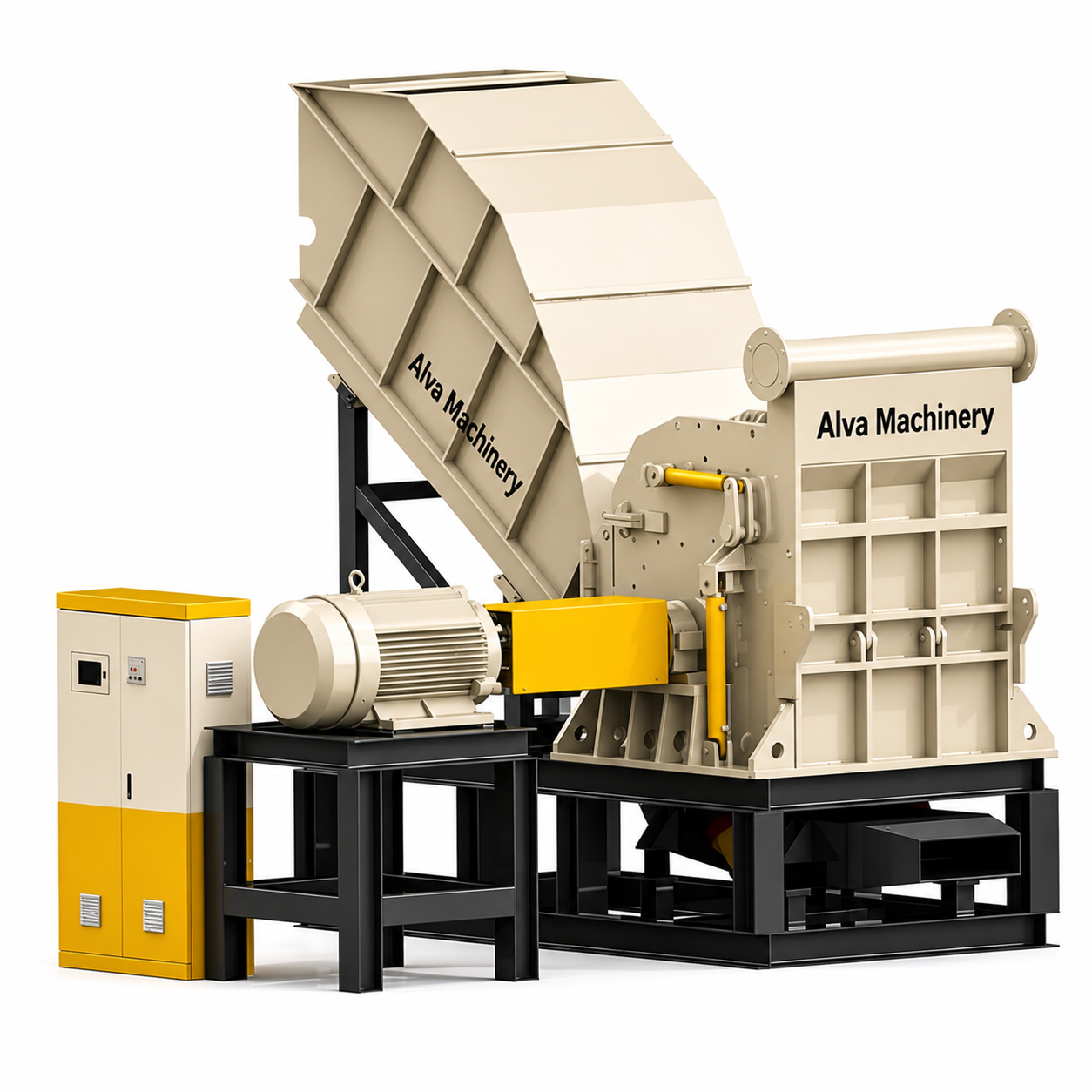
A vertical metal crusher excels at densifying and "balling" aluminum scrap, making it highly effective for medium-thickness profiles. The vertical impact action folds and compacts the metal into dense nuggets ideal for furnace feeding. In contrast, horizontal hammermills or shredders are better suited for the continuous feeding of long extrusions, utilizing gravity and horizontal feed conveyors to manage material length before reduction.
Standard aluminum crushers reach their limit when faced with extreme wall thicknesses or the presence of heavy steel attachments. Structural aluminum profiles often contain foreign materials like high-strength steel brackets, connection plates, bolts, and fasteners. Processing these mixed-metal joints requires a scrap steel crusher. Attempting to process heavy steel fasteners in a standard aluminum machine will cause immediate and severe rotor and blade damage.
Facilities processing complex scrap, such as motor housings with internal extrusions and copper windings, require specialized separation capabilities. Integrating an electric motor rotor crusher allows operations to aggressively fracture the outer aluminum shells while simultaneously liberating the internal copper and steel cores. This targeted crushing action maximizes recovery rates for highly complex, multi-metal components.
Ignoring profile thickness during the procurement and operational phases introduces severe mechanical risks that can derail production schedules. You must anticipate these challenges to maintain uptime.
Processing abrasive, thick-walled anodized aluminum drastically accelerates blade wear compared to raw, thin extrusions. The hard oxide layer on anodized profiles acts as an abrasive, dulling cutting edges rapidly. Facilities must establish realistic expectations for blade lifespan based on the specific surface treatments and thicknesses of their primary scrap stream, scheduling replacements before dull blades cause material wrapping.
Feeding thick profiles into a high-speed machine designed for thin scrap causes severe amperage spikes. As the rotor struggles to shear the heavy metal, the motor draws excess current, leading to potential electrical faults, tripped breakers, and increased utility demands. Proper material staging and metering are required to prevent these surges.
Jams caused by oversized or overly thick profiles are inevitable in mixed-stream processing. Machines must be equipped with auto-reverse programming to detect rotor stalling, automatically reverse to clear the obstruction, and resume forward operation. Establishing a baseline maintenance schedule tailored to the primary material thickness ensures that blade gaps remain tight and screens remain clear.
There is no universal setup for processing aluminum extrusions. Equipment must be explicitly configured to the dominant wall thickness of the facility's scrap stream to ensure reliable operation. Taking a standardized approach will only lead to mechanical failure and lost revenue.
Conduct a rigorous material audit to identify the minimum, maximum, and average profile thicknesses in your standard feed.
Document the presence of any joint connectors, steel brackets, or heavy fasteners that require upgraded machine durability.
Send sample batches of your thickest and most difficult profiles to manufacturers for factory testing to validate torque requirements.
Specify blade metallurgy and rotor design based strictly on the results of the physical material tests.
A: Standard single-shaft crushers typically handle aluminum profiles up to 3-5mm thick. Thicker structural profiles require dual-shaft high-torque shredders to fracture the metal without stalling the rotor.
A: Thin material can slip between blades that have wide tolerances designed for heavy impacts. Instead of shearing, the flexible aluminum wraps around the rotor shaft, eventually choking the machine.
A: Yes, while highly capable of handling thick walls, steel crushers may over-process thin aluminum. This creates excessive fines and reduces the overall material value for smelting.
A: Standard aluminum crushers suffer severe blade chipping from heavy steel components. Processing these joints requires a heavy-duty scrap steel crusher or a dedicated pre-sorting stage to remove the steel.
A: The hard oxide layer on anodized profiles is highly abrasive. It significantly accelerates blade wear, requiring specialized, wear-resistant blade metallurgy regardless of the underlying aluminum thickness.
A: Horizontal-feed shredders or crushers with specialized long hoppers are recommended. They accommodate the length of the extrusions while maintaining the tight blade clearances needed for thin-wall shearing.
A: Vertical crushers are ideal if your end-goal is producing high-density nuggets or "meatballs" for direct furnace feeding. They are less efficient for simple volume reduction of long, thin extrusions.