Views: 0 Author: Site Editor Publish Time: 2026-09-26 Origin: Site
Did you know electronic scrap contains hidden gold? Yet extracting these precious and base metals remains a massive logistical challenge. Poor shredding practices often destroy this value before the material even reaches the sorting line. To recover metals profitably, recycling facilities must reduce volume with absolute precision. Specific machine configurations directly impact the purity, yield, and overall profitability of a recycling operation. Blade layouts and target output sizes are the primary factors dictating success.
Precision Matters: Operational efficiency relies heavily on custom blade configurations tailored to the specific type of electronic scrap.
Blade Layout Dictates Performance: Engineering parameters like blade thickness, hook count, and spatial spacing determine how effectively the machine grips and shears complex assemblies.
Output Size is Crucial for Sorting: Achieving the optimal output fraction prevents over-shredding, which causes severe metal loss as airborne dust. It also prevents under-shredding, which leaves valuable metals permanently trapped inside plastic housings.
High Torque and Low Speed: Top-tier primary crushers utilize immense torque to break down tough materials without generating excessive heat. This protects sensitive components like embedded batteries.
ROI Depends on Synergy: Matching the primary output fraction to the exact requirements of downstream separation technologies maximizes overall material purity.
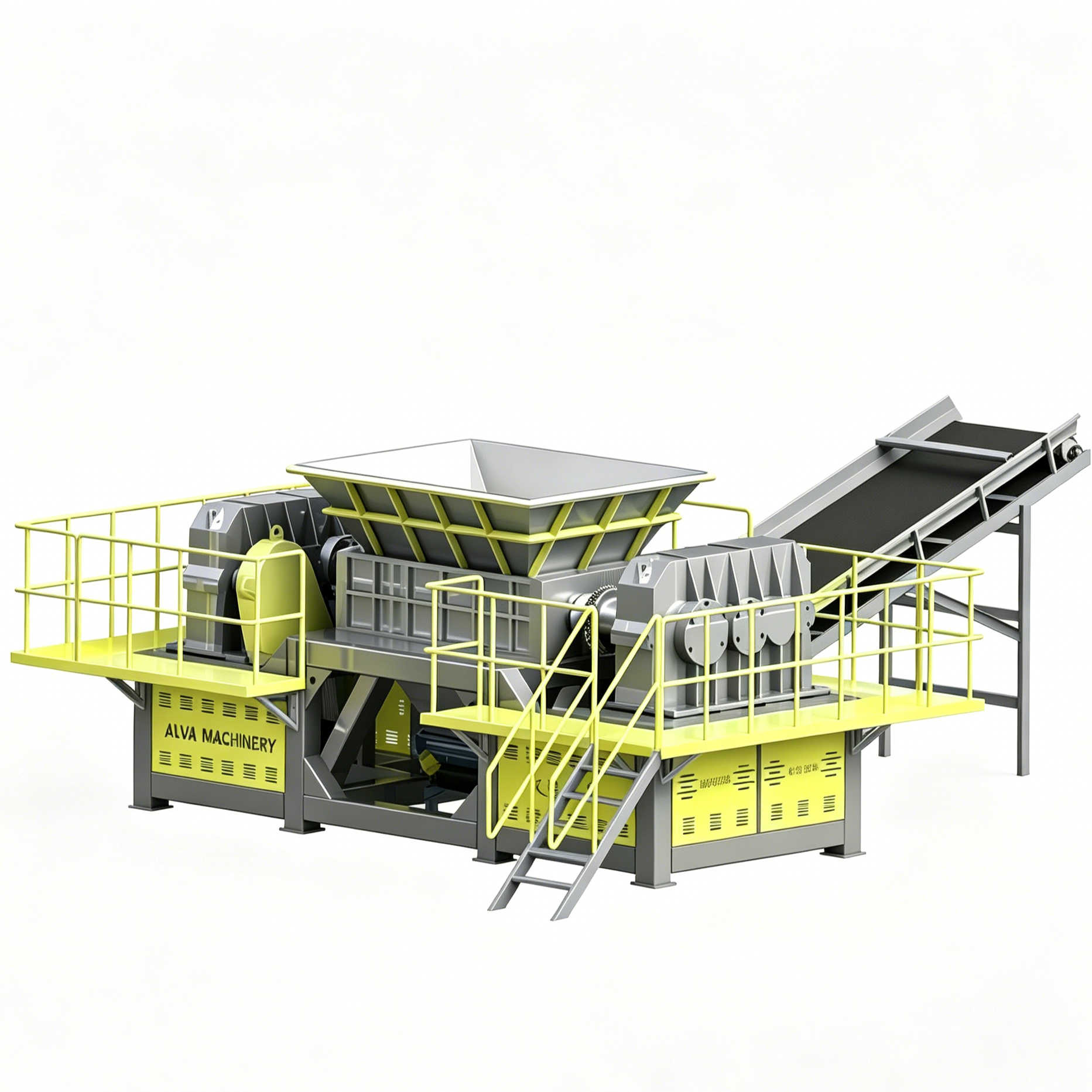
To extract maximum value from end-of-life electronics, the raw material must first undergo a rigorous volume reduction process. Mechanically, the primary breakdown equipment features two robust, counter-rotating shafts equipped with interlocking alloy blades. As bulky scrap enters the cutting chamber, the opposing blades grab, shear, tear, and fracture the heterogeneous material into manageable strips.
Processing electronic scrap presents unique hazards compared to standard municipal solid waste. Consumer electronics frequently conceal dense steel components, abrasive fiberglass substrates, and severe fire risks like small embedded batteries. High-torque, low-speed processing is non-negotiable here. Operating at low rotational speeds, typically between 15 and 30 RPM, the machine generates massive shearing force without creating high friction. This methodical approach significantly reduces airborne dust generation. Furthermore, it mitigates the risk of thermal runaway when processing battery-embedded devices.
Within a modern recycling plant, this machine acts as the critical pre-shredding stage. It prepares awkward items for secondary processing and ensures a steady feed rate. Without a reliable electronic waste recycling machine acting as the gatekeeper, downstream granulators and optical sorters would inevitably suffer from frequent blockages, accelerated wear, and catastrophic mechanical failures.
A common operational misconception is that cutting blades are universally interchangeable across different waste streams. In reality, blade geometry must be strictly engineered for the specific feed material entering the hopper. The physical layout of the cutting chamber dictates the exact mechanics of material destruction.
The thickness of the cutting knife directly correlates to the size of the shredded output and the structural integrity of the blade itself under load.
Thick Blades: Handling heavy-duty structural items like washing machines, microwaves, and thick steel casings requires thick blades. They provide the necessary mass and kinetic strength to fracture structural steel without snapping under extreme stress. Industrial models often utilize 40mm to 60mm thick blades for these applications.
Thin Blades: In contrast, intricate components like printed circuit boards, laptops, and hard drives require a much finer initial cut. Thin blades, typically 20mm to 30mm, ensure the material is sliced into narrower strips. This action is essential for breaking the tight physical bonds between fiberglass substrates and precious metal traces.
The hook is the protruding section of the blade that physically bites into the material, pulling it forcefully down through the cutting shafts.
Fewer Hooks: Blades featuring a single or double hook are engineered for bulky, rigid, and thick-walled items. This geometry allows large casings to drop deeper into the cutting chamber before the shearing action occurs, providing maximum bite force.
Multiple Hooks: Knives with five to seven hooks are purpose-built for grabbing and tearing thin, flexible materials like copper cables, ribbon wires, and thin plastic housings. A higher hook count ensures flexible materials are continuously pulled downward rather than floating harmlessly on top of the rotating shafts.
Shredding electronics is a highly abrasive endeavor. The constant presence of glass, silica, and hardened steel demands exceptional metallurgical properties. Premium blades are typically manufactured from high-alloy, heat-treated tool steel such as D2, H13, or specialized 42CrMo. The complex heat treatment process must strike an exact balance between surface hardness and core toughness. This allows the metal to maintain a razor-sharp edge while absorbing sudden violent impacts without shattering.
Material Type | Recommended Blade Thickness | Hook Count | Primary Mechanical Action |
|---|---|---|---|
White Goods and Appliances | 40mm - 60mm | 1 to 2 | Aggressive fracturing and crushing |
Mixed IT E-Waste | 20mm - 30mm | 3 to 5 | Shearing and tearing |
Cables and Wires | 15mm - 20mm | 5 to 7 | Continuous grabbing and slicing |
In the realm of metallurgical recycling, the concept of liberation dictates success or failure. Liberation refers to the exact physical point at which a target metal is physically separated from its surrounding matrix of plastic or resin. The output size generated by your primary shredder directly dictates the success rate of this liberation.
Plant managers often assume that shredding material as small as possible is beneficial. However, doing so in the primary stage is actually highly detrimental. Over-shredding generates microscopic metal dust. When valuable metals are reduced to a powder-like consistency, they lose the physical mass required for downstream sorting technologies to detect and eject them. Consequently, this highly valuable dust becomes intimately mixed with the plastic fraction or gets sucked away by the dust collection system, resulting in a permanent loss of revenue.
On the other end of the spectrum, if the output size is too large, the liberation process fails entirely. Heavy metals remain firmly encased in thick plastic housings or bolted to steel sub-frames. When these under-shredded composites reach downstream separation lines, the sensors inevitably misclassify the material. A large chunk of plastic containing a hidden ounce of copper will likely be rejected into the waste stream. This drags your profits straight to the landfill.
Through empirical data and operational testing, a well-calibrated dual shaft shredder should target a sweet spot typically ranging from 40mm to 100mm. This depends heavily on the specific input material. This precise fraction provides enough volume reduction to ensure steady downstream feeding while maintaining sufficient material mass. It allows overhead magnetic separators to cleanly pull ferrous metals upward. Specifically, it enables eddy currents to efficiently repel non-ferrous metals forward, entirely free from the interference of excessive plastic drag.
Although they operate on identical mechanical principles, heavy-duty shredders must be highly tailored to their specific operational environment. Relying on a one-size-fits-all approach inevitably leads to severe processing inefficiencies.
Focusing on the appliance shredder application requires a machine explicitly built for brute, unforgiving force. White goods contain rigid structural steel frames, dense compressor motors, and thick aluminum heat sinks. The machine must feature an exceptionally wide cutting chamber to physically accommodate the awkward dimensions of refrigerators and washing machines. Furthermore, it demands aggressive blade layouts with thick profiles and extreme drive torque. Dual motors ranging from 55kW to 132kW enable the rotors to bite into and shear solid metal without stalling.
Processing dense IT equipment demands high-level precision rather than raw power. Enterprise servers, smartphones, and network switches require incredibly tight blade clearances. If the microscopic gap between the rotating blades and the stationary cleaning fingers is too wide, small but valuable components will slip through the shafts entirely unshredded. Tight engineering tolerances guarantee that every individual component is fractured, exposing the internal precious metals for subsequent chemical or mechanical extraction.
When evaluating massive capital expenditures for recycling infrastructure, facility decision-makers must look far beyond basic horsepower specifications. The operational environment of electronics processing is abrasive and unpredictable. To ensure continuous uptime, primary equipment must incorporate specific engineering features designed to protect the machine from self-destruction.
Electronic scrap streams run notoriously inconsistent. Stricter manual pre-sorting protocols help. Still, unshreddable foreign objects like solid steel blocks or heavy motor armatures inevitably tumble into the cutting chamber. When blades strike these solid masses, mechanical resistance spikes motor amperage dangerously.
Top-tier metal recovery equipment utilizes intelligent Programmable Logic Controller systems deeply integrated with real-time torque sensors. Siemens control systems are an industry standard for this application. If the system detects an abnormal amperage spike indicating a severe jam, the auto-reverse mechanism immediately halts the rotors. The shafts then briefly reverse direction to clear the heavy obstruction before attempting to process the material again. This critical safety feature prevents catastrophic blade fracture, protects the gearbox from mechanical overload, and entirely eliminates the risk of motor burnout.
The specific engineering method used to mount the cutting blades onto the rotating shafts is a defining factor in a machine's overall durability. In lower-cost machines, round shafts utilizing single keyways are common. Under the extreme twisting torque required to shear heavy metals, single keyways suffer from intense stress concentration. This inevitably leads to metal fatigue, key shearing, and catastrophic shaft failure.
Industrial-grade machines utilize solid hexagonal or splined shafts forged from high-strength alloys. A hexagonal shaft distributes the immense rotational force evenly across six distinct contact planes. This geometric advantage ensures that the blades cannot slip or spin independently of the shaft, even when processing highly resistant materials. Robust power transmission is absolutely non-negotiable for facilities aiming for high-throughput, continuous operation.
Feature | Round Shafts with Keyways | Hexagonal or Splined Shafts |
|---|---|---|
Torque Distribution | Concentrated on a single keyway point. | Evenly distributed across multiple flat planes. |
Fatigue Resistance | Low. Prone to key shearing under heavy loads. | Extremely high. Engineered for maximum stress absorption. |
Blade Slippage Risk | Moderate to High during sudden material jams. | Virtually zero due to interlocking geometric design. |
Best Application | Light plastics, paper, and uniform soft materials. | Complex e-waste, dense metals, and heavy appliances. |
In the heavy recycling industry, machine downtime directly correlates to massive lost revenue. The intensely abrasive nature of fiberglass circuit boards and steel casings guarantees that wear on cutting components is inevitable. Therefore, ease of maintenance should be a primary purchasing criterion.
High-quality machines feature a highly modular chamber design. This architectural choice allows maintenance crews to access and replace individual blades, spacers, and cleaning fingers without dismantling the entire cutting chamber. Utilizing bolt-on cleaning fingers and segmented blade configurations can reduce routine maintenance downtime by up to 60 percent. Replaceable wear plates bolted to the chamber walls protect the main structural housing from deep abrasion, significantly extending the overall lifecycle of the equipment.
Purchasing the right heavy machinery is only the first step. Maintaining its strict mechanical integrity guarantees a high return on investment. A meticulously maintained e-waste shredder operates more efficiently, consumes far less electricity, and produces a highly consistent output size. This directly benefits every downstream separation technology in the plant.
The fundamental operating principle of a two-shaft system is clean shearing. When blades are sharp, they cleanly slice through tangled copper wires, aluminum hard drives, and thick plastic casings. As blades naturally become dull over thousands of operational hours, the machine slowly transitions from cleanly shearing the material to forcefully tearing or crushing it.
Tearing requires drastically more torque and electrical power, driving up daily operational costs. More importantly, dull blades stretch and mangle materials rather than cutting them cleanly. This mangling effect can cause precious metals to fold and remain permanently trapped inside crushed plastic housings. Facility managers must implement strict blade inspections. Depending on the specific alloy used, worn blades can often be removed, hard-faced with wear-resistant welding wire, and precision re-machined back to their original tolerances.
Blade clearance refers to the microscopic engineered gap between the interlocking knives on the opposing shafts. For processing delicate electronics, maintaining extremely tight tolerances, often between 0.1mm and 0.5mm, is critical.
If this clearance becomes too wide due to lateral wear, thin materials like ribbon cables and flexible printed circuits will fold and slip between the blades. These uncut materials can wrap tightly around the rotor shafts, a dangerous phenomenon known as bridging. Severe wrapping forces the motors to work harder, generates excessive heat, and eventually forces a complete manual plant shutdown. Regularly calibrating blade spacers prevents this nightmare scenario.
Processing electronics generates a highly abrasive, toxic dust profile laden with fragmented fiberglass and microscopic metal shards. If this aggressive dust infiltrates the main bearings of the rotor shafts, it acts exactly like a grinding compound. It rapidly destroys the polished bearing races and leads to catastrophic mechanical failure.
Premium shredding machines utilize multi-layered sealing systems, such as intricate labyrinth seals combined with grease-purged barriers, to protect these vital bearings. Maintenance teams must adhere strictly to the manufacturer lubrication schedule. Utilizing automated greasing systems ensures human error does not compromise the machine.
Maintenance Task | Frequency | Objective and Expected Outcome |
|---|---|---|
Visual Blade Inspection | Daily | Identify chipped hooks or severe dulling early before output degrades. |
Grease Bearings and Seals | Weekly | Prevent abrasive dust intrusion and reduce internal friction. |
Check Blade Clearances | Monthly | Prevent material wrapping and ensure clean, uniform shearing. |
Gearbox Oil Analysis | Bi-Annually | Detect microscopic metal shavings indicating internal gear wear. |
Full Rotor Hard-facing | Based on tonnage | Restore cutting geometry, maintain output size, and lower power draw. |
As global consumer electronics continue to evolve, devices are becoming smaller, vastly more complex, and heavily integrated with internal lithium-ion batteries. The recycling industry is being forced to adapt rapidly. The technology driving primary size reduction is shifting away from purely mechanical brute force toward highly intelligent, data-driven processing. Industry trends show a massive push toward the circular economy, placing unprecedented pressure on facilities to recover critical minerals like cobalt, lithium, and rare earth elements with near-perfect purity.
One of the most significant shifts is the integration of predictive sensor technology into heavy shredding equipment. Modern machines are increasingly equipped with embedded sensors that continuously monitor bearing temperatures, gearbox vibration frequencies, and real-time motor torque. This telemetry data alerts plant operators to potential mechanical issues weeks before a catastrophic failure occurs. By transitioning from reactive emergency repairs to scheduled predictive maintenance, plant managers maximize overall facility throughput.
Furthermore, the synergy between primary shredding and automated artificial intelligence sorting lines is tightening. AI-driven optical sorters and advanced robotic picking arms require a perfectly consistent material feed to function accurately. If the primary shredder produces highly variable, mangled output sizes, the visual recognition systems struggle to identify and separate the materials. Therefore, the modern shredder is no longer just a blunt volume reduction tool; it has evolved into a precision instrument. The exactness of the shred directly dictates the sorting accuracy and the profitability of the entire high-tech facility.
Success in the highly competitive e-waste recycling sector begins long before the material reaches the sorting magnets. It begins at the primary shredding stage. Choosing the right mechanical infrastructure dictates your final metal purity and operational uptime.
The precise blade layout, hook geometry, and strictly controlled output size are the levers that control your overall yield. A poorly configured machine will trap your profits in plastic or lose them as dust. In contrast, a finely tuned system liberates precious metals for maximum market value.
Are you ready to optimize your recycling line and maximize material recovery? Equip your facility with machinery engineered for continuous operation and precise output sizing. Visit CNALVA to explore high-performance double shaft shredders and consult with engineering experts to configure a cutting chamber tailored specifically to your unique material stream.
While the exact dimension varies based on the specific feed material, a primary double shaft system typically aims for an output size ranging from 40mm to 100mm. This specific size range is highly ideal for physically liberating major internal components without pulverizing them into dust. It prepares the material perfectly for secondary shredders, granulators, or direct magnetic separation, ensuring that precious metals are exposed but not lost to the facility dust collection system.
These machines are engineered specifically for the rapid volume reduction of hollow, bulky, or composite materials, such as electronic housings, hard drives, and appliance casings. They are not designed to shear solid blocks of thick metal like steel ingots, heavy anvils, or solid motor shafts. Introducing solid metal blocks will typically trigger the machine auto-reverse safety feature to protect the blades and gearbox from severe, immediate damage.
Thinner blades equipped with multiple aggressive hooks are highly preferred for processing printed circuit boards. Because these boards are incredibly dense with valuable metals and rigid fiberglass layers, thin blades provide a finer, more frequent cutting action. This precise shearing ensures that delicate precious metals like gold, silver, and palladium are adequately fractured and liberated from the tough plastic resins, completely optimizing the downstream chemical or mechanical separation processes.
The operational lifespan of cutting blades depends entirely on the throughput volume and the specific abrasiveness of the feed material. Processing high volumes of steel-heavy appliances will naturally wear down the blade edges significantly faster than processing standard consumer plastics. However, rigorous regular maintenance, including hard-facing and maintaining strict blade clearances, can drastically extend the operational life of the knives before a full, costly replacement is necessary.
A double shaft system uses two counter-rotating shafts to aggressively grab and shear bulky materials into long strips. It generally lacks a sizing screen, which allows for extremely high throughput and high resistance to jamming. Conversely, a single shaft machine uses one high-speed rotor pushing material against a fixed stator blade, forcing the cut material through a sizing screen to guarantee an exact, uniform output size. In professional metal recovery plants, these two distinct machines are often used sequentially in a highly efficient, two-step reduction system.
Fire prevention starts with utilizing a low-speed, high-torque shredding process. Operating at low RPMs minimizes friction and prevents the sparks that ignite volatile lithium-ion batteries. Additionally, modern facilities often inject inert gases or fine water mists directly into the cutting chamber to suppress thermal runaway immediately if a concealed battery is ruptured during the shearing process.
Power consumption varies widely based on the machine size and target throughput. Mid-sized units processing mixed electronics might utilize dual 30kW to 55kW electric motors. Heavy-duty appliance models designed for thick steel frames often require dual 90kW to 132kW motors. Utilizing advanced control systems ensures these motors only draw maximum amperage during peak shearing loads, optimizing overall energy efficiency.